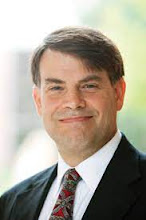
Showing posts with label Francis Collins. Show all posts

Wednesday, October 02, 2019

Language of God 4

So far:
Chapter 1 Notes: here
Chapter 2 Notes: here
Chapter 3 Notes: here

Chapter 4: Life on Earth
  • Begins by recapping the argument from design by William Paley. He argues against Paley's argument with a syllogism that I don't actually think is analogous. I recognize that Paley's argument is not without its questions, but I don't think Collins has really dispensed with it as easily as he thinks.
Origins of Life
  • Earth inhospitable to life for its first 500 million years. 4 billion years ago, no evidence of life. 150 years later, microbial life.
  • "No current hypothesis comes close to explaining how in the space of a mere 150 million years, the prebiotic environment that existed on Earth gave rise to life" (90). Collins is rightfully cautious about inserting God into these gaps, but I'm comfortable myself with a casual insertion. In other words, this certainly could have been God's intervention.
  • RNA may have been the path to the first life form.
  • Second Law of Thermodynamics is generally irrelevant to this discussion. "Order can certainly increase in some part of the system (as happens every day when you make the bed or put away the dishes)." The Second Law is about the total disorder, not the order/disorder of a portion of the system.
Fossil Record
  • "Suddenly, approximately 550 million years ago, a great number of diverse invertebrate body plans appear in the fossil record" (94). This is the Cambrian explosion.
  • "The vast majority of organisms that have ever lived on Earth have left absolutely no trace of their existence" (94).
  •  230 million years ago, dinosaurs dominated. An asteriod in the Yucatan peninsula toasted them and opened the door for mammals to thrive and eventually dominate.
Darwin
  • Initial reaction to Darwin was mixed. B. W. Warfield accepted evolution as "a theory of the method of God's providence" (98).
  • Darwin's faith was ambiguous. He speaks of the Creator at the end of The Origin of Species. Then later he said, "Agnostic would be the most correct description of my state of mind" (99). Another time he called himself a theist.
DNA
  • He tells a little of the development of genetics, from Gregor Mendel to James Watson and Francis Crick. 
  • "Do not fear, there is plenty divine mystery left.

Monday, September 30, 2019

Language of God 3

See here for notes on chapter 1 and here for notes on chapter 2.

Chapter 3: The Origins of the Universe
  • "One of the most cherished hopes of a scientist is to make an observation that shakes up a field of research... Any assumption that a conspiracy could exist among scientists to keep a widely current theory alive when it actually contains serious flaws is completely antithetical to the restless mind-set of the profession" (58).
  • I resonated with this comment, although I did finally plow through Hawking after 25 years: "It seems likely that the 5 million printed copies of Hawking's book [A Brief History of Time] remain largely unread by an audience that overwhelmingly found the concepts within its pages just too bizarre to comprehend" (60).
  • Eugene Wigner: the "unreasonable effectiveness of mathematics" Why is it that math corresponds so well with the world? (62)
  • The Big Bang - actually very amenable to faith because it posits a clear beginning.
  • Robert Jastrow - "For the scientist who has lived by his faith in the power of reason, the story ends like a bad dream.. as he pulls himself over the final rock, he is greeted by a band of theologians who have been sitting there for centuries" (66).
  • "The Big Bang cries out for a divine explanation" (67).
  • The Anthropic Principle - basically he presents the fine tuning argument for the existence of God. "Our universe is wildly improbable" (74). This basically reduces to two possibilities--a multiverse or God. As a stand alone universe, not at all a realistic option--too improbable.
  • Freeman Dyson - "The universe in some sense must have known we were coming" (76).
  • Bottom line - "The Anthropic Principle certainly provides an interesting argument in favor of a Creator" (78).
  • Laplace argued hard determinism around 1800. Quantum mechanics smashes him to quantum bits.
  • Genesis is poetic. Augustine - "In matters that are so obscure and far beyond our vision, we find in Scripture passages which can be interpreted in very different ways without prejudice to the faith we have received. In such cases, we should not rush in headlong and so firmly take a stand that, if further progress in the search for truth justly undermines this position, we too fall with it" (83).

Sunday, September 29, 2019

Language of God 2

Here are some notes on chapter 2 of The Language of God.
(notes on chapter 1 here)

Chapter 2: The War of the Worldviews
  • "Doubt is an unavoidable part of belief" (33).
  • Paul Tillich: "Doubt isn't the opposite of faith; it is an element of faith."
He treats four objections to belief in God:

1. Isn't it just wish fulfillment?
  • Freud--"at bottom God is nothing other than an exalted father" (37).
  • Countered by Lewis: wish fulfillment would likely give rise to a very different kind of God than the one described in the Bible.
  • Lewis: "Creatures are not born with desires unless satisfaction for those desires exists." (38)
  • But in a materialistic world, Annie Dillard speaks of the growing void: "We doused the burning bush and cannot rekindle it." (39)
2. What about harm done in the name of religion?
  • Voltaire: "Is it any wonder that there are atheists in the world, when the church behaves so abominably?" (40-41)
  • Marx: "Religion is the opiate of the masses" (41)
  • "A real evaluation of the truth of faith depends upon looking at the clean, pure water, not at the rusty containers" (42).
3. Why would God allow suffering?
  • Lewis - It would be an inner contraction for God to give free will and yet withhold it. (43) I don't find this argument convincing. I do agree that a world with some freedom seems better than a world without it, but it seems to me that it's above our pay grade to know how true this is.
  • Polkinghorne's distinction between physical and moral evil. I personally prefer not to call natural evil evil at all. For me, evil by definition requires an agent.
  • Lewis: "God shouts in our pains: it is His megaphone to rouse a deaf world" (46). Sure, sometimes, perhaps most of the time. Not sure this does all the work Lewis wants it to.
4. What about miracles?
  • "A miracle is an event that appears inexplicable by the laws of nature and so is held to be supernatural in origin" (48).
  • "If we hold a philosophy which excludes the supernatural, this is what we always shall say" (that the supposed miracle was an illusion of some sort).
  • Bayes' Theorem - allows you to calculate the probability of observing a particular event. (49)
  • Not only materialism will kill the notion of miracles but also "claiming of miracle status for everyday events for which natural explanations are readily at hand" (52).
  • Polkinghorn: "Miracles are not to be interpreted as divine acts against the laws of nature... but as more profound revelations of the character of the divine relationship to creation" (53).
  • What I like about Collins approach is his insistence that we not play the miracle card too quickly, especially for gaps in our scientific knowledge. He also talks about God stacking the deck of probabilities toward a miracle within the realm of possibilities.

Friday, September 27, 2019

Language of God I

I'm teaching an online Science and Scripture course from October to December (more to come). So I'm pulling some books off my shelf and have purchased even more in preparation. A classic, although not even 15 years old, is Francis Collins' The Language of God. I don't think I'll have time to blog through the whole thing, but here is chapter 1.
  • Interesting that the human genome was cracked six months into this millennium--3 billion letters long
  • Bill Clinton: "most wondrous map ever produced by humankind... We are learning the language in which God created life." (4)
  • "The goal of this book is to explore a pathway toward a sober and intellectually honest integration" of scientific and spiritual perspectives. (6)
  • In chapter 1 he charts his pilgrimage. Chemistry to medicine, agnosticism to atheism.
  • Then he speaks of his awakening.
C. S. Lewis' Mere Christianity was what pulled him in. He found his pathway to faith looking like that of Lewis. I am delighted that he came to faith. The moral argument seems to have done the trick for him.

For me, the fine tuning argument is the most persuasive, and I still find the cosmological argument significant. However, the moral argument has never grabbed me, nor has Lewis for that matter. No matter. I have no desire here to question Lewis or Collins.

Friday, June 17, 2011

Francis Collins on Adam

I heard Francis Collins yesterday here at Pepperdine.  As you may know, he is author of The Language of God and co-author of The Language of Science and Faith.  He was leader of the project that cracked the entirety of the human genome, a project that I believe will quickly result in curing most diseases like cancer, diabetes and  other gene related illnesses.  Obama appointed him to head the National Institutes of Health, an appointment new atheists like Sam Harris publicly opposed.

His faith is very evident.  Let's be clear about that.  He has a spiritual autobiography something like C. S. Lewis where he started as an atheist but was driven to faith.  It is also evident that he sees no contradiction between science and faith, and he was founder of BioLogos to that end.

I won't pretend that the question of evolution is not a difficult one at one point in particular, namely, our theology of Adam and the Fall.  Genesis 1 is a piece of cake, since it seems rather easily read as a poetic rather than a literal presentation of creation.  The problem is not even with Genesis 2-3.  The problem is with what Paul does with Genesis 2-3 and what Augustine did with Paul and with what Calvin and Wesley did with Paul.

I might describe it like this:
1. The rest of the OT doesn't do anything with Genesis 2-3.  Genesis 2-3 is not of major significance for the theology internal to the Old Testament.  Further, Adam and Eve's sin only stop them from not dying.  It does not seem to bring human death into the world except in that it prevents endless life.
2. The rest of the NT doesn't do anything with Genesis 2-3.  Genesis 2-3 is not of major significance for the theology internal to the rest of the New Testament outside Paul.  Adam is not mentioned elsewhere.
3. Adam in Romans and 1 Corinthians, however, provides Paul's explanation for where sin and death came from.  Adam seems to play a central role in Paul's theology.
4. This became central to our Christian understanding because Augustine and Protestantism focused on Paul and Adam, and made him a centerpiece in the Christian reading of Scripture.  When anyone reads Scripture, s/he must prioritize passages to form a coherent reading.  Adam would not have to be a centerpiece of such a reading.  He is central because we have inherited the readings of Augustine and the Protestant tradition.

The idea that death entered the world through Adam is one issue, since evolution requires lots of death.  There are strategies you can make.  Perhaps spiritual death entered through Adam.  Perhaps we could go with Genesis--Adam stopped life rather than started death.

Collins presented a new problem yesterday I was not aware of.  In his opinion, the human genome is too diverse to have come from one parent (remembering that Eve got her DNA from Adam).  He thinks thousands would have been necessary (he also pointed out that the genome of homo neanderthalis, which they have also decoded in full, is very similar to homo sapiens, possibly implying continuity between the two species.

He presented several possibilities.  One is that God created thousands of Adams and Eves.  One is that God did something special with two of the newly evolved thousands and then retro-did the others or it spread to the others.  Collins doesn't like the metaphorical route, that Adam and Eve are a story expressing the mystery of human identity and our condition before God, but not historical individuals.

Here is some exploration of Adam by RJS on Scott McKnight's blog, including a link to a recent CT article.  I do not offer an answer.  I do have two ground rules:

1. Having grown up with a fundamentalist view of the Bible and then feeling repeatedly stupid--indeed feeling like a complete ignoramus--as I studied the Bible in context, I reject the idea that the Christian position on these sorts of issues is a slam dunk.  The interpretation of the Bible is often complicated and unclear, and its appropriation even more susceptible to debate.

2. I reject any glib dismissal of science by those who couldn't pass a science class to save their life and yet insist on using cell phones and surgeons.  It is one and the same scientific method which has given us lap tops and evolution.  I am not a scientist.  I am not competent to judge the issue.  But I fear basing my faith on the opposite side of the vast and overwhelming majority of those who are competent to judge the evidence, in a field where you make your reputation by coming up with new discoveries, when every single scientist against evolution does so because of a presupposition they start out with rather than because the evidence drove them to that conclusion.

So have at it.  What do you think?