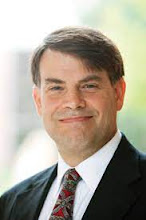
Three great questions from Steve Deneff in this morning's sermon:
1. Who are your teachers?
He doesn't just mean people you read or take classes with. Who do you surround yourself with? Who are you becoming more like because you hang around them?
2. What are they teaching you?
You can't help but be changed by those around you. How are you changing because of your "teachers"? What are you becoming because of your environment?
3. Are they right?
Are you headed in the right direction? Is your environment having a positive impact on who you are? Have you chosen the right teachers?
Questions worth pondering!
Showing posts with label Steve Deneff. Show all posts
Showing posts with label Steve Deneff. Show all posts
Sunday, August 23, 2015


Wednesday, May 22, 2013
Preachers and Presidents...
It was announced yesterday that IWU has a new president. Provost David Wright has become President David Wright. Dr. Wright is well known far and wide for his innovation, his burden for global witness (he's an MK by heritage), his academic-institutional prowess, and his wisdom in general. I think we will be truly amazed at the creative things that will come out of his presidency.
As an example of his wisdom, Steve Deneff quoted him at the Emerging Preachers Conference this week, which was a cooperative between College Wesleyan Church and Wesley Seminary. Deneff remembers David telling him that there were three basic kinds of preachers: 1) those who are gifted with words, 2) those who are gifted with people, and 3) those who are gifted with organization.
I thought the preaching conference went great, with Lenny Luchetti being the main force behind it. Some of the emerging preachers preached and coach teams gave them valuable feedback. Great insights were doled out by the likes of Steve Deneff, Keith Drury, Wayne Schmidt, Lenny Luchetti, and Safiyah Fosua. I find conferences rare where insights are as common as they were at this conference.
Great experience!
I'm off to Turkey for a few days, so my posts may become sporadic... or maybe they won't. :-)
As an example of his wisdom, Steve Deneff quoted him at the Emerging Preachers Conference this week, which was a cooperative between College Wesleyan Church and Wesley Seminary. Deneff remembers David telling him that there were three basic kinds of preachers: 1) those who are gifted with words, 2) those who are gifted with people, and 3) those who are gifted with organization.
I thought the preaching conference went great, with Lenny Luchetti being the main force behind it. Some of the emerging preachers preached and coach teams gave them valuable feedback. Great insights were doled out by the likes of Steve Deneff, Keith Drury, Wayne Schmidt, Lenny Luchetti, and Safiyah Fosua. I find conferences rare where insights are as common as they were at this conference.
Great experience!
I'm off to Turkey for a few days, so my posts may become sporadic... or maybe they won't. :-)
Sunday, August 12, 2012
Pastor Deneff, Harry Potter, and Nay-Sayers
Got home from Bible study in time to see the end of Harry Potter and the Order of the Phoenix. Throughout the entire movie, no one believed that the evil Voldemort was back. Harry Potter was mocked as a fool, punished for being a liar. At the very end, the Minister of Magic and his retinue see Voldemort and in shock exclaim, "He's back!"
So Harry is vindicated. Standing behind the minister is the older brother of Harry's best friend Ron. If you read the novels, you'll know what the movies only hint at, that Percy is a jerk who thinks he's better than everyone else. He is a leader who prides himself on how much more he knows about everything and about how much more virtuous he is than everyone else. He is always ready to give advice to younger students who might want to follow in his footsteps.
In the final scene, the self-righteous Percy is confronted with the fact that in fact it is he who has been wrong all along. He has maligned his parents when he was in fact the loser, and they the righteous ones. He is the one without insight, without discernment. I immediately thought of something Steve Deneff said in his sermon this morning.
The Percy type never admits they were wrong. They don't apologize. What they usually do is go on to be vociferously wrong again... on the next issue.
So Harry is vindicated. Standing behind the minister is the older brother of Harry's best friend Ron. If you read the novels, you'll know what the movies only hint at, that Percy is a jerk who thinks he's better than everyone else. He is a leader who prides himself on how much more he knows about everything and about how much more virtuous he is than everyone else. He is always ready to give advice to younger students who might want to follow in his footsteps.
In the final scene, the self-righteous Percy is confronted with the fact that in fact it is he who has been wrong all along. He has maligned his parents when he was in fact the loser, and they the righteous ones. He is the one without insight, without discernment. I immediately thought of something Steve Deneff said in his sermon this morning.
The Percy type never admits they were wrong. They don't apologize. What they usually do is go on to be vociferously wrong again... on the next issue.
Monday, May 10, 2010
Image of God
Finally getting back to some philosophy. The last post was on the soul.
__________
Thus far in the chapter we have looked at the human person from four different angles. We started with those who have viewed us as biological machines. From a Christian standpoint, this much is true, but it is not nearly the whole picture. Then we looked at the extent to which human identity is "socially constructed," that is, the degree to which we draw our identity from the social groups and contexts in which we grow up and live. Again, Christianity would historically see more to human existence than the mere constructs of particular societies. Further, Christianity's understanding of salvation has set us on a trajectory that tends to transcend visible social groupings and group-embedded identity. Since being a Jew or a Greek, a male or a female, a slave or a free person--or any visible indicator--cannot tell that a person is part of the people of God (Gal. 3:28), the usual external indicators of identity become quite inadequate. [1]
The third angle was that of personal choice, existentialism. Existentialism focuses on the potential for each of us to create our own identity for ourselves, to make ourselves into anything we want to be. Again, while Christianity can certainly accommodate a view that sees individual choice as essential to becoming a Christian, we would not believe that truly authentic existence is something anyone can create from any direction in life they choose. We believe that there are right and wrong choices, no matter how much you might invest yourself in the choices you make.
Finally, we looked at the traditionally Christian view that we have souls or spirits within us that survive death. Although the idea that the soul might be the primary container of our identities largely dates to Descartes, Christians have long associated the soul or spirit as the part of us that survives death until the time of the resurrection when we are reunited with a transformed body. In the last section, however, we saw that much of the work the soul is made to do in modern Christian thinking is itself largely a modern innovation that at least can be questioned from a number of different angles, including that of the Bible itself.
In this final section of the chapter, we want to consider if thinking about how humans as the image of God might stand at the heart of a Christian view of human beings. Yes, we are biological machines whose self-understanding derives significantly from our social context. Yes, a privilege of Western society in particular is the freedom to determine who we are in many more respects than people at other times and places. Yes, whatever the mechanism, we believe all humans continue to exist at death and that they will eventually be re-embodied. But more than anything else, a human is a reflection of God. A human person is an image of God.
Just like the soul, the idea of the image of God has also shifted somewhat over the centuries. As Western culture after Descartes became more individualistic, so the image of God more and more became something inside of me as an individual. [2] This was a crucial shift. Prior to Descartes, the image of God was something about me that reflected the divine order of things. What humans are reflected in part what God is. God is ruler of the universe. So God created humanity as His image to rule the created order. [3] Other aspects of us as humans that were often thought to reflect characteristics of God and the order of the world were our rationality and our potential for moral righteousness.
[textbox quote: The image of God in Wesley: natural, political, moral]
The Reformers from the time of Martin Luther increasingly looked at the image of God as something almost completely destroyed by Adam's sin in the Garden of Eden. [4] It became something we largely do not have in the present but that Adam had in the past. They focused primarily on the "moral" image as something completely lost in the Fall of humanity. Yet another current view focuses on the image of God as something greater than anything Adam had in the past but that we are destined to have in the future, at the time when God restores all things.
All of these views go well beyond anything in the Bible. Genesis is not very specific as to what the image of God in humanity might be, although in 1:27 it seems to relate to men and women governing the world. Paul and others in the New Testament seemed to relate this position of honor in the creation to Psalm 8, which the NRSV translates,
"what are human beings that you are mindful of them, mortals that you care for them? Yet you have made them a little lower than God, and crowned them with glory and honor. You have given them dominion over the works of your hands; you have put all things under their feet, all sheep and oxen, and also the beasts of the field, the birds of the air, and the fish of the sea, whatever passes along the paths of the seas" (8:4-8).
As His image, God has granted humans a position of honor in the world that is a reflection of His own honor. Here is no sense of human rationality or even morality. We simply reflect God. The place He holds over all is the place He has assigned humanity in the world. A man should not cover his head when he prays because his head reflects God (1 Cor. 11:7)--to see the honor of a man is to see the honor of God. Similarly, one should not harm an innocent human because you are harming the image of God (Jas. 3:9). These are all pictures, but we can easily synthesize them into a Christian way of thinking about what we are as human beings created in the image of God.
First, even if one only looked at humanity as biological machines, we are clearly the dominant beings on the planet, at least as far as we can see. [5] The idea that humans "rule" in the animal kingdom--even if we are poor rulers at times--seems beyond question. We hold a position of honor in the created order that does reflect the role God has in relation to the entire creation. Part of that high position does include a higher rational and moral capacity than the rest of the creation, which reflects our sense of God as the perfect thinker and absolute standard of goodness. In this sense, Christian thinkers throughout the ages have fastened on legitimate aspects of what we are as humans, even if they read much more into the image of God than any biblical author was thinking.
However, what is perhaps more important for us today is to recognize that humanity in the image of God is intrinsically valuable and meaningful. Prior to Descartes and the Reformation, the value of humanity in general was a reflection of the very order of things, of the world. Meanwhile, the value of an individual human might be a matter of the social class to which they were born. There was no sense of development. It was assumed that a person who turned out to be great must have always been great.
After Descartes, thinkers no longer simply assumed an intrinsic order to things. A person's choices might show them to be great, and a person might start from nowhere and rise to greatness. The late 1800s saw Sigmund Freud (1856-1939) and the birth of psychoanalysis, where events in a person's childhood were seen as formative influences that combined to make a person what they became. The nature/nurture controversy began, which would eventually become the question of whether what we are is more a function of our genetics or the environment in which we grew up.
Nevertheless, we can to a great extent return to the thinking of the Christians of the ages by thinking of how God thinks of humanity. If humanity--if indeed all the creation--is important to God, then it becomes a moral offence to mess with any of God's "stuff" and especially with humanity, which Scripture has declared to be the image of God in a way that the rest of the creation is not. This fact of God's perspective toward us makes us intrinsically valuable, despite the fact that we might also be biological machines that think and make moral choices.
[1] Although to be sure, visible Christiantity soon developed its own set of visible indicators so that group-embedded identity has continued to dominate the history of Christianity as well, another indication that homo sapiens is a herd animal.
[2] I am highly dependent in what follows on Charles Taylor's The Sources of the Self.
[3] This would seem to be the primary sense of the image of God in Genesis 1:27.
[4] The late Stanley Grenz spoke of a shift to a "relational" view of the image of God in the Reformation, followed by a more "dynamic" view as something God wants to restore in us at the time of Christ's return. See Theology for the Community of God, **, 168-73.
[5] Leaving out of consideration the spiritual realm for the moment.
_____________
As a side note on Steve Deneff's sermon this past Sunday:
Pastor Deneff made an interesting contrast between contemporary Westerners who are more "performance" based and the Bible world that was more "identity" based. This laborious chapter I've been hammering out in bits and pieces for months says similar things but in different terms.
First, what he is talking about is part and parcel of the ancient world, indeed I consider it the default of the human animal everywhere. His "identity" is really a function of a collectivist and honor-shame culture, as discussed previously.
Second, it is a pre-Descartes view of a person that sees who we are as a function of orders outside ourselves, an order to the world that is out there, as discussed previously and above. I think it can be recovered (as above) by seeing our truest identity as what God thinks of us. But the "performance" view--I am what I do--is one possible perspective as a result of the Cartesian slide, IMHO.
__________
Thus far in the chapter we have looked at the human person from four different angles. We started with those who have viewed us as biological machines. From a Christian standpoint, this much is true, but it is not nearly the whole picture. Then we looked at the extent to which human identity is "socially constructed," that is, the degree to which we draw our identity from the social groups and contexts in which we grow up and live. Again, Christianity would historically see more to human existence than the mere constructs of particular societies. Further, Christianity's understanding of salvation has set us on a trajectory that tends to transcend visible social groupings and group-embedded identity. Since being a Jew or a Greek, a male or a female, a slave or a free person--or any visible indicator--cannot tell that a person is part of the people of God (Gal. 3:28), the usual external indicators of identity become quite inadequate. [1]
The third angle was that of personal choice, existentialism. Existentialism focuses on the potential for each of us to create our own identity for ourselves, to make ourselves into anything we want to be. Again, while Christianity can certainly accommodate a view that sees individual choice as essential to becoming a Christian, we would not believe that truly authentic existence is something anyone can create from any direction in life they choose. We believe that there are right and wrong choices, no matter how much you might invest yourself in the choices you make.
Finally, we looked at the traditionally Christian view that we have souls or spirits within us that survive death. Although the idea that the soul might be the primary container of our identities largely dates to Descartes, Christians have long associated the soul or spirit as the part of us that survives death until the time of the resurrection when we are reunited with a transformed body. In the last section, however, we saw that much of the work the soul is made to do in modern Christian thinking is itself largely a modern innovation that at least can be questioned from a number of different angles, including that of the Bible itself.
In this final section of the chapter, we want to consider if thinking about how humans as the image of God might stand at the heart of a Christian view of human beings. Yes, we are biological machines whose self-understanding derives significantly from our social context. Yes, a privilege of Western society in particular is the freedom to determine who we are in many more respects than people at other times and places. Yes, whatever the mechanism, we believe all humans continue to exist at death and that they will eventually be re-embodied. But more than anything else, a human is a reflection of God. A human person is an image of God.
Just like the soul, the idea of the image of God has also shifted somewhat over the centuries. As Western culture after Descartes became more individualistic, so the image of God more and more became something inside of me as an individual. [2] This was a crucial shift. Prior to Descartes, the image of God was something about me that reflected the divine order of things. What humans are reflected in part what God is. God is ruler of the universe. So God created humanity as His image to rule the created order. [3] Other aspects of us as humans that were often thought to reflect characteristics of God and the order of the world were our rationality and our potential for moral righteousness.
[textbox quote: The image of God in Wesley: natural, political, moral]
The Reformers from the time of Martin Luther increasingly looked at the image of God as something almost completely destroyed by Adam's sin in the Garden of Eden. [4] It became something we largely do not have in the present but that Adam had in the past. They focused primarily on the "moral" image as something completely lost in the Fall of humanity. Yet another current view focuses on the image of God as something greater than anything Adam had in the past but that we are destined to have in the future, at the time when God restores all things.
All of these views go well beyond anything in the Bible. Genesis is not very specific as to what the image of God in humanity might be, although in 1:27 it seems to relate to men and women governing the world. Paul and others in the New Testament seemed to relate this position of honor in the creation to Psalm 8, which the NRSV translates,
"what are human beings that you are mindful of them, mortals that you care for them? Yet you have made them a little lower than God, and crowned them with glory and honor. You have given them dominion over the works of your hands; you have put all things under their feet, all sheep and oxen, and also the beasts of the field, the birds of the air, and the fish of the sea, whatever passes along the paths of the seas" (8:4-8).
As His image, God has granted humans a position of honor in the world that is a reflection of His own honor. Here is no sense of human rationality or even morality. We simply reflect God. The place He holds over all is the place He has assigned humanity in the world. A man should not cover his head when he prays because his head reflects God (1 Cor. 11:7)--to see the honor of a man is to see the honor of God. Similarly, one should not harm an innocent human because you are harming the image of God (Jas. 3:9). These are all pictures, but we can easily synthesize them into a Christian way of thinking about what we are as human beings created in the image of God.
First, even if one only looked at humanity as biological machines, we are clearly the dominant beings on the planet, at least as far as we can see. [5] The idea that humans "rule" in the animal kingdom--even if we are poor rulers at times--seems beyond question. We hold a position of honor in the created order that does reflect the role God has in relation to the entire creation. Part of that high position does include a higher rational and moral capacity than the rest of the creation, which reflects our sense of God as the perfect thinker and absolute standard of goodness. In this sense, Christian thinkers throughout the ages have fastened on legitimate aspects of what we are as humans, even if they read much more into the image of God than any biblical author was thinking.
However, what is perhaps more important for us today is to recognize that humanity in the image of God is intrinsically valuable and meaningful. Prior to Descartes and the Reformation, the value of humanity in general was a reflection of the very order of things, of the world. Meanwhile, the value of an individual human might be a matter of the social class to which they were born. There was no sense of development. It was assumed that a person who turned out to be great must have always been great.
After Descartes, thinkers no longer simply assumed an intrinsic order to things. A person's choices might show them to be great, and a person might start from nowhere and rise to greatness. The late 1800s saw Sigmund Freud (1856-1939) and the birth of psychoanalysis, where events in a person's childhood were seen as formative influences that combined to make a person what they became. The nature/nurture controversy began, which would eventually become the question of whether what we are is more a function of our genetics or the environment in which we grew up.
Nevertheless, we can to a great extent return to the thinking of the Christians of the ages by thinking of how God thinks of humanity. If humanity--if indeed all the creation--is important to God, then it becomes a moral offence to mess with any of God's "stuff" and especially with humanity, which Scripture has declared to be the image of God in a way that the rest of the creation is not. This fact of God's perspective toward us makes us intrinsically valuable, despite the fact that we might also be biological machines that think and make moral choices.
[1] Although to be sure, visible Christiantity soon developed its own set of visible indicators so that group-embedded identity has continued to dominate the history of Christianity as well, another indication that homo sapiens is a herd animal.
[2] I am highly dependent in what follows on Charles Taylor's The Sources of the Self.
[3] This would seem to be the primary sense of the image of God in Genesis 1:27.
[4] The late Stanley Grenz spoke of a shift to a "relational" view of the image of God in the Reformation, followed by a more "dynamic" view as something God wants to restore in us at the time of Christ's return. See Theology for the Community of God, **, 168-73.
[5] Leaving out of consideration the spiritual realm for the moment.
_____________
As a side note on Steve Deneff's sermon this past Sunday:
Pastor Deneff made an interesting contrast between contemporary Westerners who are more "performance" based and the Bible world that was more "identity" based. This laborious chapter I've been hammering out in bits and pieces for months says similar things but in different terms.
First, what he is talking about is part and parcel of the ancient world, indeed I consider it the default of the human animal everywhere. His "identity" is really a function of a collectivist and honor-shame culture, as discussed previously.
Second, it is a pre-Descartes view of a person that sees who we are as a function of orders outside ourselves, an order to the world that is out there, as discussed previously and above. I think it can be recovered (as above) by seeing our truest identity as what God thinks of us. But the "performance" view--I am what I do--is one possible perspective as a result of the Cartesian slide, IMHO.
Sunday, July 19, 2009
Deneff on Temptation: A Wesleyan Reflection
Steve Deneff preached a good sermon this morning on temptation. You can listen to it on iTunes in a day or two. Check back at the College Wesleyan website.
What made me think of posting was the fact that he really ignored the Wesleyan question of entire sanctification. If we're honest, few Wesleyan pastors preach this doctrine. Few people in the pew understand it. Forgive the imagery, but this morning sermon struck me as something like a by-pass around a blocked artery.
Deneff's sermon took off from Genesis 4 and the line that "sin crouches at the door." He made very healthy distinctions between evil and sin. He had a helpful section on avenues by which temptation come (personality, physical issues, environment). He had a practical "to this" start toward solutions (practice the virtue opposite the tempting vice).
He warned the entirely sanctified not to forget that still "sin crouches at the door." Crouches, not as in we "fall" into sin but that it is looking to get us.
How am I as a Wesleyan to map this sermon to our historical doctrines? Is this Keswick? Sin will always be a struggle, even though you can beat it through the Spirit. That's not historically Wesleyan. What about entire sanctification? Where the power of Sin over me is defeated over the whole?
For good or ill, those aren't the questions Christians are asking and I suspect if we were to dwell on them, we simply consign ourselves to irrelevance. I believe Deneff has hit the nail on the head this morning and has, intentionally or not, boiled down the Wesleyan tradition in this area to what people need to hear and will actually help them.
1. Sin crouches at the door of all our lives, no matter how long you have been a Christian. No one dare think they have arrived or ignore the constant possibility of having and yielding to temptation.
2. No one need be defeated by Sin or temptation, through the Spirit's power. Sin may crouch, but it never need catch.
3. Implicit, although it was not the focus this morning, is the possibility that God can "break the power of cancelled Sin." I personally think it is more problematic than helpful to debate the breaking of the power of Sin for the entirety of a person, since we are constantly changing all the time. In principle, I completely agree that a Christian should be able to say at any point of their life that, for their part, they are as surrendered to God as they know how to be and would obey Him whatever He might ask them to do.
But what matters today--and as humans we only ever have today--is that the power of Sin be broken in the area where Sin is crouching today. Wesleyans believe that God can shoot the lion crouching today to where that particular temptation ceases to crouch so threatenly tomorrow.
The blood will flow through this artery.
What made me think of posting was the fact that he really ignored the Wesleyan question of entire sanctification. If we're honest, few Wesleyan pastors preach this doctrine. Few people in the pew understand it. Forgive the imagery, but this morning sermon struck me as something like a by-pass around a blocked artery.
Deneff's sermon took off from Genesis 4 and the line that "sin crouches at the door." He made very healthy distinctions between evil and sin. He had a helpful section on avenues by which temptation come (personality, physical issues, environment). He had a practical "to this" start toward solutions (practice the virtue opposite the tempting vice).
He warned the entirely sanctified not to forget that still "sin crouches at the door." Crouches, not as in we "fall" into sin but that it is looking to get us.
How am I as a Wesleyan to map this sermon to our historical doctrines? Is this Keswick? Sin will always be a struggle, even though you can beat it through the Spirit. That's not historically Wesleyan. What about entire sanctification? Where the power of Sin over me is defeated over the whole?
For good or ill, those aren't the questions Christians are asking and I suspect if we were to dwell on them, we simply consign ourselves to irrelevance. I believe Deneff has hit the nail on the head this morning and has, intentionally or not, boiled down the Wesleyan tradition in this area to what people need to hear and will actually help them.
1. Sin crouches at the door of all our lives, no matter how long you have been a Christian. No one dare think they have arrived or ignore the constant possibility of having and yielding to temptation.
2. No one need be defeated by Sin or temptation, through the Spirit's power. Sin may crouch, but it never need catch.
3. Implicit, although it was not the focus this morning, is the possibility that God can "break the power of cancelled Sin." I personally think it is more problematic than helpful to debate the breaking of the power of Sin for the entirety of a person, since we are constantly changing all the time. In principle, I completely agree that a Christian should be able to say at any point of their life that, for their part, they are as surrendered to God as they know how to be and would obey Him whatever He might ask them to do.
But what matters today--and as humans we only ever have today--is that the power of Sin be broken in the area where Sin is crouching today. Wesleyans believe that God can shoot the lion crouching today to where that particular temptation ceases to crouch so threatenly tomorrow.
The blood will flow through this artery.
Subscribe to:
Posts (Atom)