Showing posts with label Keith Drury. Show all posts

Sunday, April 14, 2024

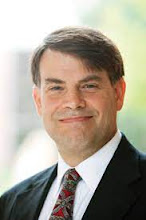
The Prophetic Voice of Keith Drury

Celebrating Keith Drury (1)
Keith Drury the Churchman (2)
Keith Drury and the Department of Religion (3)
Keith Drury and Wesley Seminary (4)
To the Present (5)

As far as I know, Keith didn't leave a prophetic letter for us who remain. "To the seven churches of America." But somehow I felt like a tribute to Keith's life wouldn't be complete if it only looked back. Keith had a prophetic voice. What would he say to the church as it looks forward? 

Obviously, it is me making an educated guess at what he would say. I could get it wrong.

To the Boomer Generation
Keith was born in July of 1945. The war in Europe was over. The war in the Pacific soon would be. Perhaps then he was just shy of being a Boomer. 

But I remember hearing some of his thoughts on this generation of the church. One critique was of large church pastors who spent their whole career snubbing the church, on the periphery of the church, almost leaving the church, practically mocking the church. But then, in the twilight of their ministries, suddenly wanting to reshape the church to be what they want it to be, to force it into their likeness.

That leads to a second critique I remember hearing. This is the difficulty of stepping aside and letting the next generation lead. Keith modeled this. There was a clear point in the later days of his teaching when he stopped posting for his Tuesday Column and very rapidly started yielding to those who would come after. It seemed a high value to him for a person to pass the torch at their peak rather than to hang on to their position until all the good they did was almost undone by overstaying.

In a sense, this is not your church to unravel. It would be deeply unfair for you to deconstruct the church as your final act. You may have run your own show in your church, but the rest of us need each other. Not only that, we want each other. We want to stay together as more than a loose connection of associated and semi-independent churches. Retire and let the Xers and millennials lead -- and leave them something to lead.

To the Millennials
You know what Keith would say to you because you've been emailing him and private messaging him for a couple decades now. He trained many of you for ministry. In fact, I'm guessing most of those who are likely to lead in the future studied under Keith at some point.

My guess is, many of you have been disappointed by the church somewhat in this last decade. Perhaps you've even been smacked around a little by the church. You used to be idealists. You used to have a dreamy idea of what ministry would be like. The reality has perhaps driven some of you away.

But don't lose heart, those of you who have stayed the course, some of you barely holding on. Your moment is at hand. Consider returning, those of you doing something else, unsure of what your prior calling meant. Soon it will be your job to bring healing to the church. Bind the church back together. Love the church out of its fractionalism. Find a path between the extremes. Call the church back to its core values and mission.

The church goes in cycles, and it has seen this cycle before. The 60s made the church feel guilty for its lack of substantive engagement with the world. It lashed out with culture wars in the 70s and 80s to make itself feel better about itself. But then in the 90s and 00s, the core message of Jesus emerged again. Robert Webber wrote about these "younger evangelicals" in 2002. The smoke of this moment will clear again.

To Gen Z and Beyond
While many in your generation might mark "none" for their religion, those of you who remain have a fervor that the church sorely needs. You are on fire to worship the Lord. You're not distracted by politics or ancient battles you can't even understand. All you know is that you love and believe in Jesus, and you want as many other people as possible to know Jesus too.

Let me introduce you to a man who was named Keith Drury. He was one who brought large groups of young people together to worship Jesus and then get some Holy Spirit to go change the world for Christ. He had this sense of getting a calling from God at these gatherings, a call to go share the good news with people and minister to them. Did you go to Follow? Did you go to Fusion or Never Too Young or Never the Same? Then you were experiencing something that this man really started.

He started this thing called Ezekiel's Wheels, where young people would bike around the country sharing the good news with people. You all have boundless creativity to go and invent all sorts of creative ways to spread the word that the real Christ is good news. You can renew the name of Christ as something pure and good and real. Ignore the voices that don't make sense. Listen to the Holy Spirit and let him show you want he wants to do through you in the church in this next generation.

To the Wesleyan Church
Don't give up on each other. Jesus gave authority to the church to bind and loose (Matt. 16:19). This was a key insight of Keith. God has given the church the authority to apply the principles of the Bible to this time in a Spirit-led way that is specific to this moment. Sometimes that means we go stricter on an issue than they did in Bible times. Sometimes it means that we go looser. 

Whether or not we drink isn't as simple as whether they drank in Bible times. We are not in Bible times. Whether or not we have a trust clause or call something a "local board of administration" isn't as simple as whether they had one or called something one in New Testament times. We are not in Bible times. The Bible was written for the people of God at particular times and places. 

Today is also a particular time and place. The church today requires the Spirit of God applying the spirit of Scripture to our times. We are forced to work out our salvation with fear and trembling and to do it today because the Bible doesn't say, "Now to those of you living 2000 years from now in America."

So grow up. Stop bickering over alcohol and find a way through it. If you don't drink, do it for the Lord. If you drink, do it for the Lord. Let each be fully convinced in his or her own mind (Rom. 14:5). 

Grow up in your understanding of Scripture. Stop borrowing all your thoughts from what you're reading on the internet or what some other cool megachurch is doing. God has called us as Wesleyans to contribute to the broader church. We don't have to be driven and tossed by all the winds outside us. Surely there are enough Wesleyans who are wise enough among us to have an insight of our own. Keith surely wasn't the last prophet among us.

The World
Whenever there were elections, Keith's father would say, "I wonder who they'll elect as their president this year." It instilled in him a core understanding that our kingdom is not of this world. If you identify your faith too exclusively with one or the other political party, you probably have infected your faith with elements foreign to the gospel. 

We are in the world, but we are not of the world. Turn off the media and spend more time reading Scripture. Spend some more time praying. Spend more time meeting together, worshiping and fellowshiping with other believers. Spend more time serving those outside the church. 

There can be some "world" in what the church thinks is its distinctiveness. And there can be some "church" in what the world thinks is its own virtue. Pray that the Spirit lead us into all truth, so that we can recognize God's moving in the world and recognize the Devil's moving in the church.

None of this is an individual or a private task. In the end, There Is No 'I' in Church. We have to work it out together (Phil. 2:12).

Saturday, April 13, 2024

My Dear Friend Keith Drury (5)

Celebrating Keith Drury (1)
Keith Drury the Churchman (2)
Keith Drury and the Department of Religion (3)
Keith Drury and Wesley Seminary (4)

I may do one more post tomorrow, but I want to finish the chronology.

Keith retired in 2012 while I was Dean of the seminary. Steve Lennox and I edited a Festschrift for him with a familiar title, Call Me Coach. It had entries by a number of us -- Sharon Drury, Amanda Drury, Chris Bounds, Bud Bence, Bob Black, Wayne Schmidt, Wallace Thornton, Burt Webb. I don't think many people ever read it, but that's usually true of Festschrifts. We thought it was fitting to independently publish it.

2. Keith downsized. For a time, Keith owned several properties around IWU. That was a thing for a while. The person who owned the most was Wilbur Williams. Terry Munday had several. Russ Gunsalus had a few. I had one. I think Keith came in second or third. In the words of Lex Luther, "You can print money, manufacture diamonds and people are a dime a dozen, but people will always need land."

Tangent: As I dread doing my taxes this weekend, I'm remembering how Keith loved to do his taxes. There was something wrong with that man.

By the way, he was the one who recommended that I divide my taxes into two buckets -- my personal bucket and my minister/writer bucket. Because ministerial taxes are a little more complicated -- and because I have book royalties and preaching/writing income -- he recommended I have a sole proprietor bucket. That way, I could also take my expenses with websites. research, etc and balance them against writer/ministry income. He was just way ahead of the game on those sorts of things.

I had coffee from time to time while Keith was still in town. Over time, most of our contact was through email. I tried to visit him in Brooksville in February, but our schedules just didn't align. I'm annoyed that Russ did manage to visit with him for a couple hours that same week.

3. Many will remember that Keith's live commentary on General Conference was better than the conference itself. During the 2016 election, we had a little Facebook group going as the results from each state came in. Prognostication was a hobby I had taken from him. Of course, his predictions were always better than mine. He could just see more of the variables than I could.

I think Nassim Taleb is spot on about people like me who like to make predictions (The Black Swan). There are just too many variables for any of us to do it well. Yet we don't stop. Our failed predictions don't stop us. We seem to forget how bad we all are at it. The book Freakonomics talks about how someone throwing darts at a board did better than a group of experts on the stock market. It's why we need to be constantly adjusting our goals and targets.

A couple years ago, I made a prediction to Keith that something would happen in three years. Keith said he'd write it down (with a tone of skepticism). New variables already have me doubting my prediction.

4. Most know that Keith was a contrarian. If a person took one side a little too strongly, he would take the other. In politics, it was much the same. If everyone around him assumed that Republicans were right on everything, he might take the opposite side to keep them honest. If everyone around him assumed that Democrats were right on everything, he might take the opposite side to keep them honest.

Jim Garlow told a story this week on Facebook about how they both took the opposite side on some issue. Then a few months later Jim said he had changed his mind. Keith said he had too, and they argued the same issue again on the opposite sides. That's a pretty good window into his personality.

Keith occasionally would make it clear to me that he was on the evangelical side of several key issues. But you couldn't stereotype his politics because his position on any one issue was determined by what he thought God and the Bible taught, not some human political party or some other group. He didn't align exactly with either party, and that probably is what a kingdom-minded person looks like.

5. As somewhat of a tangent, I remembered yesterday that Keith had a bit of a bias against the South. Of course, he never let these biases interfere with his decisions. He made light of them. For example, he always made fun of Nazarenes for their bathroom fixtures. How do you tell you're at Nazarene headquarters? By how expensive the furnishings are in their bathrooms. 

His bias against the South came from the fact that his great-grandfather (I think) rotted in a Confederate prison during the Civil War.

6. I wish I could say that my emails to him these last few years were joyous. Some of them asked for advice. Some of them were me griping. Sometimes I gave him gossip. I wish more of them had been like the near daily email exchanges he had with a group of other Wesleyan retirees (Bud Bence, Bob Black, Dennis Brinkman). Russ Gunsalus told me this week that he hoped Sharon, Dave, or John knew the password to his email because it was most certainly full of gold (and probably some contraband).

Tangent: Bud Bence and I have been working on a Wesleyan Church History course for my organization (Campus Edu) and Kingswood. I was glad that Keith got to see those videos. In one of them, Bud and I sit on a bench in Anderson where the Wesleyan Church was formed. Bud talks about his father and the Wesleyan Methodists. I talk about my father and the Pilgrims. Keith loved it.

Some of my emails were griping. He often had a way of pushing back on my gripes. If I told him that the seminary faculty were getting on my nerves he would remind me that I hired them. If I told him I thought some leader was making the wrong decision he would show me how their decisions might make sense.

I will say that he seemed to have a bias toward strong leaders. I think he thought it takes strong leadership to get through all the junk that people and organizations throw at someone. But of course the problem with strong leaders is that they sometimes blur into being bullies or trigger happy. We didn't agree on everything, but he was surely right far more often than me.

7. Some of my emails sought advice. When I told him I was going to Houghton, he told me he thought it might be a good move. Life was a game of chess to him. You make a move. Life makes a move. You don't always know where the moves will lead, but you keep playing the game until you find out.

(To be honest, several of us had always kind of mocked Houghton for being arrogant. We felt like IWU had snuck right past them in the 2000s without them even hardly realizing it.)

Keith had actually been on the Houghton board for a while when Dan Chamberlain was president. Once he wondered if Dan was trying to keep the board members from eating with the students so that they wouldn't hear anything negative from the students. But when he finally got a chance to eat with them, they were pretty positive about the school. By the way, I suspect Chamberlain had some savvy, but I'll leave those thoughts for some other day.

I told Keith that I always thought of Houghton as the Wheaton of the Wesleyan Church, the school that the smart kids went to. I thought his response had a profundity and nuance that I had come to experience regularly around him. He said, "I don't know if Houghton attracts smart kids or if it makes them smart."

I applied for some leadership positions these last few years. He wrote a reference for at least one of them. I always sent him my cover letters as I applied, and he responded with his impressions. The last one he said was bold. I didn't have much of a chance, but it was bold enough that I might get someone's attention. (I didn't :-)

For years I have been notoriously too quick to email things. When we were founding the seminary, he strongly urged me to put a 5-minute (or even a 1-minute) delay on the emails I was sending. And if I asked him what he thought, he seemed to think I should at least give him an hour or two to respond before going ahead and sending. He could be really unreasonable sometimes. :-)

In these last couple years, I think I sometimes gave him information he didn't have. That was a big switch. I used to be amazed at how Keith knew everything that was going on in the church. (JoAnne Lyon is still like this, by the way.) But it was because he was someone who was on everyone's shortlist to tell about stuff. I got some information like that this week, and it was a little sad to think that I couldn't email him with it.  

8. I met Keith when I was barely in my 30s, and he leaves us with me in my late 50s. When I was 52, it was shocking to realize that I had turned the age he was when I first met him. He used to say that his 40s were much worse than his 50s. In his experience, in your 40s you look back and see all the capacity you are losing. In your 50s, he said, you look at those in their 60s and see all the capacity you still have.

I haven't found it that way myself. I suspect his 40s are my 50s, and his 50s will be my 60s, assuming I tarry. It has been in my 50s that I've experienced my first real sense of diminishment.

A few years ago, Keith felt a great deal of diminished energy. He assumed it was age. But he actually narrowly missed a heart attack. As I recall, he used a map of the Appalachian Trail as a symbolic way to track his recovery. And recover he did. I haven't mentioned how he hiked so many trails around the country in the summers. Countless IWU students have pictures of him on hikes like these. Jeremy Summers and I actually hiked up Ben Nevis in Scotland with him in 1998 just before I got married. 

In the 2000s, Keith, Jim Lo, Burt Webb, and I did the Indy marathon. Jim -- being the beast that he is -- ran the whole thing, ran back to us, and then walked the rest of the way with us. I ran half, jogged back and walked the rest of the way. A great experience and Jim Lo has shared the picture more than once. 

He also canoed one summer. One book he self-published was Walking the Trail of Death, a journal of his reflections in 2006 as he followed the 660-mile path of native American relocation in 1838. It is just hard to imagine Keith having any physical problems. He was always the one to leave other hikers in the dust. 

9. So much of history is lost with the passing of each soul, and Keith's soul was about three or four times as big as the rest of ours. 

And, of course, it still is. I'd like to think that he's having regular coffee now with his parents and brother Elmer. Perhaps he occasionally visits Wilbur Williams, the old David Smith (1998) or Duane Thompson, former DoR professors. Perhaps he and Earle Wilson have a chance to arm wrestle from time to time.

Most of all, he can eat at the table with Jesus. We'll eat with him again too, soon enough. 

Friday, April 12, 2024

Keith Drury and Wesley Seminary (4)

Celebrating Keith Drury (1)
Keith Drury the Churchman (2)
Keith Drury and the Department of Religion (3)

Wesley Seminary would never have existed without Keith Drury. 

On the one hand, the conditions were right.  The relationship between Asbury and the Wesleyan Church was pretty low at the time. And more significantly, Wesley Biblical Seminary (WBS) was in conversation with IWU to perhaps form a branch campus at IWU.

The president of WBS at that time actually came up to Marion with his Dean. The meeting didn't go very well. An unnamed head of the Department of Religion (DoR) unintentionally insulted the president with his Jersey ways. Keith tried to soothe the WBS president's blood pressure on a walk.

As always, Keith brought the focal question. "The Wesleyan Church has one seminary card to play in the next 10 years. Is Wesley Biblical the card we want to play?"  

So we began a campaign to start a seminary. Henry Smith had recently become president of IWU, so that was a kairos moment too. He wasn't in the thick of it yet. There was the energy of the honeymoon stage, and he was wondering what his key contribution to IWU might be. 

Keith was part of all those conversations. He was the type of person that didn't need any credit, but his influence was all over everything. What mattered to him was the result, and he didn't care if anyone knew he had played a part. There were two task forces. First there was the one that proposed an MDIV degree. Then there was the one that proposed the formation of a seminary. Keith was a major voice on both task forces.

I believe Keith was also a whisper in Dr. Smith's ears from time to time. I'm pretty sure that it was his idea to devote the 1.1 million dollars given to IWU from the denomination toward scholarships for Wesleyan students in the first few years of the seminary.

2. We designed the MDIV degree over the summer. Because it was summer, it was often Keith, Russ Gunsalus, and I in the room, with David Smith and Norm Wilson joining as they could. Russ had some recent survey results from ministers about what they had found useful in their ministerial education. We also had that in hand. 

Keith and Russ were sure to point out to me that, in the survey, Greek came in as one of the least useful things ministers had been required to study in seminary and college. They had no fight from me. I had taught Greek for 20 years. I knew that -- especially given the way biblical languages had been taught -- it was one of the most wasteful requirements in the old ministerial curriculum. 95% of ministers never even mastered it, let alone used it.

So we come again to the practical and pragmatist nature of Keith. The DoR at IWU was known for being practical. It's not that we were against theology or biblical studies or the minute studies of scholarship. As I would later say to the seminary board tongue in cheek, "no one loves the irrelevant more than I do." But it was a foregone conclusion before we ever started that we would found a seminary that actually helped you do the work of the ministry. "May it never be said of Wesley that I never learned what I actually needed to know to do ministry."

I had one of my brother-in-law's voices in my ear. He didn't feel like seminary had taught him the practical things that he actually needed to know as a pastor from day to day -- how do you make a budget? How do you to run a board meeting? How do you run a capital campaign for a building extension? The quote in my head was my brother-in-law: "I never learned anything in seminary that I actually needed to know to do ministry."

Henry Smith would say, "This is not your father's seminary." And Russ would say, "Take your church to seminary." Students were going to have to be involved in ministry to be in the seminary. They were going to have on the job training. I likened it to an Indy car coming into the pit to get new tires before racing out into ministry. This was all the spirit and influence of Keith.

Seminaries were dying all over the place. In large part, it was because there was an onsite requirement that the Association of Theological Schools still required at that time. It was without question that we would provide an online option. This seminary would be accessible, affordable, and practical, as Henry Smith used to say. But this had everything to do with the culture that Keith had fostered in the DoR.

3. We designed a Keith Drury seminary. That was IWU then. And that would be the seminary then. And it had over 500 students in five years. And that's real students -- full time equivalents, not just a head count of how many took a class at some point during the year. I'll just slip in here that the founding formula of the seminary worked really well. I hear the seminary may be leaving its building, which pains me greatly. Perhaps if it returned to the founding formula -- perhaps if it would regain some of that Keith Drury flavor -- it would regain some of its vigor. 

Asbury has been able to buck the trends, and good for it. We saw no reason to found a seminary that was like the existing options. And since most seminaries were dying, why found a seminary like every other dying seminary? So while the traditional seminary had a 90 hour curriculum, we would give a practical curriculum that was 75 hours. 

In good Keith Drury fashion, we would focus on application. We would integrate Bible, theology, and church history into its practical courses. You would learn lots of Bible, but you would do it in connection with leadership, mission, worship, preaching, congregational formation, and congregational relationships. You would learn lots of theology, but you would learn it in relationship to these core practical areas. The same with church history. 

And in each course you would do a study that required you to bring Bible, theology, and church history to bear on a practical issue in ministry. You would learn how to draw on these disciplines for ministry rather than simply learning the Bible or theology in isolation.

So it would have a practical focus, and it would connect the foundations with application. Traditional seminaries in effect said. "We're going to teach you all this theory and then you can apply it yourself when you get to ministry." Our approach was to teach you how to apply it as the focus. And this had Keith Drury written all over it. 

The president of Asbury held up our curriculum in a faculty meeting with a condescending scorn and mockingly said, "We will not be doing this here." One of the faculty there blogged, "MDIV Lite: Tastes great, less filling." And I just laughed. You do you. And we'll give ministers what they most need to do ministry.

4. Spiritual formation was another missing piece in the seminary landscape at that time. Under Keith's influence, students were going to take a one hour spiritual formation class every semester. I remember sitting in a classroom in Noggle with four desks circled together as Keith whipped out a spiritual formation curriculum in a minute flat.

A lot of spiritual formation seemed like, "Go read the Bible. Be changed." Keith recognized that there is a human process of change that can be intentional. Once again, his practical wisdom made the seminary curriculum more profound than most people realized. First we would talk about change in general, and they would read Bobby Clinton's The Making of a Leader. Then they would figure out where they were now. Then they would set goals. Then we would talk about the importance of having a mentor or spiritual director. Only in class 5 would they get to the classical spiritual disciplines. A final course would talk about deliverance, crossing the finish line, so to speak.

This was all Keith Drury's doing. There was a profundity to the seminary's curriculum, a deeply profound underlying philosophy embedded. Like Wesley himself, you might miss it if you just focused on its practical appearance. Underneath, it reflected a deep hermeneutic and understanding of people and the world.

5. The actual process of designing the courses came from Keith too. We would get 5 or 6 people in a room -- a practitioner, a Bible person, a theology person, a church history person, and other key minds. We would start with 3 x 5 cards and brainstorm. What's every topic you can think of that might be in a course on Proclamation? Write, write, write. Everyone write. A bunch of cards on the table with lots of topics from the innovative minds in the room.

Then we would begin to congeal the cards into topics. What subject headings emerged? Eventually, we would have 16 sheets of paper on the wall, each representing a week of the course, each with a collection of 3 x 5 cards stuck to them. 

A regular flow to each course evolved. Subject matter experts were commissioned to write assignments. The rest is history.

6. Keith urged me to become the first academic Dean of the seminary. "Who else?" he asked. "Give five years of your life to founding a seminary," he said. I gave six. And when I stepped down, in his typical bluntness he said, "Helping to found a seminary may turn out to be the most important contribution you make in your life." :-)

Keith and Russ were instrumental in recruiting Wayne Schmidt to be the first permanent leader of the seminary (Russ was the first leader technically). They drove to Grand Rapids to see if he would be interested in teaching or, just maybe, in leading the seminary. Before Henry Smith talked to Wayne, they had prepared the soil.

Wayne very much was cut from that same practical cloth as Keith. Wayne would be almost religious in keeping the seminary focused on practical ministry. There was a sense that the gravitational pull of the academy was away from the practical. So Wayne focused on things like church planting. When the KERN option arose, Wayne was fine for it to be on the other side of campus so the seminary could stay focused. In that phase, it was no problem for the other side of the campus to do the more advanced study of subjects like Bible and theology. The seminary was focused on practice and application.

All this flavor of the seminary was Keith. It was the flavor of Keith. It was the flavor of the DoR. It was the flavor of IWU. And it was the starting flavor of Wesley Seminary. 

Keith's devotion to the seminary has never wavered. In fact, instead of flowers, donations to a "Keith Drury Memorial" scholarship at the seminary are encouraged.

I might do one more post as a wrap up.

Thursday, April 11, 2024

Keith Drury and IWU's Department of Religion (3)

Celebrating Keith Drury (1)
Keith Drury the Churchman (2)

In 1997 I interviewed for a teaching job at Indiana Wesleyan. I think Keith had only been in the Department of Religion for a year when I interviewed. 

He always warned new faculty coming from the church how much more material is involved in teaching a college class than in giving seminars in the church. I seem to remember him warning Charlie Alcock when he came on how much more material it took to fill out a three-hour class than the kind of stuff he had presented going around to churches. I forget the exact amount, but it was something like he had used up all his existing material for a class in the first month.

2. I interviewed for a New Testament teaching position. Bud Bence (then chair) expressed well the philosophy of the Department of Religion (DoR) at that time. They aimed to hire "thoroughbreds" who could teach more than one subject. Also, there was a clear emphasis on the church -- experience pastoring was considered a premium to teach in a department whose main purpose was to train ministers for the Wesleyan Church.

I don't remember many of the questions there at the Hostess House. There was concern I would be too academically oriented rather than church oriented. There was concern I would cause some blow-up by being too liberal (Bud had been burned as VPAA at Houghton over a professor -- a tussle that involved general officials, the general board, and believe it or not Harold Lindsell). 

I was single at the time, and Keith delicately asked (in so many words) whether I was gay. I don't think I found any of these questions too surprising. I think I even chuckled at that last question.

One of Keith's last questions had to do with the fact that the DoR was a bunch of white guys. He asked that, given the current makeup of the department, if there were an equally qualified female professor being interviewed alongside me, who would I hire. And there was! They did hire her, but I was delighted to be hired anyway to teach philosophy for a year. That way, Bud could find out whether I was going to blow up the place or not. :-)

3. I think a lot of people would consider the next decade or so to be the golden age of the DoR at IWU. I think that had everything to do with Keith Drury. He set the tone. Yes, there were some very dynamic professors involved. In those days, I compared a good professor lineup to a zoo with lots of fascinating animals for the students to see. Keith shaped the direction, and he helped establish the boundaries.

I've often reflected on why those were such incredible years. I wish Keith had written a Tuesday Column on the recipe (maybe he has somewhere). IWU was at its peak under Barnes, so there was that. It was growing like crazy. It had money like crazy. It was building like crazy. There was something palpable when you stepped on campus. It was a taste of excitement. There was an energy. Many experienced it as a sense of God's presence on the campus.

Here's an attempt to express some of the values the DoR had in those days. We tacitly agreed on them, but Keith stood at the heart of them, I would say. And, to some extent, he policed them. He could whack someone verbally if they began to step in the wrong direction, so to speak. He had a way of establishing one of those invisible fences that gives the dog a little zap if it tries to cross the boundary.

  • It's all about the students. Your job as a professor is not about you. The university does not exist for you. It is not here to facilitate your career as an academic or to help you get to your next job or to help you publish your research. IWU is a teaching institution, not a research institution. Research is nice. Some do it in the summer. But you had better work to be a good teacher for the students during the year.
  • IWU belongs to the Wesleyan Church. Neither the faculty nor the Board of Trustees nor the administration decide what IWU believes. The Wesleyan Church does. Want to debate women in ministry? Go somewhere else. Want to debate issues of sexuality? Go somewhere else. The Discipline and the general conference of the Wesleyan Church holds the title deed to your property, and that's that. The General Board of TWC could fire the entire Board of Trustees of IWU if it saw fit.
  • You're training them for ministry. Prioritize your teaching based on what will be most useful for a pastor. Keith always said that a New Testament Survey class should aim to equip a nursing major to lead a Bible study. That was the persona he gave me. Do you need to teach them about Q? No. Do they need to know the life and teachings of Jesus? Yes.
  • You're here to serve the church. Every once in a while, an issue would rise in the church over something. Maybe someone claimed to find the bones of Jesus. Keith might give a nudge. "You're up, Ken. This is what we keep you around for."
  • The church gets to decide what's good for the church. No doubt the church can be wrong, but it doesn't matter. They'll only listen to you if you're on their frequency. Otherwise, you're just some lunatic talking to yourself at an institution bleeding students. We always shook our heads at the fools who thought they could logically convince the church (or the board) that it was wrong with a very nicely written position paper.
  • It isn't just about truth. Truth isn't what wins all the time. In fact, it loses regularly. Power is what wins, and the power often comes from constituencies and from boards of trustees. Respect the snake or it just might bite you.
  • Get out there. Don't stay in your cave talking to yourselves. Be out there preaching and teaching on weekends in churches. If they don't want you, that's a warning sign for you.
  • We enjoy having lunch with each other. I realize there can be legitimate pushback on this point, but I think it is still more correct than not. The department should enjoy hanging out together. The synergy of good relationships in the department is contagious for the students. We had Friday lunches together. One of the unspoken hiring questions was whether we would enjoy going to lunch with this person, the "lunch" test.
  • The cocurricular is important too. To be honest, in the 2000s, Keith probably was more interested in getting the students to study rather than do youth camp on campus. He famously thought that the number one problem with students was a lack of sleep. Todd Voss was part of IWU's success at that time by running a super co-curricular program. But I think Keith would agree with me that the co-curricular is an essential component to a thriving college.

Those are just a few of the values that I think made the DoR such a great success in the 2000s, and Keith was the primary force steering them, in my opinion.

4. I think Keith regularly gave President Barnes advice as well. Keith once told me that he didn't think he would be up to the challenge of being a college president. Of course, that was hogwash. He would have made a spectacular college president. But he took his hat off to Barnes' abilities at the job.

One of the reasons I gelled so well with Keith was his sense that form should follow function. Form for its own sake is great in art. But in ministry and business it's self-defeating.

Apparently, President Barnes had this committee known as the PACE committee. On it were all the innovators in the university. It completely ignored the official structure of jobs at the university. You might have a subordinate on the committee and their boss not there. You might have an insightful faculty member but not their department head or dean. 

But it consisted of the most entrepreneurial elements of the university, a kind of steering committee. And Keith was probably the most insightful voice there.

The Higher Learning Commission and countless others always mocked IWU's structure, which had the online and adult people doing one thing and the residential campus doing another. But this was growing things where they would grow. I have long said that if Barnes had put the online and adult programs under the control of the residential faculty, they would have killed them within a couple years.

This was also the genius and spirit of Keith. And frankly, this is the way God designed the universe. Things grow where they grow, and they don't grow where they don't grow. Many humans say, "No, no, no, you have to grow here." But the plant doesn't care. The plant says, "I think I'll die if you plant me where you want to." People who design structures so that the org chart looks pretty and symmetrical -- rather than it being functional given the people you have -- these are not Keith-level thinkers.

5. Keith had retired by the time the most recent talk about tenure at IWU took place in the late 2010s. Barnes had done away with it before I arrived on the scene. I'm pretty sure my thoughts were the same thoughts Keith would have had (I probably emailed him about it). "This is a non-starter. All this fuss is a waste of time. The board will never approve it." My next Keith thought was, "David Wright has to know this. I wonder if he's letting them have this conversation to feel good about themselves and, after all, it keeps them out of trouble." But, perhaps with a wry grin, "It's never going to happen." :-)

6. One danger of such organizational and human savviness is the development of a kind of culture of cleverness. I don't think Keith had this. But perhaps I and one or two others got a little too cocky on the street smarts we absorbed from Keith. It's not the right attitude, but I'll confess I did develop some of this.

Steve Horst, Russ Gunsalus, and I used to have our philosophy classes watch a clip on Socrates from an old movie called Barefoot in Athens. There's a line about Socrates in the movie from one of his accusers that always makes me laugh. "Socrates taught a devilish ingenuity in logic which worked on men like a magic... the worst men of three generations." I always laugh when I think of that line and think of Keith. Of course not that he trained the worst of us or taught leaders to be manipulative. No, but he did teach leaders how to strategize, a power that can be used for good or ill. He understood how people and the world actually works, regardless of what we might say or think about ourselves... regardless of how we think it should work or want it to work.

I'm sure he wasn't always right, but he was always strategic. You get the best you can get with the choices you have with a view to the long-term plan. Plan for sure, but your plans will inevitably have to be changed along the way. Don't plan too long, or you'll miss your window. He used to say that most mission statements were outdated by the time they were finished. They tended more to be a reflection of where you'd been than where you would go, which God and circumstances would ultimately decide.

Keith's genius with people sometimes reminded me of the scene in The Matrix when the prophet tells Neo not to worry about the vase. He turns around and knocks the vase over, breaking it. But he wouldn't have broken it if she hadn't have said anything. Sometimes Keith said or did what he felt like needed to be said or done to get you where you needed to be or to go. Some might call this dishonest, but I bet God does this. God knows what we need to hear to get us where we need to go.

Tim Kirkpatrick was telling about how Keith told him he wasn't an A student and so he should just try to be better than a C student. In retrospect, Tim thinks Keith was just saying what he needed to hear to inspire him to become an A student. Some might call it dishonest. I think God probably does this with us because it is the direction we are moving in that is important.  

Words are "vectors." They have a direction. Two people can say the same thing and one be loving and the other be hateful. Most of us point our words in certain directions without thinking about it. We sting or we build up instinctively. 

People like Keith are on a whole different level. They are aware and usually intentional about trying to move you with their words. For Keith, his words were always trying to move you towards God and virtue. For others, such pointing can be very selfish and dangerous. Some of the scariest people are those who wield the weapon of rhetoric with great prowess and are thinking three chess moves ahead of you. 

7. I would say I paid little attention to a lot of these things in my first years at IWU. I had fun and, in a happy go lucky way, didn't take things as seriously as I should. When I went for full professor, I turned in a plain manila folder with a rubber band around it. 

For some context, it's hard for professors these days to realize how little assessment, how little paperwork, how little structure there was to things 20 years ago that today are amazingly specified. When others took over for me at the seminary, they wondered where all the additional paperwork was. It just hadn't been required even as recently as 2008.

I probably published more at IWU in those days than anyone else on campus, and I did it with publishers like Cambridge and in the flagship journals of my discipline. Only Michael Boivin and I were doing things like Fulbrights in other countries. I knew I easily met the criteria for rank promotion.

Keith very patiently came to me from the committee. "Ken, we know you've published a lot. But being a full professor is a big deal. You could at least present your materials in a more professional way." So I bought some more folders and some tabs and prettied it up. Even five years later they would have made me wait a year. I know he was being incredibly kind to me.

I'm sure I frustrated him on occasion. There were days I felt like he may actually have kept his door closed so he wouldn't chew me out on some stupid thing I had done. I often appeared in his doorway as did countless students. He was very, very patient with me.

8. I saw an opportunity to write a New Testament Survey for the adult and online program, and I seized it. I wrote it, like Keith, for ordinary people. From what I heard, the students loved it. Eventually, there would be those who thought it wasn't academic enough. This is the disconnect I write often about.

Keith generously read every word of the manuscript. I didn't deserve that. My wife Angie doesn't even do that. He was forthright and helpful. "Drip, drip, drip" -- you've said this ten times Ken. Is it really that important? He steered me away from the kinds of things that could cause me problems, although I was already sensitive about those things.  

8. Everyone in the DoR no doubt has their own stories of Keith. I remember a story about him and Steve Lennox traveling together and Lennox being very frugal in his approach to things. Apparently, Keith might intentionally drop some of his change at a gas station knowing that Steve would pick it up.

Keith led students to Turkey a couple of times, as I recall. He let the students plan it all. He wouldn't help them. They had to figure things out. I think they even left one person behind at Istanbul because he didn't get to the meeting point when he was supposed to. I would go to Turkey with Keith in 2013 with Ross Hoffman and David Ward. Those were great memories too.

We had a general plan, but Keith didn't like to plan out those sorts of trips, much to Ross Hoffman's discomfort. It was his style not to have reservations at a hotel. You just found one when it was time to find one. 

The thing is, Keith was smart enough to do that. He knew he could figure it out on the spot. I remember in the middle of Turkey he just got in the car with someone who was going to show us a hotel to stay at. We followed them. I thought, what in the world is he doing, getting into a stranger's car in the middle of Turkey.

Enough for now. Maybe one more post on the founding of Wesley Seminary.

Wednesday, April 10, 2024

Celebrating Keith Drury 2

Reflections #1

I've read some of the memories of Keith by people like Dan LeRoy. I hope they'll continue to share. They knew Keith in phase 1 of his ministry, much of which was at Wesleyan HQ. He pastored and served in the general department of youth up until he was almost a general superintendent. More than anyone else, he created a youth program that would raise up a generation of ministers and leaders in the church. 

I only met Keith in 1997 when, in a sense, he was in his "retirement." He once said that he had his turn first with his career and then Sharon took her turn. He taught at IWU while she got her doctorate and had her own career as a leadership professor and administrative leader in IWU's College of Adult and Professional Studies.

1. Ironically, I shared a post on Facebook about him about a week ago without naming him. In college at Allentown (later United Wesleyan), he apparently did not always give his courses his all. My hunch is that he found many of the classes impractical and probably less than well-taught. I could be wrong.

Tangent: It was always funny that he and I both had Herbert Dongell as a teacher. I had Dongell for Greek at SWU. Dongell was an old-school teacher. There was lots of memorization, and falling asleep was not tolerated. I liked Dongell and learned Greek fine with his style, but he was definitely old school. (I think he overlooked my sleepiness a time or two.)

So when Keith applied for seminary, Asbury apparently didn't admit him because of his grades. His roommate got in. As the story goes, the next year, someone at Asbury asked whatever happened to him. His roommate indicated that he had gotten into Princeton, where he did well.

There's something important about this story to me. To me, it smacks of a certain arrogance that is often present in the academy at the same time that its own values can be misguided. Don't get me wrong. I am an academic at heart. But some get preoccupied with form when they are in fact blind to substance at the same time.  

I have a guess as to who it was at Asbury that snubbed Keith. I liked that prof too. But he made some snide remark about Keith to me once that suggested they had tussled with each other at some point. God can use us all. We are all made differently, and God can use us all.

I remember Keith saying (and remember that my memories are often a little off) that he was not told he was smart until he went to Princeton. I don't know what his IQ was -- it was certainly very high -- but he apparently wasn't informed of this until he was there. Eric Romer put a Strategetics audio clip of Keith on FB about the potential of an acorn. Keith was that acorn.

2. Keith to me is the embodiment of the best of the Pilgrim Holiness Church. Over the years, I've watched him joke with Bob Black or Bud Bence about whether the Pilgrims or the Wesleyan Methodists were better. (And he had his share of similar playful dialogs with Nazarenes like James Petticrew.)

My takeaway from those sparrings is that the Pilgrims were entrepreneurial. The Wesleyans were organized and a bit bureaucratic. In other words, the Wesleyan Methodists were Methodists, and the Pilgrims were revivalists. The Wesleyan Methodists were slow and steady; the Pilgrims were charismatic without the tongues.  

My sense is that David Keith was Keith's mentor at HQ. And I think David Keith gave Keith a lot of leeway to run with things. The PACE conventions, Ezekiel's Wheels, Isaiah 6, TAWG (Time Alone with God) -- Keith was the mastermind behind all of them. 

Many will remember Keith's Tuesday columns, which were one of the most effective discipleship tools when the internet first came out. When I first came to IWU, it was Keith that got me learning a little HTML and setting up my own (must less known) webpages. This very blog probably wouldn't have existed without Keith's influence. 

Just about a week ago I had a brief email conversation with Keith about Lulu.com, which is where he and I first self-published books. This was before CreateSpace or Amazon's Kindle Direct. Keith was always there first, and I just followed his innovation around.

By the way, I was always in awe of Keith's email correspondence. He must have spent hours every day just mentoring and giving advice to people via email. This didn't end when he retired.

Tangent: He was so creative as a teacher. I once told him he was the only Christian education teacher I had ever known who could actually teach. I mentioned in the last post about the allowance in his syllabi that you could get out of an absence by getting someone else to go in your place. He had students self-publishing their curricula as final projects when that option became available.

Tangent 2: He always published books that were useful. I remember that some "real" worship voices questioned using his Wonder of Worship book as a textbook. I mumbled to myself, "You idiot. This book is far more useful to pastors than whatever book you want to use."

Holiness for Ordinary People is simple and straightforward, yet it did more to keep the doctrine of holiness going than any other book I know in the last century. Scholars like me write for a particular audience -- and it isn't the majority audience. Our books usually have a negligible impact on anything.

His presentation, "The Holiness Movement is Dead" sent a shockwave through the holiness movement. It was a major wake-up call that got things stirring again at least for a little while.

The Call of a Lifetime tried to buck the trend of everyone saying that everyone's a minister. Even Keith couldn't win that battle, although he held the day at IWU for a while.

The Story of the Wesleyan Church. This book that Keith and Bob Black wrote is something people will actually read. The previous work was boring as heck, a kind of torture to have to read. Keith and Bob's book is interesting and so much more likely to give a sense of identity to a denomination.

His writing practice was so disciplined and methodical. He would crank a draft of a chapter out, misspellings galore (if you know his emails, he couldn't care less about spelling and such in such contexts -- he typed using the hunt-and-peck method). 

Then he had several edit phases. There was the "clean up" read through, for example. I don't remember all of them but one that stood out to me was the "quotable" read through. I think he wanted something like one quote on every page or so. You might call it the "tweetable" edit.

Five more stories and I'll start my day.

3. Keith was extremely well-organized. And for years he taught the part of leadership that was on parliamentary law. He emphasized that this seemingly boring part of leadership could be extremely important in key moments.

One example was the vote in 1976 in Wichita, Kansas (I didn't double check). My family wasn't sure whether it was a good idea to merge with the Free Methodists because we thought they were too liberal. But my dad was a delegate and it came to a vote... or so we thought.

O.D. Emory (who ordained me) used a parliamentary trick to prevent the merger. When the recommendation to merge was made from the task force, he made the motion that the body receive the recommendation. Keith told me he turned to the person next to him and said, "Did he say, 'receive.'" The appropriate word would have been to "adopt" the motion. Receiving a motion just means you are more or less thanking the committee for their work.

Emory said something like, "All in favor of receiving this recommendation stand and give a hearty applause for the hard work of this committee." Everyone stood and clapped. I thought we had merged.

But of course, nothing happened. Clever Pilgrim.

4. A second story I heard is one summer the generals sent Keith to be the HQ representative for District Conference in West Virginia. Apparently, he was the only general official at that time who had a wedding ring. I got a little sense that they wanted to nudge the conference a little.

Keith said that as he moved his hand preaching, it was like a group of people watching a tennis match. They weren't paying any attention to his sermon, just his ring. He said it was such an obvious distraction that he actually stopped and said, "Is this a problem?" and he took the ring off. He said there was an audible sigh of relief when he did so. And from that point on in the sermon, they were completely receptive to his message.

I think this is a very meaningful story. Some people rebelled against the conservatism of their youth. Perhaps even some of the generals at that time delighted in the thought of making that district squirm. God knows. But Keith was about the message, about the mission, and about the substance. "If eating meat or wearing a wedding ring causes an obstacle, then I will not eat meat or wear a wedding ring ever again."

5. I remember him being very disappointed with a general official who wouldn't even talk to the New York Pilgrims after they reached out to the Wesleyans to try to make peace. The New York Pilgrims didn't go with the merger but reached out to apologize several decades later. The general they reached out to refused to have anything to do with them.

I remember someone else of some importance who got ordained so that he could get a break on his taxes. It effectively ended their friendship. 

For all his pragmatism, Keith had strong moral principles that I believe reflected the core values of Jesus and Scripture. The church at large often can't tell the difference between biblical values and the Christian culture they're swimming in. We can see in hindsight, but it is very difficult at the time.

Keith could tell the difference. Yet he could play Nathan the prophet so well. He could present things in a way that got through David's self-defenses. 

6. Keith was a phenomenal speaker. When we had the inaugural consecration service for the seminary, he preached it. His title -- very typical -- was "From Great to Good," riffing off Jim Collins' book title.

A story was once told about two preachers at a camp meeting who preached the same day. One was a well-known large church pastor in North Carolina. The other was an extremely famous book writer and public figure. The second arrived just in time for the afternoon service and so didn't know what the first had preached in the morning service. 

And, as it turns out, he preached pretty much the same sermon.

A mischievous former IWU student went up to them both after the service and asked, "So, whose was it?" The first got red in the face. The second didn't know what he was talking about it. After a quick explanation to the second preacher, "So, whose was it?" 

Then they both sheepishly admitted: "Keith Drury's."

7. A final story for today. In the 90s, the internet came out. Keith Drury recommended that they take all their Sunday School curriculum and put it out for free on the web. Can you imagine the impact Wesleyan thinking would have had on the world, being some of the first of such material available for free out there?

"But then we won't make money on it." He lost. I used to say he had Cassandra syndrome. Because she would not return the love of the god Apollo, he cursed her to always prophesy correctly but for no one to ever believe her.

Tuesday, April 09, 2024

The Passing of Keith Drury

We received word yesterday that Keith Drury had passed on Sunday. Apparently, he began feeling and perhaps acting a little strangely at church Sunday morning. It appears he had a stroke that led to a brain bleed. 

It would be hard to quantify the impact of this man. In some ways, he was like a second father to me. But to say that is not to say anything different from what countless others might say of him. He invested in so many people over the years. The memories that are flooding on Facebook have a predictable cadence. There are countless pictures of him hiking with students and countless comments about how he said just the right thing at the right time for someone.  

He was eminently quotable. As I started to write this post, I thought, "There are people who can write faster than me, and there are people who can write better than me, but there aren't many who write as well as me and as fast as me." Or something like that. I often mess up the details.

One Facebook story yesterday that stood out to me was a pastor's kid who came to IWU as a psychology major. But he was wondering if God was calling him to ministry. One of Keith's syllabus antics was that you could have someone attend class for you. This PK subbed in for his roommate, I think. The class tugged him more in the ministry direction.

So Keith had a quote -- "Often a pastor's kid needs to take a vacation from ministry when they come to college, but eventually they find their way back." Or something like that.

2. If I were to sum up Keith in one word, it would be phronesis. This is the Greek word for practical wisdom. I have never known anyone who had more wisdom than Keith Drury. If he had lived in ancient Israel, God might have used him to write a book of Proverbs. 

I wasn't of the age to know his course in Strategetics, but I am so happy that he invested in Eric Romer to preserve it. I felt like he planted his legacy in countless people. I doubt that anything of his wisdom is lost. It's all out there somewhere. I wouldn't be surprised if in forty years the Wesleyan Archives release a time capsule of memoirs that he has planted there on a fifty-year release schedule.

I know that some people think I have some book smarts, but I think of how stupid I must have presented myself at anything practical over the years. As no doubt with all of us, he patiently listened (most of the time) and then Socratically led us to the right path. How many good decisions or ideas I had over the years actually came from his subtle redirection? I bet this is true of countless ones of us.

3. I am prone to share too much, so I ask forgiveness if I do. I like to preserve the memories I can, and I have a forum here to preserve them that others may not have. Others will be able to perfect and fill in details. Keith came from Pennsylvania, as I recall. The Pilgrim Church in Pennsylvania was very conservative. The Alleghany district, for example, didn't go with the merger of the Wesleyan Church because they thought it was a move toward liberalism (maybe even a one world religion -- some of the ideas back then were crazy, as are some of ours today... we just can't see it yet).

___________________________

Interlude

So let me give a Drury interruption again (there may be many). He used to talk about how worship comes in cycles. The children go back to choruses and think they're doing something new when their grandparents were singing choruses in the 40s. The parents thought their parents were unsophisticated and so sang hymns. Then their children think they know more and shift to choruses again. The children always think they know more and that they are coming up with something new, but often history is just bouncing back and forth. The children swing one way; their children swing back to what their parents did.

He didn't believe we were getting better and better. It was more like we were bouncing back and forth. The children make fun of their parents for being legalistic and narrow-minded on x. Then their children grow up and do the same thing on different issues. In this most recent flare-up over race, one of Keith Drury's students (Andy Merritt, as I recall) came up with a very Drurian quote: "If you want to know what you would have done during the Civil Rights movement, you're doing it now."

With regard to the holiness movement, he used to say that the impact of ultraconservatism of that sort usually left evidence on a person even after they have long abandoned its specifics. With Jim Barnes, he thought it was in a certain way of dressing and presenting himself. With Larry Mitchell, he thought it was a kind of "anti-rule" approach to life. He wasn't sure how it had impacted me but my parents weren't narrowminded in their approach to life even though they lived what to most would be a strict life. If anything its impact on me has been more a deep sense of perpetual failure, but perhaps that is my personality.

_____________________________

4. I think Keith didn't have as smooth a relationship with his mother, but as far as I remember he was a dutiful son. I knew his older brother Elmer briefly at SWU. He was the advancement officer (Elmer's son Scott would later become advancement officer for SWU too). In the late 80s, I was in a mixed quartet that traveled to Florida for the college, and Elmer took us there. But he died suddenly of a heart attack not long after, as I recall. Keith helped his family get their affairs in order. Again, forgive me if I am sharing too much.

The memory I remember hearing of Keith's dad was very interesting to me. He was district superintendent in Pennsylvania in the days when going to movies was an absolute no-no. His father knew it was an unnecessary rule and at least on one occasion drove some distance to take Keith to see a movie. In other words, his father may have followed strict rules most of the time, but he wasn't legalistic about them.

____________________________

Interlude

Keith used to say that if you put the unimportant rules in the same place in the Discipline as the important rules, then you undermine the importance of the truly important ones. So if you put "don't have sex outside of marriage" in the same place as "don't dance and don't go to movies," you trivialize the rules about sex by the rules about dancing.

It is truly dumbfounding how much rearrangement and strategizing in the Discipline has taken place in order to maneuver around rules like "don't dance." They actually created a special section of the Discipline called "Special Directions" to try to insulate the truly important from the culturally passing.

It is [insert stronger word than puzzling] to me that the Wesleyan Church might actually disintegrate over the issue of drinking. The Methodists devolved over homosexuality, but it would be perfectly Wesleyan for us to split because of drinking, something that is obviously not prohibited in Scripture. I don't drink. But really. As Drury said, we are just playing out the struggles of our parents and grandparents with a different issue. "In essentials unity, in non-essentials liberty, in all things charity."

___________________________

 5. You can see that Keith was a pragmatist. I would define Keith's kind of pragmatist (as mine) as someone who has a set of essentials but understands that a lot of the rules are more or less made up by our cultures and subcultures. Far more than the idealists think, the end often does justify the means, just not on the essentials. Keith understood people. And Keith understood what was important. Within those parameters, there was a lot of lee-way to get things where they need to go.

I would say that most leaders -- at least the successful ones -- fall into this philosophy. The church doesn't like it when they find out how much politics there often is on a general level, but this seems to be the way things are. The idealists (I don't want to say the godly) end up either breaking everything or failing miserably. Frankly, I'm not sure how well I am equipped to play these games, and that's probably why I'm not a leader.

Man, the memories are flooding in and my typing can't keep up. Keith used to say that he wasn't sure you could stay holy and become a senior leader even in the church. He mused once that the holiest people are probably the quiet people in the pew who don't do much. [By the way, his comments never had a permanent quality. They were always just musings he felt free to change his opinion on. In fact, he might change positions just to keep you on your toes.]

He famously turned down being general superintendent in 1988. The reason was to be a father to his sons, and I have no reason to doubt him. But he was also aware of the corrupting impact that being in senior leadership could have.

He used to say that he could rarely go up against someone like Earle Wilson and win. Earle was just too savvy at maneuvering. I'm not saying, by the way, that all general superintendents or college presidents have been warped. I'm just saying that the world of power, even in the church, has an impact on you that isn't always positive. It's because of fallen human nature and the difficulty of doing even good in the world without breaking some eggs.

When I became the Dean of the School of Ministry, David Drury made a positive comment to me about the possibility of getting good things done in organizations without political maneuvering and sneakiness. I felt like it was a comment on his father's generation. However, I view my efforts to get good things done during that time as a failure. Perhaps I wasn't sneaky enough. My initiatives were given to another... where they have died to a degree I could have never imagined.

I need to work now. To be continued...

Tuesday, December 31, 2013

Festschrift for Keith Drury

We are pleased to announce the publication of a Festschrift in honor of Keith Drury (the first is paperback, the second Kindle):


"Scholars have a long-standing tradition of honoring one of their own with a Festschrift, a collection of essays, to mark a significant moment life of the honoree. In this volume, Bud Bence, Bob Black, Chris Bounds, Amanda Drury, Sharon Drury, Stephen Lennox, Dan Reiland, Ken Schenck, Wayne Schmidt, Wallace Thornton Jr., and Burton Webb honor Keith Drury with scholarship related to his contributions to the church, in honor of his retirement from full-time ministry."

Steve Lennox did the lion's share of the editing, but in setting it up for print I was REALLY impressed with these essays. There is some really good stuff in here. All the proceeds will go, as I understand it, toward scholarships at IWU.  The Table of Contents is below.

I know some of you are wondering whether Wesleyans have a contribution to make to broader Christianity today. Keith Drury is the most innovative thinker, I suspect, in our entire church's history, and these essays represent scholarly engagement with his most distinctive thoughts. So if you are looking for how Wesleyans might play a role on a larger scale, there's probably something in here. See also Wayne Schmidt's essay, "The Making of a Movement," based on KD's article of the same name.

Introduction
Stephen J. Lennox

Chapter 1
Re-Viewing History: Keith Drury, Pilgrim Bible Colleges, and the Power of a Single Word
Bob Black

Chapter 2
Scripture as a Sacrament of Transformation
Ken Schenck

Chapter 3
Toward a “Neo-Holiness Theology” of Entire Sanctification
Chris Bounds

Chapter 4
It’s Not Just Wrapping—It’s Skin: A Reflection on the Work of Keith Drury and the Relevance of Faith to Lifestyle
Wallace Thornton, Jr.

Chapter 5
Habituated Spontaneous Judgment: A Conversation with John Dewey’s How We Think
Amanda Drury

Chapter 6
Keith Drury’s Leader Development Legacy
Sharon Drury

Chapter 7
Mentoring Moments
Dan Reiland

Chapter 8
The Making of a Movement
Wayne Schmidt

Chapter 9
God’s Call and Divine Guidance: Revisiting the Concept of Life Calling
Clarence (Bud) Bence

Chapter 10
The Providence of God
Burton Webb

The Works of Keith W. Drury

Tuesday, June 04, 2013

Drury Prognosticates on the Future of Ministerial Education

I hope that the presentation of Keith Drury on the future of ministerial education will be made available somewhere online (I'll post the link here when I find it). As usual, he not only is a step ahead of most of us in seeing the trajectory of education but he has bottom line insights we all ignore at our own peril.

Here are first two "Get ready; it's coming" moments:

1. Students will increasingly shop around for their gen. eds online and nearby.  Like "Hotwire" or "Travelocity," they'll shop for the cheapest, most convenient Western Civ. course on some pooled list on a website.  That means institutions that invest too much of their future in the liberal arts or gen. ed. parts of their universities (even if they're trying to sell a "Christian worldview" version of it) are doomed to fail.

2. Residential campuses will have to sell the campus life.  Come here because our professors and staff live with the students.  They're available in the evening and will respond to texts.  This is a spiritually formative campus. It's fun to come here and live here. They won't come for the courses, since they will be able to do that anywhere online, probably cheaper.

Wednesday, May 22, 2013

Preachers and Presidents...

It was announced yesterday that IWU has a new president.  Provost David Wright has become President David Wright.  Dr. Wright is well known far and wide for his innovation, his burden for global witness (he's an MK by heritage), his academic-institutional prowess, and his wisdom in general. I think we will be truly amazed at the creative things that will come out of his presidency.

As an example of his wisdom, Steve Deneff quoted him at the Emerging Preachers Conference this week, which was a cooperative between College Wesleyan Church and Wesley Seminary.  Deneff remembers David telling him that there were three basic kinds of preachers: 1) those who are gifted with words, 2) those who are gifted with people, and 3) those who are gifted with organization.

I thought the preaching conference went great, with Lenny Luchetti being the main force behind it.  Some of the emerging preachers preached and coach teams gave them valuable feedback.  Great insights were doled out by the likes of Steve Deneff, Keith Drury, Wayne Schmidt, Lenny Luchetti, and Safiyah Fosua.  I find conferences rare where insights are as common as they were at this conference.

Great experience!

I'm off to Turkey for a few days, so my posts may become sporadic... or maybe they won't. :-)

Sunday, November 04, 2012

The Wesleyan Church Today (Black and Drury)


Now, the last chapter of Bob Black and Keith Drury's, The Story of the Wesleyan Church. I'll be deciding this week what book to work through next.  I think it's probably going to be Will Willimon's Bishop.

So far it's been:

Chaps 1-2  About Wesley and the origins of the Wesleyan Methodist Church in abolitionism
Chaps 3-4  About its activist early days that were low church, pro-women (and anti- some other things)
Chaps 5-6  The post-Civil War let down, when the best and brightest returned to the Methodists
Chaps 7-8  Birth of Pilgrim Holiness Church
Chapter 9   Multiple Ministries
Chapters 10-11 Roaring Holiness 20s
Chapters 12-13 Institutional Solidification (30s/40s)
Chapters 14-15 Prelude to Merger
Chapters 16-17 The Wesleyan Merger
Chapter 18 The Decade of Evangelism (1970s)
Chapter 19 The Decade of Church Growth (1980s)
Chapter 20 End of the Century Wesleyan (1990s)
___________________
Most of this chapter is "state of the question" Wesleyan, but it starts with some features of the early 2000s.  For example, there was John Maxwell's Leadership Development Journey (LDJ) that started out the decade.  The engagement of the church with issues of social justice is also highlighted. "Since 2000 Wesleyans have produced strong and convicting position statements on domestic violence, human trafficking, global poverty, and immigration" (271).

Joanne Lyon became the first woman general superintendent in the history of the denomination and, as we now know, is currently the only general superintendent of the church.  This correlates to the first "go forward" item Black and Drury mention: women in ministry.  After some lost ground on this issue, it feels like the church has turned a corner.

This leads to an aside here.  In many respects, The Wesleyan Church remains in danger of simply sliding off into pop fundamentalism and even forgetting that there are some important differences between the Wesleyan tradition and some of the most powerful forces within mainstream evangelicalism. If the Wesleyan tradition abandons concern for social justice, it is ceasing to that extent to be Wesleyan. The same goes for items like women in ministry.

Another "go forward" item is church planting.  In its most innovative forms, church planting has clearly been a major focus of Wesleyan energies, maybe the biggest focus right now.  The rise of "venue planting" is a remarkable phenomenon right now, simply brilliant.  Churches like 12Stone, New Hope, and Seacoast have used this tool in planting in brilliant ways. And, if I may, I lead the Book of Common Prayer service mentioned on page 275, which Keith Drury attends :-)

The founding of Wesley Seminary is mentioned on p. 278, now led by Wayne Schmidt.  Wayne has led us to worlds unknown, with the possibility of online cohorts based at 12Stone and Bogota being discussed.  He launched us into strategic phase two a couple years ago, and a vibrant faculty are perhaps about to lead the curriculum into phase 2 as well--both very exciting!

The book ends with the hope that, when it's time, the Boomers will hand off the baton of the church to the next generation when it's time.  Great book! Congratulations to Bob Black and Keith Drury for the best Wesleyan history ever written...

Monday, October 22, 2012

Decade of Church Growth (1980s): Black and Drury

Only one chapter again today from Bob Black and Keith Drury's, The Story of the Wesleyan ChurchSo far it's been:

Chaps 1-2  About Wesley and the origins of the Wesleyan Methodist Church in abolitionism
Chaps 3-4  About its activist early days that were low church, pro-women (and anti- some other things)
Chaps 5-6  The post-Civil War let down, when the best and brightest returned to the Methodists
Chaps 7-8  Birth of Pilgrim Holiness Church
Chapter 9   Multiple Ministries
Chapters 10-11 Roaring Holiness 20s
Chapters 12-13 Institutional Solidification (30s/40s)
Chapters 14-15 Prelude to Merger
Chapters 16-17 The Wesleyan Merger
Chapter 18 The Decade of Evangelism (1970s)
___________
A few things of note happened to the Wesleyan Church in the 80s.  One was the move of its HQ back to Indianapolis.  This was to go closer to the city and closer to the airport.  If we were going to be engaged with the world, we would need to be able to get there.

There were also some changes to our core documents, our Articles of Religion and our membership commitments.  A paragraph on God the Father was added. The most major change was on divorce.

Previously, adultery was the only thing mentioned as a valid basis for divorce.  This was expanded to include any sexual sin such as incest or bestiality.  The word porneia in Matthew 5 and 19 is usually taken to mean sexual immorality of any kind.  More controversial was what divorce did to membership. Previously, the "guilty party" in a divorce lost membership and was not allowed to remarry. Now, membership was not involved with the issue.

The WC launched missions in Europe in the 80s, when Ken and Marilyn Blake went to Munich, Germany, where I was last year at this time.  Since then we have a number of small works scattered here and there in Europe. On the whole, these efforts have not yielded much fruit, a sobering reality and one that deserves serious reflection. As we are poised to have a church in Cuba after over half a century, I hope significant reflection is going into the question of contextualization.

But the biggest feature of the 80s was probably the growth of large churches in the WC and the beginning of serious church planting by those churches.  Kentwood Community Church, where Wayne Schmidt pastored, has to be a model for how to grow in a way that isn't gimmick or shallow but discipled growth with depth.  Although he is now the head of Wesley Seminary at IWU, under his leadership Kentwood went on not only to have "children" churches, but grandchildren and great grandchildren.

John Maxwell led the church in the charge to grow and even set up a Round Table for the pastors of the largest churches in the denomination. They were all following the lead of Bill Hybels at Willow Creek Community Church.  Of course not all the church was as gungho as others. Some of these pastors were seen as a bit arrogant and even shallow--numbers for numbers sake.

The large church of the present day is hopefully a little less "attractional" and moving well beyond the seeker sensitive model.  The shift from attractional to missional is a shift from a self-centered church that competes with other churches for people and builds off of "transfer growth" to a church that is centered on what God is doing and wants to do in a community.

The attractional church also tends to be a homogeneous church, a church that only draws people who look like itself.  Usually this ends up being white middle class families.  Wayne Schmidt at Kentwood was a pioneer of reaching out to its diverse community with the aim of looking like the same multicultural mix of people around it.

Finally, Willow Creek has acknowledged in the last ten years that its almost exclusively seeker sensitive approach, which only aims at the entry level person, was ultimately a failure.  It is now acknowledged everywhere that a church needs to be leading its congregation into deeper and deeper faith, primarily through small groups.  A large church thus must have its people meeting in smaller discipleship groups to be a fully functional church.

In fact, you might think of the healthy megachurch as a collection of smaller church communities within a larger whole.

Saturday, October 13, 2012

Choosing and Evaluating Church Curriculum

This morning I found myself summarizing a chapter by Keith Drury called, "Choosing and Evaluating Curriculum.”  It's in a book called Discipleship That Transforms.  As usual, it is crystal clear and eminently practical.

Curriculum is “a planned sequence of learning experiences that organizes learning and change in an orderly manner to accomplish the spiritual development of people” (192). Or to unpack his definition:
  • Good curriculum is planned—it plans learning sometimes over ten years or more.
  • It is sequential—it asks about the best order to learn material.
  • It is organized and orderly.
  • It asks not only about what people need to know but how they need to change, especially in terms of spiritual development.
Here are some important terms often used in relation to curriculum (193-95):
  • Goals and objectives: Goals are long term (over months and years) while objectives are more short term (in a unit or single lesson).
  • Outcomes: The direction of education these days is more toward talking in terms of outcomes—what should a student know, be able to do, or just be in general at the end of an assignment. Preferably, the outcome should be measurable, something you could demonstrate was accomplished.
  • Cognitive-affective-behavioral: These are types of outcomes. Cognitive refers to things someone might know. Affective outcomes relate to feelings or attitudes. Behavioral outcomes have to do with actions or skills.
  • Educational mission: What is the entire multiyear curriculum plan trying to accomplish? Drury gives an example: “To help individuals recognize God as revealed in Scripture, respond in personal faith, seek to follow him as fully devoted Christians, be incorporated into Christ’s church and become actively involved in God’s mission in the world, as they live in the full power of the Holy Spirit growing to Christian maturity” (194).
  • Scope and sequence: The scope is the range of material to be covered. The sequence is the order of material to be covered.
  • Area or theme: Sometimes a scope and sequence can be broken down into themes (e.g., salvation, vocation, etc.).
  • Teaching strategy: The pattern used to move through each lesson in the curriculum, taking into account factors like age level readiness and attention span. Here is an example: 1) hook (capture interest), 2) book (study the Bible), 3) look (examine life—apply), and 4) took (enact into life).
In a local church, Drury recommends the following as a process for selecting curriculum:
  • Organize the decision-makers. Who should decide?
  • Establish your evaluation criteria. How will you evaluate curriculum?
  • Examples include age appropriateness, whether it fits your theology, how expensive is it, how much preparation does it require of teachers, how widely can you use it among groups, does it give application or only talk theoretically, etc.
  • Weight the criteria. Which factors are most important to you?
  • Send for samples and documentation.
  • Evaluate the curriculum materials.
  • Make a decision.
  • Plan periodic assessments of the material.

Monday, October 08, 2012

Wesleyan Merger: Black and Drury


I reach chapters 16-17 today from Bob Black and Keith Drury's, The Story of the Wesleyan ChurchSo far it's been:

Chaps 1-2  About Wesley and the origins of the Wesleyan Methodist Church in abolitionism
Chaps 3-4  About its activist early days that were low church, pro-women (and anti- some other things)
Chaps 5-6  The post-Civil War let down, when the best and brightest returned to the Methodists
Chaps 7-8  Birth of Pilgrim Holiness Church
Chapter 9   Multiple Ministries
Chapters 10-11 Roaring Holiness 20s
Chapters 12-13 Institutional Solidification (30s/40s)
Chapters 14-15 Prelude to Merger

Now chapters 16 and 17 on the merger of the Wesleyan Methodist and Pilgrim Holiness Churches:

__________________
Chapter 16
I was very impressed with the emphasis on parity in the merger. How hard it is for people not to want to come out ahead, but the spirit of the merger was genuinely one of equality.  Two general superintendents from each denomination, very similar numbers of general officials. We now reach my childhood and people I at least met in my first decade or so of life. (My parents, for example, got the idea of Kenneth as a name from J. D. Abbott's son. Having grown up in Florida, I came across many of the old leaders of both churches at Brooksville winter camp meeting)

The new denomination took equal ministerial and lay representation from the WMs, as well as some of the older wording of faith statements, some of which go back to the Thirty-Nine Articles of the Anglican Church.  I'm glad the Pilgrims lost over dispensational language in relation to the end times.  I'm glad the Pilgrims won over a more centralized local church board, as opposed to the scattered boards of the WMs.

Chapter 17
The most painful part of merger beyond question was the closing (although called merging) of three, later four Pilgrim Bible colleges. I think they probably made the right decisions, but having close connections with Frankfort, I know how hard it was (My Dad didn't vote to close Frankfort, but he was on its college board at the time).

This chapter has a lot of interesting details about how merger worked its way out on the local level.  It is interesting in Indiana, for example, sometimes to find Wesleyan churches right down the street from each other.  One of them usually was originally Wesleyan Methodist and the other Pilgrim.

One of the more disappointing aspects of this period--although maybe it was all for the good--is the failure to merge with the Free Methodists.  The two sticking points were initially the FM statement on Scripture, which did not say anything about inerrancy--and the percentage of college board of trustees who had to be members of the church. The FM church was actually willing to change its statement on Scripture, and the Wesleyan Church later went with percentages more like the FMs anyway.

With regard to language of inerrancy, the debate went along merger lines.  The WMs had put inerrancy language in their discipline in 1955 at the urging of Stephen Paine, then president of Houghton and strong participant in the neo-evangelical movement of the fifties.  The Pilgrims didn't have a statement of that sort in their Manual but didn't oppose it in the merger.  After all, who wants to argue that the Bible is errant?

But it is fascinating in the FM merger discussions that Roy Nicholson, the old WM general emeritus, was the one that argued the term was essential for merger. Meanwhile J. R. Mitchell, a Pilgrim, didn't think it should be a sticking point. (I wish I had known this during my Asbury days so I could have picked his brain) It remains a mid-twentieth century artifact in our Discipline that I suspect most Wesleyan scholars consider more problematic than helpful.

But the most fascinating part of this story by far is something Black and Drury omitted.  I suspect that those at the 1976 General Conference actually thought that they had voted to merge with the Free Methodists.  I was there. My father was a delegate. My family had reservations about the merger (I obviously would have supported it in retrospect). At nine years old, I remember leaving Wichita thinking we had merged (and thinking it probably wasn't a good thing ;-).

But the motion on the floor was not a motion to adopt the recommendation of the merger committee, as I suspect almost everyone thought.  It was a motion to receive the report of the committee.  Perhaps in a clever parliamentary move, the General Conference gave a hearty thanks to the committee and, by implication, shelved the recommendation until this day.

Wednesday, August 15, 2012

Book Review: Story of Wesleyan Church

Read the first two chapters of Bob Black and Keith Drury's new The Story of the Wesleyan Church.  I am not disappointed, and I had high expectations.  These are good writers.  History should be interesting but so often is not (most of the earlier versions of this history are torturous).  Black and Drury have done a great job.

The first chapter was amazing to me.  I glaze over at the beginning chapters of most American histories with their tales of Native American migrations and distant figures of no direct impact on my life.  This book begins in medias res, with a dramatization of the founding of the new denomination in 1968, followed by a flashback to Wesley at the end of the chapter.  Brilliant!

There is so much mediocrity, all around, everywhere.  This is excellence!

Chapter 2 deals with the origins of the Wesleyan Methodist Church in the abolitionist movement.  I continue to process what I think of the abolitionist movement.  I'm obviously on board with their values. But I also think some of the abolitionists were extremists.  Gladly, I don't get that impression of the founders of the WM church.  For example, Luther Lee only joined the movement after Elijah Lovejoy was murdered by a mob.

I am sympathetic with the early attempts of the Methodists (and the Congress) to do away with slavery gradually. But I am also sympathetic with those who finally gave up on gradualism and decided more decisive action needed to happen. I admire Orange Scott for taking a stand in the way he did and hope I would have done the same.

A couple of applications. One is that civil disobedience is no disgrace. Sometimes I feel that Wesleyans today can't tell the difference between US law and God's law, as if breaking the speed limit was like bearing false witness. Getting arrested for protesting against discrimination fits well with our heritage.

The second is a warning.  Standing against sin, as it is often preached today, is not the same spirit as standing against slavery.  Those who stood against slavery were standing up for people.  It's not the same as protesting against liberalism or homosexuality.

So my take away so far:

  • I'm proud that we stood for unity, merger, and coming together in 1968.
  • I'm proud of Wesley and Asbury's innovation to accomplish the mission, working around the respectable rules of society.
  • I'm proud of their optimism about what God wanted to do in people's lives, assuring them that they are right with God, delivering them from the power of evil over them.
  • I'm proud of the abolitionist heritage.

Saturday, July 28, 2012

5. Postlude: The Effect of Scripture

With this post I end the long hermeneutical autobiography I started two months ago.   Here are the "chapters":

1. Learning to Read in Context
2. The Text of the New Testament
3. The NT Use of the OT
4. Sources behind the Bible

Now the conclusion:
________________
Where am I today in my hermeneutical pilgrimage?   I once heard Keith Drury say something to the effect of "The fundamental purpose of Scripture is to form a holy people."  As usual, he intuitively senses a position that can be backed up with an immensity of scholarship

1. Scripture is for us today.
It is fascinating to reflect at how deeply ingrained the sense is that what we are to do with Scripture is to uncover the hidden, to "get back." Prior to modern times, there was the impulse to find the secret meaning.  "Here's what God is really saying here."  There was a penchant for the allegorical, the mystical, or the spiritual meaning.

The modern era didn't change the impulse, it only channeled it. So now the pre-modern person studies Greek and Hebrew to get a secret meaning, or Rob Bell knows something about ancient Jewish tradition that you've never heard of.  Or we do a word study to get some secret truth. Often these impulses are no more modern than before historical criticism. They are just new expressions of the medieval drive to find secret meanings.

For those who truly understood history, the impulse became to "get back" to the original meaning. The pre-modern meanings above became anathema. Now we are on a quest for the historical Jesus, not the Jesus of Nicaea, not even the Jesus of the gospels. The Bible became a dissected frog.

We are now in a better position to reflect on our prior selves. If the Bible is either communication to us or action on us from God, then Scripture is Scripture when it has some effect on us. That simple observation puts the focus of Scripture's function not on the past but on the present. Scripture is Scripture when it has an effect on us today. That means that, as Scripture, whatever has happened in the past is only as effective as what happens in the present.

Let's say there was a perfect play back on your own 20 yard line in football.  Maybe there was a perfect pass or a perfect sneak. Maybe your team rushed up the field to the opposing team's 10 yard line with plays that will be put in textbooks and played over and over again on TV. But if you never get into the end zone, there won't be any score. Scripture as Scripture for us is only effective to the extent it communicates or has the proper effect on us.

In that light, how bizarre is the obsession and myopia involved in "getting back." So we say the Bible is inspired in the "original manuscripts" that we do not have.  But can I be inspired when I read it? For me as a reader, it doesn't matter how inspired it was 2000 years ago if I don't hear or experience it rightly today. Why are we so inculturated to ask about matters of its original moment?

This lays bare how anemic past debates about historicity and authorship have been. They are drives not to hear God today or experience God through the Bible today but to put an artifact from the past on a pedestal.  What becomes important is not so much what is in it but the high idea of it in itself. Indeed, we are willing to ignore its plain meaning over and over again to preserve the lighting in the museum show room. We want to bow before an icon of God's past action and marvel at its glory.

But the Bible is not to be worshiped. It is to be experienced. God is to be worshiped through the Bible. God is to heard through the Bible. God is to be experienced through the Bible. All those things happen now, not in the original manuscripts.

That brings us to bolster our sense of the role the Holy Spirit and the Church inevitably must play in our use of the Bible. Perhaps God did implant hidden meanings in the past in the Bible. But I think we would be far more on point if we recognized that God can inspire us in the moment of reading to hear and experience him. Similarly, most Christians are unaware of how much Christian tradition impacts the way they read the Bible and, presumably, this is also part of God steering Scripture to its desired effect on us. The Bible is a sacrament of divine encounter.

2. Scripture is formative.
There is a tendency to think about the Bible only in cognitive terms. I read the Bible to know things. This is also a shallow sense of Scripture. God wants to do things to us through Scripture. Human understanding is a flimsy thing. It changes so often without us even realizing it. For most of us the words of "truth" we say are a game we play to express our irrational feelings and justify our desired actions.

By contrast, it is the very nature of narrative to draw us into the story and this is a predominant genre in the Bible. So it is easy for God to expose our hidden motives as we get in the story and see ourselves. Even the instruction and prophecy of Scripture come in the stories of ancient Israel and the early church and God can find us in those stories as well if we don't rip the words out as self-standing timeless propositions of philosophical truth. I can identify with the emotions of the Psalms and find myself soothed.

The primary function of Scripture is thus to form us.  First, it is to form us more than me, although forming me is part of forming us. We read Scripture in communities of faith. Second, our hearts are the primary target of formation because the heart is God's primary concern. God is primarily concerned with making us people who love him and love others through Scripture.

As God forms our attitudes he also is forming our actions, the way we live together in this world. How shallow is the "answer book" sense of the Bible in this light, whose focus is on certainty in understanding. But my understanding is only as important as it joins with a right heart and right actions. I believe in truth, but for most of us, our understandings are only epiphenomena, a front for our emotions and wills. The most important truths have always been existential.

3. Scripture is historical.
For all my attempt to get into proper focus what is really going on and should be going on in our reading of Scripture, the Bible does in fact come from the past.  To set the proper focus on what Scripture does today does not negate the fact that God has spoken in the past, and the Bible is the primary place for us to see what God hath wrought upon the earth.

The Bible in its original meaning is history. Most profoundly, its books are part of the history of God walking with humanity. The pre-modern constructs history out of the biblical text.  The modern sees the texts as part of history. The post-modern recognizes that the texts were part of history and yet affirms the importance of us getting inside the stories within the texts.

So there is much to learn about God from the way he spoke to ancient audiences through each of these individual texts. There is much to learn about us from the way God formed the people of God in the past. I can be formed as I observe the past formation of others, and I am the people of God just as they were.

So God inspired, spoke, and formed the people of God in the past through the individual books of the Bible and he inspires, speaks, and forms us as the people of God in the present through the Bible. God does not err in what he speaks or in how he forms. It thus goes without saying that the Bible is inerrant in all that it affirms and infallible in what it does, for it is God that affirms and acts through it.

But we should not get it out of focus. Scripture is not an end in itself.  It is a means, an instrument through which God speaks and acts on us. We submit to God and Christ, and the Bible is the messenger.     We must resist bibliolatry, trying to encapsulate God in a tangible object. God is not contained by the Bible, nor can the depth of his understanding be captured in human language.