Showing posts with label Wesley Seminary at Indiana Wesleyan University. Show all posts

Friday, April 12, 2024

Keith Drury and Wesley Seminary (4)

Celebrating Keith Drury (1)
Keith Drury the Churchman (2)
Keith Drury and the Department of Religion (3)

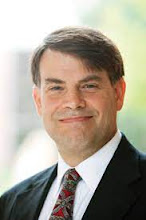
Wesley Seminary would never have existed without Keith Drury. 

On the one hand, the conditions were right.  The relationship between Asbury and the Wesleyan Church was pretty low at the time. And more significantly, Wesley Biblical Seminary (WBS) was in conversation with IWU to perhaps form a branch campus at IWU.

The president of WBS at that time actually came up to Marion with his Dean. The meeting didn't go very well. An unnamed head of the Department of Religion (DoR) unintentionally insulted the president with his Jersey ways. Keith tried to soothe the WBS president's blood pressure on a walk.

As always, Keith brought the focal question. "The Wesleyan Church has one seminary card to play in the next 10 years. Is Wesley Biblical the card we want to play?"  

So we began a campaign to start a seminary. Henry Smith had recently become president of IWU, so that was a kairos moment too. He wasn't in the thick of it yet. There was the energy of the honeymoon stage, and he was wondering what his key contribution to IWU might be. 

Keith was part of all those conversations. He was the type of person that didn't need any credit, but his influence was all over everything. What mattered to him was the result, and he didn't care if anyone knew he had played a part. There were two task forces. First there was the one that proposed an MDIV degree. Then there was the one that proposed the formation of a seminary. Keith was a major voice on both task forces.

I believe Keith was also a whisper in Dr. Smith's ears from time to time. I'm pretty sure that it was his idea to devote the 1.1 million dollars given to IWU from the denomination toward scholarships for Wesleyan students in the first few years of the seminary.

2. We designed the MDIV degree over the summer. Because it was summer, it was often Keith, Russ Gunsalus, and I in the room, with David Smith and Norm Wilson joining as they could. Russ had some recent survey results from ministers about what they had found useful in their ministerial education. We also had that in hand. 

Keith and Russ were sure to point out to me that, in the survey, Greek came in as one of the least useful things ministers had been required to study in seminary and college. They had no fight from me. I had taught Greek for 20 years. I knew that -- especially given the way biblical languages had been taught -- it was one of the most wasteful requirements in the old ministerial curriculum. 95% of ministers never even mastered it, let alone used it.

So we come again to the practical and pragmatist nature of Keith. The DoR at IWU was known for being practical. It's not that we were against theology or biblical studies or the minute studies of scholarship. As I would later say to the seminary board tongue in cheek, "no one loves the irrelevant more than I do." But it was a foregone conclusion before we ever started that we would found a seminary that actually helped you do the work of the ministry. "May it never be said of Wesley that I never learned what I actually needed to know to do ministry."

I had one of my brother-in-law's voices in my ear. He didn't feel like seminary had taught him the practical things that he actually needed to know as a pastor from day to day -- how do you make a budget? How do you to run a board meeting? How do you run a capital campaign for a building extension? The quote in my head was my brother-in-law: "I never learned anything in seminary that I actually needed to know to do ministry."

Henry Smith would say, "This is not your father's seminary." And Russ would say, "Take your church to seminary." Students were going to have to be involved in ministry to be in the seminary. They were going to have on the job training. I likened it to an Indy car coming into the pit to get new tires before racing out into ministry. This was all the spirit and influence of Keith.

Seminaries were dying all over the place. In large part, it was because there was an onsite requirement that the Association of Theological Schools still required at that time. It was without question that we would provide an online option. This seminary would be accessible, affordable, and practical, as Henry Smith used to say. But this had everything to do with the culture that Keith had fostered in the DoR.

3. We designed a Keith Drury seminary. That was IWU then. And that would be the seminary then. And it had over 500 students in five years. And that's real students -- full time equivalents, not just a head count of how many took a class at some point during the year. I'll just slip in here that the founding formula of the seminary worked really well. I hear the seminary may be leaving its building, which pains me greatly. Perhaps if it returned to the founding formula -- perhaps if it would regain some of that Keith Drury flavor -- it would regain some of its vigor. 

Asbury has been able to buck the trends, and good for it. We saw no reason to found a seminary that was like the existing options. And since most seminaries were dying, why found a seminary like every other dying seminary? So while the traditional seminary had a 90 hour curriculum, we would give a practical curriculum that was 75 hours. 

In good Keith Drury fashion, we would focus on application. We would integrate Bible, theology, and church history into its practical courses. You would learn lots of Bible, but you would do it in connection with leadership, mission, worship, preaching, congregational formation, and congregational relationships. You would learn lots of theology, but you would learn it in relationship to these core practical areas. The same with church history. 

And in each course you would do a study that required you to bring Bible, theology, and church history to bear on a practical issue in ministry. You would learn how to draw on these disciplines for ministry rather than simply learning the Bible or theology in isolation.

So it would have a practical focus, and it would connect the foundations with application. Traditional seminaries in effect said. "We're going to teach you all this theory and then you can apply it yourself when you get to ministry." Our approach was to teach you how to apply it as the focus. And this had Keith Drury written all over it. 

The president of Asbury held up our curriculum in a faculty meeting with a condescending scorn and mockingly said, "We will not be doing this here." One of the faculty there blogged, "MDIV Lite: Tastes great, less filling." And I just laughed. You do you. And we'll give ministers what they most need to do ministry.

4. Spiritual formation was another missing piece in the seminary landscape at that time. Under Keith's influence, students were going to take a one hour spiritual formation class every semester. I remember sitting in a classroom in Noggle with four desks circled together as Keith whipped out a spiritual formation curriculum in a minute flat.

A lot of spiritual formation seemed like, "Go read the Bible. Be changed." Keith recognized that there is a human process of change that can be intentional. Once again, his practical wisdom made the seminary curriculum more profound than most people realized. First we would talk about change in general, and they would read Bobby Clinton's The Making of a Leader. Then they would figure out where they were now. Then they would set goals. Then we would talk about the importance of having a mentor or spiritual director. Only in class 5 would they get to the classical spiritual disciplines. A final course would talk about deliverance, crossing the finish line, so to speak.

This was all Keith Drury's doing. There was a profundity to the seminary's curriculum, a deeply profound underlying philosophy embedded. Like Wesley himself, you might miss it if you just focused on its practical appearance. Underneath, it reflected a deep hermeneutic and understanding of people and the world.

5. The actual process of designing the courses came from Keith too. We would get 5 or 6 people in a room -- a practitioner, a Bible person, a theology person, a church history person, and other key minds. We would start with 3 x 5 cards and brainstorm. What's every topic you can think of that might be in a course on Proclamation? Write, write, write. Everyone write. A bunch of cards on the table with lots of topics from the innovative minds in the room.

Then we would begin to congeal the cards into topics. What subject headings emerged? Eventually, we would have 16 sheets of paper on the wall, each representing a week of the course, each with a collection of 3 x 5 cards stuck to them. 

A regular flow to each course evolved. Subject matter experts were commissioned to write assignments. The rest is history.

6. Keith urged me to become the first academic Dean of the seminary. "Who else?" he asked. "Give five years of your life to founding a seminary," he said. I gave six. And when I stepped down, in his typical bluntness he said, "Helping to found a seminary may turn out to be the most important contribution you make in your life." :-)

Keith and Russ were instrumental in recruiting Wayne Schmidt to be the first permanent leader of the seminary (Russ was the first leader technically). They drove to Grand Rapids to see if he would be interested in teaching or, just maybe, in leading the seminary. Before Henry Smith talked to Wayne, they had prepared the soil.

Wayne very much was cut from that same practical cloth as Keith. Wayne would be almost religious in keeping the seminary focused on practical ministry. There was a sense that the gravitational pull of the academy was away from the practical. So Wayne focused on things like church planting. When the KERN option arose, Wayne was fine for it to be on the other side of campus so the seminary could stay focused. In that phase, it was no problem for the other side of the campus to do the more advanced study of subjects like Bible and theology. The seminary was focused on practice and application.

All this flavor of the seminary was Keith. It was the flavor of Keith. It was the flavor of the DoR. It was the flavor of IWU. And it was the starting flavor of Wesley Seminary. 

Keith's devotion to the seminary has never wavered. In fact, instead of flowers, donations to a "Keith Drury Memorial" scholarship at the seminary are encouraged.

I might do one more post as a wrap up.

Friday, May 06, 2016

First Seminary DMIN cohort starts!

The first Wesley Seminary DMin cohort is now up and running with Bob Whitesel. It's a three year series of courses in Leadership, with a fourth year to do an individualized project.

Bob was built for this sort of thing and it is amazing the schedule he has put together. Next year, Lenny Luchetti is up with a Preaching DMin!

Friday, April 01, 2016

Ease from academics to ministry!

IWU's School of Theology and Ministry (STM) has recently added a master's degree that eases the transition from the academy to the church.

1. Designed for those right out or recently out of college, it's a two year master's degree that is the academic equivalent of an MDIV (72 hours).
  • The first year is on the residential campus, going to class just like you're used to, with courses arranged so that you can do ministry or work in between. 
  • The second year is a placement at a church with some online classes integrated with your church work (some of the online may have a "real time" option).
So the first year includes a biblically and theologically rich fare with practical courses like pastoral counseling and spiritual formation. Then the second year transitions to a church placement, where the focus will become more heavily practical with some online components.

We've just changed the name of the degree to a "Master of Practical Theology," the same degree that Wesley Seminary offers in a shorter form to individuals who already have one master's degree. But this new version of the master's is designed for people who are just finishing or have recently finished college. It covers all the bases of a traditional MDIV, has the number of hours of an MDIV, and could easily serve as a stepping stone later to a DMin or even PhD.

When I finished college, I wasn't ready to pastor yet, and a program like this one would have eased me into the church world. Many of the ministry students in our first cohort are headed for places like 12Stone next year. What a great way to ease into ministry! The cohort has become really tight, both single and very recently married students, a real community of learners and ministers.

How much does it cost? Tuition starts at 485 a credit hour, but there are significant scholarships and the possibility of denominational money, making it a pretty inexpensive master's degree. You can get advanced standing for some courses from your undergraduate work.

2. Of course for those already in ministry and those who want an even more practical focus, Wesley Seminary is better than ever and offers an MDIV designed just for you. It's a three year, 75 hour degree that can be taken online from anywhere in the world. If you minister in the area, there is also an onsite option that meets once a week. WS also has a two year MA in Ministry degree with lots of possible specializations.

3. This new STM degree has been a long time coming, going way back to early meetings with KERN by people like Keith Drury and Russ Gunsalus, and it has reached its mature form under the perfecting genius of Dave Ward, Brian Bernius, and the energizing, personal touch of Eddy Shigley and Melissa Fipps.

Don't hang in limbo next year after you graduate; come have fun with us! Go deep in the Bible, theology, and history the first year. Then dive deep into the practice of ministry the second.

Monday, March 14, 2016

Lots of IWU professors at WTS

The Wesleyan Theological Society met last week in San Diego. I was absolutely amazed at how many IWU professors were involved. There was a time when no one from IWU went. Then there was a time when only John Drury went.

Now look:
  • Abson Joseph: "The Background and Implications of the Language of the New Birth in 1 Peter"
  • Kayla Caruso: "Becoming Like a Child: John Wesley's Doctrine of Childhood"
  • Constance Cherry: "Child Dedication in Alternative Rites for Wesleyans: Some Possible Models for Contemporary Practice" (also responded to two papers for the Charles Wesley part)
  • Patrick Eby: moderated "Language and Experience in Cultural Contexts" (the panel had Abson Joseph, Lara Levicheva, and Lena Caruso; Patrick also responded to two papers for the Charles Wesley part)
  • John Drury: On panel reviewing Katherine Sondregger's first volume on the Doctrine of God in her new Systematic Theology (also moderated one session)
  • Lenny Luchetti: "A Homiletic New Birth: How Empathy Drove John Wesley to the Fields"
  • And I have to mention Joanne Lyon: "Don't Be Overcome with Evil, but Overcome Evil with Good"
What an impressive showing!

Thursday, December 17, 2015

DMIN in Leadership--Open for Business!

In most academia, the wheels move so slowly it can drive you insane! Finally, after months and months and months of waiting, the second accrediting body has approved Wesley Seminary at IWU's new DMIN degree. The first cohort begins this coming summer in Leadership, with Bob Whitesel as the faculty mentor.

There are only 20 slots and several have already been tentatively filled so you want to jump on this NOW!

You can apply here.

You can download the booklet here.

You can download the flyer here.

For two weeks each year, you’ll travel first to Atlanta, then to England, and finally to San Diego with a diverse group of students to learn from 24 top leaders, experts, and thinkers in leadership, with Wesley's own Dr. Bob Whitesel as your guide.

You will learn about urban, suburban, and rural leadership in Atlanta; church multiplication and renewal in London and Oxford; and multicultural leadership in San Diego. The program leads to a capstone project one on one with a project adviser that brings together 3 years of study and life-changing experiences to transform your ministry, and transform lives. At the end, you will have earned a Doctor of Ministry in Transformational Leadership from Wesley Seminary.

In order to qualify, most students, with some exceptions, will be expected to have three years of full time ministry since achieving MDIV equivalence (72 hours of graduate work).

So excited to see this venture now officially open for business! Then in 2017 a proclamation cohort begins with Dr. Lenny Luchetti, and a spiritual formation cohort in 2018 with Dr. Colleen Derr. Jump into the game NOW!

Wednesday, December 16, 2015

Reflections on a semester of teaching

I've now finished my first semester back teaching. Now comes the big perk of professordom--we don't start back up until January 11. Maybe I can finish a book. :-)

1. Teaching has been a lovely change of pace! Although in some ways the day to day is more intense than as Dean, it has a punctuated nature to it. You show up somewhere then move on. Then you show up somewhere else and then move on.

I've come to view administrative work as something like an hour glass where you have this weight of sand that can only get through a trickle at a time. Administrative work never ends. You just go on vacation and then pick back up where you left off when you get back.

2. I have no regrets. Probably what I miss the most about my former job is the interaction with the whole denomination, a unique position that the seminary enjoys. One fun dimension of the seminary is that it has students who went to OKWU, Kingswood, SWU, and Houghton, beyond IWU. There is really a sense in the Seminary that you're working with ministers in the whole denomination and have access to the denomination on the highest levels.

I do miss the innovation and creative problem solving you can sometimes do when you are in a position of leadership. I should add relatively unencumbered leadership. I think there are creative juices in the College of Arts and Sciences (CAS) as well, but they have sometimes been somewhat submerged in the past, it seems. I think we are seeing the beginnings of a real turn-around this year with the restructuring. On the other hand, being in leadership when your hands are tied, when you think you know how to improve things or innovate but can't--that's the worst!

My friends in the seminary seem to be doing just fine under the leadership of Captain Wayne Schmidt and co-pilot Dave Smith. Onward and upward!

3. I have enjoyed the students in CAS immensely, as well as my old friends in the School of Theology and Ministry (STM). Of course I only enjoy teaching if the students enjoy it too, so I have enjoyed teaching when the students have seemed to enjoy class, and there have been a few days reflecting on what to do differently next time. Jim Lo and I both agree that it has felt a bit like making all new preps, even though I have taught most of these courses before.

For one, back in the day I was still procrastinating moving my overheads to PowerPoints, so I had to migrate and edit almost all my old materials. More, I taught several courses in special formats. So my New Testament Survey was not just a NT Survey; it was a "First Year Experience" (FYE) NT Survey. That meant that there was another layer of "high touch" elements.

And my Romans and Galatians class was not just a Romans and Galatians class, but a class that had both graduate and undergraduate students in it. That also required some extra attention. My Greek students had Lara Levicheva last year and were sharp as a tack. She was a tough act to follow!

I taught two sections of the basic Foundations course for the Honors College because of that deserter, Steve Lennox. That was a challenge, to synthesize OT and NT Survey, Inductive Bible study, and some basic hermeneutics.

But there has been much laughter. The students have laughed and I have laughed with them. A college that laughs together is a healthy, hopeful place. There are few things I enjoy more than sharp young minds bursting with ideas, seeing new universes for the first time!

4. The students are a little different than before, and I am too. So my age now aligns more with their parents than before. The students seem to be a little higher on average academically than when I first came to teach at IWU. There are also higher expectations of professor service than before. I will refrain from making generic comments about millennials. :-)

So being a professor now, across the university, is a lot more work than it used to be. Gone are the days where a course has one paper or one test and that's it, or where a mysterious grade appears at the end of the semester on the basis of who knows what. But that's a good thing.

5. So on to next semester! Teaching some great classes, not least Biblical Theology on a graduate level. I think I had the best Romans class ever this last semester, so I'm hoping that Hebrews in the spring will follow suit.

I will say that it's hard not to want to jump in and get things moving when you see things that could be done somewhere. It reminds me of Fast and Furious 7--it's hard to drive kids to school when you're used to driving cars out of planes.

But nothing is on fire and there's no question that I have had an unusually peaceful, easy feeling all semester. I will be perfectly happy to teach till the day I retire, and then some. As so many of us professor types say repeatedly, "I can't believe they pay me to do this!"

Wednesday, September 23, 2015

Wesley Seminary passes 500!

So exited to see Wesley Seminary at IWU pass the 500 mark this month! That puts it in the top 20 seminaries in the Association of Theological Schools (the average seminary is only about 155 students).

Amazing kudos to President Wayne Schmidt (I'm just going to call him that ;-), Dean Dave Smith, and Aaron Wilkinson, who is
Superadmissionsman
(he called the event, pictured in the middle).

President David Wright reminisced on some of the questions the Seminary had to answer when it began. Would the whole church accept it or would it be more an IWU regional seminary? Wayne Schmidt in command guaranteed that the whole church would claim it for its own.

Then there were those who suggested it might not have girth because most of it is online. Man, do those voices sound like pre-Industrial Revolution curmudgeons now. I dare anyone who thinks it's light weight to take a class... hands down more demanding than the classes at _________ (insert name of your seminary here).

Aaron did a great job of thanking all the players at IWU who make everything possible. It was a LONG list! When President Wright got up, he joked that the list of people it takes to run the place is almost as many as the 500 students Wesley now has.

So many congrats to Wesley, to Wayne, Aaron, the faculty, staff, and new Dean Dave Smith, who is fixing all the problems I left with magnificent skill!

Friday, July 31, 2015

End of another Bible class

1. I noticed that Nijay Gupta was talking about teaching Scripture at seminary. I'm just finishing up today teaching the one week "Bible as Scripture" intensive at Wesley Seminary. I second guess myself a lot when it comes to these sorts of things, but am pretty happy with the formula I've been using:
  • I start each day with a quasi-devotional that illustrates the learning of the previous day.
  • After the devotional and prayer, we discuss the reading of the previous night. I have them read and evaluate Green before they come, then Fee and Stuart during the week. This gives them two evangelical poles to situate themselves between. I've recorded videos to give a little exposure to critical issues and have a little book to fill in some other gaps. 
  • After a morning break, I introduce an interpretive tool, which they apply in the early afternoon in groups in relation to a particular passage I have chosen.
  • In late afternoon we regroup and the groups present their initial findings, which they finish up in the evening and submit by the next morning.
2. The flow of the week goes as follows:
  • Monday and Tuesday work on the skills of observation. This is a focus on the literary context. This is a focus on the "world within the text."
  • Monday is on the immediate literary context and they do a "train of thought" assignment. Tuesday is broader literary context and they do a "survey."
  • Wednesday transitions to interpretation, the "world behind the text," and historical-cultural context. In particular, Wednesday is word study day.
  • Thursday then digs deeper into historical-cultural context and answering other kinds of interpretive questions. This is the first day that we go to the library and engage secondary literature.
  • Finally on Friday, we address directly what we have been doing all along in the devotionals and reading discussions--how to discern a biblical theology and appropriate biblical texts.
3. Although I hope eventually to find a better integrating theme, the passages on which the groups work all week (and present on all week) have to do with the Devil (or do they):
  • Genesis 3
  • Job 2
  • Isaiah 14 
  • Matthew 4
  • Luke 10
  • Revelation 12
The reason why these are good passages because they bring out issues like pre-understandings of meaning and sensus plenior. We are, in effect, working toward a biblical theology of the Devil all week, while forcing distinctions between the meanings of each text.

4. I think this works pretty well when I keep on task and have enough caffeine. I do continue to second guess myself.

Is teaching how to do inductive Bible study a little like requiring Greek--just not something everyone is going to be able to do? Would it be better as a capstone after several courses that have more or less modeled the interpretation of biblical texts rather than expected students to do it themselves?

Tuesday, June 16, 2015

New Seminary MA Specialization - Ordination Track

In what I think will be my last Seminary Academic Affairs meeting with me chairing (I have one more with Dave Smith chairing in August, I suspect), we passed a new MA in Ministry specialization in "Pastoral Ministry" this afternoon. It is a delightful finale to my generally "creative" Deaning, created with the brainstorming help of none other than Russ Gunsalus and Joel Liechty.

This MA specialization will take 6 hours more than the base degree (which is 36 hours), but you will be able to meet all the educational requirements for ordination in the Wesleyan Church in 42 credit hours. There's not an ounce of fat in this degree, and (aside from one course--Lenny Luchetti's Pastor, Church, and World), this will be the only completely online way to meet ordination requirements for the Wesleyan Church and get a degree in the process.

It will only take two years and a semester to complete, and you will be able to transfer in up to 15 graduate hours toward it from somewhere else. You can possibly get up to 6 hours of advanced standing toward it from appropriate undergraduate work as well. All the requirements for licensure are completed in the first year.

I think this will be a tremendous addition to the tool set of the Wesleyan Church. Mind you, the Master of Divinity degree remains the ideal seminary degree for a minister. It is obviously a much more robust degree than this MA, and it is the degree that hospitals, the military, and doctoral programs recognize.

So this degree is not meant to be a substitute for the MDIV. It's meant to be a more robust option for those who wouldn't have done a degree at all.

Wednesday, June 03, 2015

The benefits and curse of Asbury style IBS

I'm teaching "Bible as Scripture" this week for Wesley Seminary. My Asbury training always shows up in this class when we get to what Dr. Bauer calls, "structural laws." I try not to call them that but try to use more informal language. I really enjoyed IBS at Asbury but I think many students left those classes feeling like they had learned some secret technical language that no one else would ever understand.

Even new Bible professors there, I got the sense, if they had not studied at Asbury as a grad student, could be mystified at a completely unique language used scarcely anywhere else in the academy. What do you make of a label like, "recurrence of particularization with filial language"? I don't think I really got a sense of what all that stuff was about until I adjuncted for Asbury a few times 10-15 years ago.

But I continue to find these categories incredibly helpful. I'm also teaching Romans online right now. I try to spare the lingo and of course these observations are spread out over weeks. But when I look at Romans, I am now cursed to see:
  • Romans 1:16-17 as the key verses of this book ("generalization of 1:16-17 in 1:18-11:36"). 
  • I can't help but see 1:18-5:11 as a movement from the problem--"all have sinned" (1:18-3:20) to the solution--"the faithfulness of Jesus Christ" (3:21-4:25)
  • ... with Romans 3:20-31 as the greatest encapsulation of how salvation works in the whole Bible ("generalization of the solution in 3:21-4:25") 
  • ... and Romans 5:1-11 as the conclusion to this whole section ("generalization with logical causation"). 
And what am I to say of all the sub-patterns I am cursed now to see? Romans 4 is a substantiation of 3:21-31. Within Romans 4, 4:1-3 is a general statement that is "particularized with a recurrence of substantiation in 4:4-25."

Who will free me from this body of IBS-eze??? I'm convinced that these are all valid patterns. But who will have a clue what I am talking about?

Friday, May 15, 2015

Dr. David Smith to be the new Dean of Wesley Seminary!

The news is now out that Dr. David Smith is coming to Wesley Seminary to be the new academic Dean. Woo-hoo! This is VERY exciting news to me because I now know that the academic oversight of the Seminary is in excellent hands going forward (in addition to the already excellent faculty).

1. Here is the announcement that our fearless leader, Wayne Schmidt has put out:

"Wesley Seminary at Indiana Wesleyan University (IWU) is pleased to announce the appointment of Dr. David F. Smith as Academic Dean, effective August 16, 2015. Dr. Smith is currently the Vice President for Academic Affairs at Kingswood University in Sussex, New Brunswick, Canada. He succeeds the founding Dean of Wesley Seminary at IWU, Dr. Ken Schenck, who served for six years and returns to a full-time ministry of teaching and writing in the School of Theology & Ministry at IWU.

"Dr. Smith’s heart for the local church, his passion to equip ministry leaders, and his widely recognized biblical scholarship were enthusiastically affirmed during the search process.

"Dr. Smith earned the M.A. in Old Testament and the M.Div. from Asbury Theological Seminary, and the Ph.D. in New Testament Interpretation from the University of Durham. An ordained minister in The Wesleyan Church, he also previously served churches in the Free Methodist and Church of Christ in Christian Union denominations."

2. I know this was a difficult decision for Dave because he and Angie have loved being at Kingswood so much, and Dave was excited to stand with Steve Lennox as he takes the reins at Kingswood this summer.

But I truly believe that the Lord had other plans for Dave. And I am amazed as I dream of what God is going to do through Steve at Kingswood, including whomever the Lord is going to bring as its new Vice President for Academic Affairs!

3. It again seems amazingly providential as I look back at these last six months. I never planned to change myself, but doors opened and I believe this was the right time for Wesley to transition to a second phase of its existence. Then it is also a dream that Dave Smith would be able to come as Dean. He was part of the first task force that designed the MDIV curriculum back in 2007! He not only knows the vision--he helped shape it from the start!

Let me say what I told Dave. Wesley Seminary has been a model of health within Indiana Wesleyan University itself--in the black with budget, consistent in growth. It has been such an astoundingly healthy model of a seminary that the Association of Theological Schools asked me to speak at the chief academic officer's meeting this year and be on the steering committee for its Chief Academic Officers.

Not only that, but the Seminary has become a truly unifying and enriching force within the denomination. It is connecting ministers with each other and with ministries they would never had connected with otherwise. It is deepening the level of both practical and theological excellence among pastors in the denomination and beyond. It has a global reach, even beyond the regional identity of Indiana Wesleyan itself.

Hitherto hath the Lord blessed us!

God's richest grace and blessing to you, Dr. Smith, as you and Wesley embark on this next segment of your/its journey!

Tuesday, March 17, 2015

30. Where is Wesley going?

You'll be happy to know that I've reached the end of this hundred page journey through the story of Wesley Seminary at Indiana Wesleyan University as I have experienced and reflected on it. I leave the story with hopefulness for the future.

1. I predict my departure will work out for good. Every couple years, something needs to happen to change things up, to provoke a new look at things. What things was I doing that would be better for others to do? What things wasn't I doing that someone different will do? Where do I have blind spots that new eyes will see?

2. It wouldn't be bad if the next Dean ate and slept a little more of the administrative side of things than I did. Now, mind you, I don't mean someone who will create a "managerial culture." That would be death. This is what I think of when I think of that.

3. I predict Wesley will continue to grow. It has a winning formula: a never-endingly, networking leader, an outstanding faculty, expanding degrees and venues, and an ingenious admissions director.

A couple weeks ago, after a meeting, I had a two minute side conversation with Jeff Boyce of the Devoe School of Business. The next thing you know, we may be launching a specialization for the MA in something like executive management.

So we met with Jeff last Tuesday. During the meeting, Joanne Solis-Walker texted me asking what we would need to do to offer our MPTh in Spanish. Nothing really, just translate that part of the catalog. A nod from Wayne. A walk down to Aaron's office. That's another wrap.

"I love this place," Aaron said.

4. Wesley serves the primary needs of the church. It primarily serves those who would not normally go to seminary. It serves them by giving them the tools to do the work of the ministry. When the Seminary started, we figured that 85% of Wesleyan ministers didn't go to seminary.

I assume that has already changed noticeably, because more and more Wesleyan ministers are coming to Wesley. We have the whole spectrum of students, ranging from those who could have gone to the most academic seminaries out there, to those who have little prior training. I've long felt that there is a disconnect among churches who require seminary. Sometimes they think that they are the majority of pastors.

They aren't. The vast majority of pastors in America never go to seminary. I believe they should be the primary target audience of Wesley.

5. So what will be on that plaque in four years, the plaque capturing what the second five years of the Seminary was known for? Since we are in a strategic planning phase, I think I can hazard some guesses. Remember those signature items the Seminary Board defined back at the very beginning? They are well underway.

We already have four course specializations in Church Planting and Multiplication and Church Health and Revitalization. Just maybe the Seminary will have one relating to Ethnic and Multi-Cultural Ministry within the next couple years.

That leaves two more signature areas. Again, both are well underway. We are already in the process of partnering with three teaching churches. No doubt more will come. And we are already engaged in global ministerial training. No doubt more will come.

6. I can also now announce that Patrick Eby will be joining the faculty July 1 this year. His specialty is in church history, Charles Wesley in particular. Wesley will become a partner with the Manchester Wesley Studies Center in England July 1 as well. With Bob Whitesel, Colleen Derr, and Patrick all experts in various aspects of applied Wesley Studies, there may be something on that plague in this area as well. Who knows?

What an amazing thing to have been a part of, six years a Dean!

Previously on Seminary take-aways:

Pre-Seminary
1. There are key moments of opportunity.
2. You need the right people.
3. Good leaders collaborate and navigate.

Year 1: Launch Year
4. Innovation requires some trial and error. (1)
5. Innovation requires some trial and error. (2)
6. Innovation requires some trial and error. (3)
7. New leaders bring new strengths. (1)

Year 2: Growing Pains
8. Administration never ends.
9. New leaders bring new strengths. (2)
10. New leaders bring new strengths. (3)

Year 3: The Year of Maturity
11. Complexity works against sustainability.
12. There are advantages to being embedded in a broader university. (1)
13. There are advantages to being embedded in a broader university. (2)
14. Our guinea pigs survived.

Year 4: The Year of the Faculty
15. Faculty share governance with administration. (1)
16. Faculty share governance with administration. (2)
17. Faculty share governance with administration. (3)
18. Faculty share governance with administration. (4)
19. Growth means addition. (1)
20. Growth means addition. (2)
21. Growth means addition. (3)

Year 5: The Year of Accreditation
22. Don't underestimate the power of a symbol.
23. A good reputation is much to be desired.
24. Sustainability needs reliable infrastructure.
25. Important decisions often involve trade-offs.

Year 6: Launching the Future
26. Good leaders look for opportunities.
27. Online programs tend to cannibalize equivalent onsite ones.
28. You can be practical on the doctoral level.
29. What's in a Dean?

Related Posts
The Next Phase of Schenck
Top Ten Leadership Lessons I've Learned

Monday, March 16, 2015

29. What's in a Dean?

1. One aspect of Year 6 was when the then Dean, Ken Schenck, decided to apply for a New Testament position back in the College of Arts and Sciences (CAS). He was not looking to change positions. But he was doing some soul searching at the time. He was wondering what he should be aiming for, as he looked ahead.

What were the options, looking ahead? At some point I could join the Seminary faculty. I had more or less assumed that would happen eventually. And of course I consider Wayne Schmidt one of the leading options for General Superintendent. Was I interested in leading the Seminary, if he were promoted to glory? Would they even choose me to run the Seminary if I were interested?

As far as joining the Seminary faculty, I didn't feel like it was time. Remaining Dean excited me more. Most of the Bible in the Seminary is introductory in nature. Being Dean is more stimulating.

Was I thriving as a Dean? No doubt I was good at some things, adequate at others. In the Fall we had wrestled with a number of questions. We wrestled with the question of onsite. We were still wrestling with the formula for the Integration Paper. We wrestled some with the question of who our typical student is or should be. We wrestled with how exacting we should be with things like deadlines and grades. We wrestled with the MA in Leadership curriculum.

After all these debates, I felt like I was becoming too negative. I was becoming too much of an Eeyore instead of a Tigger.

But Eeyores don't make good leaders. I actually asked Keith Drury to meet me at Starbucks one week in mid-November to try to reset my mind. I resolved to start acting with the gravitas of someone who leads a Seminary, to start behaving with the kind of gravity and class Wayne has.

2. My final choice to apply for the New Testament position back in the School of Theology and Ministry (STM) is only partially the story of the Seminary, so I won't share much. At one lunch, someone jokingly asked me if I was interested in the job. I think I said something like, "If you'd have asked me Wednesday, I'd have said yes. Today, I'm okay."

Before I left for the Society of Biblical Literature meeting in late November, I told Wayne that I was praying and reflecting on whether to apply for the STM position. Returning to teaching New Testament with undergraduates was one of the possible options on my earlier list, just not one I thought was ever likely to happen. There are things you do well at with ease. There are things you do well at with effort. There are things you do okay at but you know others might do better.

Teaching 18-22 year olds philosophy and the Bible is something that, at least in the past, seemed to be second nature to me. I think I was at least entertaining as a professor (which of course doesn't necessarily mean that learning took place). If you gave me an impromptu topic in these areas to teach in five minutes, I could probably do better than average, and a good time would be had by many.

Being Dean is much more important, much more significant, and much more thankless. Most of the time, you don't get to do your own dreaming. Your job is to facilitate the dreams of others. In some cases, it is the job of gluing people together who are running full speed in different directions. Sometimes it's the job of policeman, and we all know that people enjoy being redirected or told no. It is a noble task, and I feel good about the job I have done.

I wasn't looking for a change. But the possibility of doing something in my sweet spot for a while just seemed too good to pass up after six years a Dean.

3. When I went to the new Deans seminar at ATS in 2013, Dan Aleshire said that, "The job of a seminary President is to make sure that a seminary has students who are coming. The job of a seminary Dean is to make sure there is something worth coming to."

That is the prevailing model of an academic Dean, to guarantee the academic quality of the institution. I believe I have fulfilled my duty in that regard. I have facilitated assessment. I have made sure the most basic academic rules have been kept. I have finished my course. I have kept the faith.

For those who think of the Dean in these traditional categories, I have only been an average Dean (aside from getting us accredited in five years, I suppose ;-). Frankly, the faculty have done a much better job at ensuring traditional academic quality than I have.

I view policies as guidelines, not laws. I consider academic quality a cultural idea that is a moving target that the market sets. And I believe we should be an open door seminary that wants to improve the serve of as many ministers as possible, whether they are academically brilliant or academic strugglers. There are several really inspiring ministers I can think of who were academic duds, and there are some academically gifted ministerial students I had, who are just doing ok in ministry.

4. I believe the most important roles I have played as Dean are threefold. I have been chief academic problem solver in executing new academic ventures. I have served as the glue holding all the players together. And I have served as the academic guardian of the initial dream.

A new Dean doesn't have to play these roles. He or she can be the traditional paper pusher. But then Wesley needs others to pick up these more crucial roles. Anyone who thinks we are done designing new things wasn't in the office last week. Not to keep moving forward is to move backward.

But I'm not too worried. Wayne cannot not make new connections. Aaron Wilkinson, admissions director, has caught the bug and he knows the method. There are faculty who will sit in a room with a white board and scheme. And, of course, there's nothing I want to do more than something I don't have to do... I remain open to post-lunch white boarding.

I think others will pick up the glue piece. I think the Seminary team may be moving toward an environment where it is okay to voice strong opinions, to disagree, and yet to go to lunch after the vote or decision. There is a structure. There are things the administration has the authority to do. There are votes the faculty have on issues. The administrate will feel freer to collaborate if it knows its final decisions will be accepted after discussion. And the faculty can disagree more freely if everyone submits to the final vote.

As for the founding vision, it is always subject to change. It has already evolved, as you would expect it to. I suspect Wayne and the Seminary Board will probably keep the current vision for the Seminary for the time being. And keeping it will still fall to the Dean academically.

But I also think the faculty have owned that vision. They have made it their own. And so I don't think there is a problem here. The faculty will only make it better.

Previously on Seminary take-aways:

Pre-Seminary
1. There are key moments of opportunity.
2. You need the right people.
3. Good leaders collaborate and navigate.

Year 1: Launch Year
4. Innovation requires some trial and error. (1)
5. Innovation requires some trial and error. (2)
6. Innovation requires some trial and error. (3)
7. New leaders bring new strengths. (1)

Year 2: Growing Pains
8. Administration never ends.
9. New leaders bring new strengths. (2)
10. New leaders bring new strengths. (3)

Year 3: The Year of Maturity
11. Complexity works against sustainability.
12. There are advantages to being embedded in a broader university. (1)
13. There are advantages to being embedded in a broader university. (2)
14. Our guinea pigs survived.

Year 4: The Year of the Faculty
15. Faculty share governance with administration. (1)
16. Faculty share governance with administration. (2)
17. Faculty share governance with administration. (3)
18. Faculty share governance with administration. (4)
19. Growth means addition. (1)
20. Growth means addition. (2)
21. Growth means addition. (3)

Year 5: The Year of Accreditation
22. Don't underestimate the power of a symbol.
23. A good reputation is much to be desired.
24. Sustainability needs reliable infrastructure.
25. Important decisions often involve trade-offs.

Year 6: Launching the Future
26. Good leaders look for opportunities.
27. Online programs tend to cannibalize equivalent onsite ones.
28. You can be practical on the doctoral level.

Saturday, March 14, 2015

28. You can be practical on the doctoral level.

1. I have mentioned Luigi Peñaranda and Brannon Hancock occasionally throughout this narrative. Let me now officially introduce them as faculty who joined the Seminary July 1, 2014.

Luigi was hired as our first full-time faculty member who would teach extensively, although by no means exclusively, for the Spanish MDIV program. He has been a Godsend because this program has lacked full-time faculty eyes. His doctoral work is in leadership but he has master's training in biblical studies.

Indeed, with him and Brannon now here, we can finally speak of something like a "foundations team." Before they came, it was John Drury and me half time. But it is awkward for the Dean to be involved in faculty decisions because of the intrinsic power differential. John astutely observed in a recent meaning that I sometimes do not give my opinion as a Bible person in meetings because as Dean I am supposed to more or less let the faculty make academic decisions.

One of the things I appreciate about Luigi--and this is an area administration has to be careful about--is that he serves above and beyond the call of duty.

This reminds me of some advice I would give the many out there who are currently looking for a faculty position. If you are wanting to become a faculty member somewhere, consider the following common sense dynamic if you go to interview. It is true that there are certain things a university probably cannot require you to do without giving you something extra in return (money, load release, etc).

But consider this. If a university has a hiring choice between two people, one of whom is wired to serve beyond what he or she is required to do and the other of whom only does what s/he is required to do, who would you hire? In 1996 when I was looking for a teaching job, a Provost at an unnamed seminary glibly told me that it was a "buyer's market" for professors.

I won't say it glibly, but it is MUCH worse now almost twenty years later. Those of us who teach are all fortunate to have a job, and beggars are choosers at their own risk of unemployment. verbum sapienti satis est.

Integration is Brannon's middle name. He is a worship guy. He is a church history guy. He knows the arts and literature. It is truly enriching to have him on the faculty. People like he and John have the academic chops to teach at a traditional, academic type graduate school, but they have the application skills to train ministers in the tools of ministry.

2. Those of us in the Seminary have believed now for a long time that a Doctor of Ministry degree (DMIN) would be a logical development over time for a seminary focused on the practice of ministry.

A DMIN is quite different from a PhD in character. For example, a PhD is something like a pyramid. It starts with a wide and broad base of theoretical knowledge and then increasingly becomes more and more specific in focus until the dissertation argues something in a way that no one has ever done before. It is an academically oriented degree.

A DMIN is different. It is more like a pylon. You start specific and you end specific. You don't take a lot of background theoretical courses but are pretty much focused on a narrow area in the practice of ministry from beginning to end. It ends with a project that involves some sort of field research, for example, in relation to a specific local church or a particular ministry related problem. It is a practice oriented degree.

3. We did not want to start any specific dreaming about a DMIN until after we were fully accredited by ATS, which happened in the summer of 2014. But as soon as we knew the positive review of the visiting team, we immediately put a task force together. Bob Whitesel had extensive experience with teaching DMIN students. He has both a DMIN and a PhD from Fuller and has taught several times for them. He has also taught for Wheaton and has extensive connections with Talbot and George Fox.

Lenny Luchetti was also a logical person to give input to a potential DMIN program, being a distinguished graduate of Asbury's highly revered Beeson Program. Colleen Derr was a logical person eventually to lead a Spiritual Formation cohort one day. She brings extensive knowledge of Regent's degree programs.

4. We did research. What kinds of subjects would bring our alumni and Wesleyan pastors with an MDIV back for a DMIN? The results put Leadership first, then Proclamation, then Spiritual Formation. Perfecto.

Here again was a situation where I suddenly realized how differently I think than others. There are really different kinds of faculty. For example, there is one kind of faculty that will teach as many overloads as you give them at the drop of a hat. They either want the money or they love to teach. Then there is another kind of faculty person that wants the time. They want load release, not money.

Then there are some who think the more the merrier as far as class size. By contrast, there are others who want relatively small class sizes so that they can give more personal attention.

So, given my personality, I assumed everyone on faculty would want to teach for the DMIN. Not so. Some had no interest whatsoever.

Also, I immediately wanted to do something unique, something creative that no one had done before. But I'm afraid the complication of the existing MDIV didn't leave many open ears there. Most wanted to do something more normal for a change. To be honest, I didn't really know how DMINs were wired. I thought they were just PhDs in a practical area.

5. I feel really good about the model that developed as a proposal. I want to be clear here. While this has passed all the internal academic approvals, we have a site visit from ATS next month and we are still waiting to hear back from HLC. So, right now, this is only a proposal.

It is a "faculty mentor" model. The concept is that, about a year before a cohort start, the professor on deck would craft a cohort proposal, which involves three years' worth of intensive courses and online research courses. Then each student would spend a fourth year (or more) completing their project.

So let's say you wanted to study Leadership with Bob Whitesel. You might spend two weeks at 12Stone® with him in June 2016, then two weeks in England with him in June 2017, then two weeks in San Diego with him in June 2018. At each of these locations, there would be guest professors who would drop in to share leadership insights relevant to the subject of the intensive.

Meanwhile, each January you would work six weeks online working on your project proposal. No later than the second year of these, you would be assigned a Project Advisor who would help you through the proposal and on to a successful oral defense. Voila, you're Dr. So and So.

Pray for us as we walk through what we hope will be the final stages of this DMIN journey.

Previously on Seminary take-aways:

Pre-Seminary
1. There are key moments of opportunity.
2. You need the right people.
3. Good leaders collaborate and navigate.

Year 1: Launch Year
4. Innovation requires some trial and error. (1)
5. Innovation requires some trial and error. (2)
6. Innovation requires some trial and error. (3)
7. New leaders bring new strengths. (1)

Year 2: Growing Pains
8. Administration never ends.
9. New leaders bring new strengths. (2)
10. New leaders bring new strengths. (3)

Year 3: The Year of Maturity
11. Complexity works against sustainability.
12. There are advantages to being embedded in a broader university. (1)
13. There are advantages to being embedded in a broader university. (2)
14. Our guinea pigs survived.

Year 4: The Year of the Faculty
15. Faculty share governance with administration. (1)
16. Faculty share governance with administration. (2)
17. Faculty share governance with administration. (3)
18. Faculty share governance with administration. (4)
19. Growth means addition. (1)
20. Growth means addition. (2)
21. Growth means addition. (3)

Year 5: The Year of Accreditation
22. Don't underestimate the power of a symbol.
23. A good reputation is much to be desired.
24. Sustainability needs reliable infrastructure.
25. Important decisions often involve trade-offs.

Year 6: Launching the Future
26. Good leaders look for opportunities.
27. Online programs tend to cannibalize equivalent onsite ones.

Friday, March 13, 2015

27. Online programs tend to cannibalize equivalent onsite ones.

1. A few days before the Fall semester this year began (August 2014), I came to a shocking realization. Although our total new student enrollment for the Fall MDIV was perfectly fine, only two of them wanted to come onsite here in Marion!

Our on-campus numbers had been trending low, but this was a shocker, a game changer. What should we do:
  • force these two to go online? 
  • roll them into one of the existing onsite cohorts meeting on a different day than they had planned?
  • have a class of two and pro rate the pay for the professors?
  • have them do it as an independent study?
  • something else?
(As a side note, Karen Clark had figured out about Year 5 that we needed an average of 12 students per class to break even, given the "tax" called "central administration" that we have to pay to the broader university. But we only pro-rate pay below 8 students--one eighth less for each student less than 8.)

2. In typical Schenck style, I sent out a ponderous email to the faculty, brainstorming what to do. My creativity began to go into action.

The class those two students were scheduled to take on Wednesdays was Missional Church. Bob Whitesel was the praxis professor, and I was scheduled to do the foundations. I quickly conferred with Bob and necessity was the mother of invention.

a. The scheduled spiritual formation professor preferred not to teach two students on a pro-rated overload, so I took that over Wednesday mornings at 9am with the two students.

b. There were two very full sections of online Missional Church with Charles Arn. Our problem again was not the number of students but their distribution.

I sent out an emergency email to those two cohorts. Would any of them like to participate in an experiment, what Bob came to call a "cyber-synchronous" class? If I could recruit 6 students from Chip's classes, we could have a live class on Wednesday mornings consisting of the two onsite students and 6 students who would meet live by way of Adobe Connect.

c. We got the six! So from 9-10am on Wednesdays, I met face-to-face with the two onsite students in spiritual formation. Then from 10-12:30, either Bob or I met with all 8 students. Joe and Matt were in the interactive classroom. Mark, Mia, Jack, Erica, Josh, and Guillermo were projected up on the screen. Then there was an online discussion the rest of the week.

Bob was convinced that this was the way of the future. (As a sidenote, I had been telling him for some time that the bandwidth was such that we should seriously begin to rethink incorporating live time at least as an option into our teaching.) The synchronous online students absolutely loved it. (Not sure whether it was quite as much fun for Matt and Joe.)

There was no promise that this group would do their whole program this way. There was always the chance that, come January, the 6 online would have to return to the ether, and the two onsite would have to combine with the Thursday onsite cohort.

3. It was then that I learned Sharon's rule, an insight that Sharon Drury had when doing a study of the CCCU schools that had both onsite and online courses: "If the same course exists at an institution in both online and onsite form, eventually it will only be offered online."

What this means is that, even though almost everyone says that they prefer face-to-face classes, the pragmatics of life are such that inevitably everyone chooses the online option. The only way around this dynamic that I can see is that there has to be some counter-incentive, some advantage about the onsite that the online doesn't have.

The rest of IWU has put rules in place to keep this from happening between CAS and CAPS. CAPS does not recruit students under 22 years old. CAS students can only take CAPS classes in the summer toward their requirements. I personally don't see this arrangement as a likely long term one, but it has held the waters in place so far.

4. In keeping with my usual mode of operation, I assumed that this was a problem we wanted to fix. I assumed that the faculty wanted to have students onsite. I thought it was important to have onsite cohorts. The problem in my mind was figuring out how to get the students to come to them. I viewed this as an emergency to fix, not as a time for philosophical reflection.

But I was genuinely surprised that find that, by this time, many of the faculty had serious questions about us even having an onsite option in Marion. To give a little background, it had long been a matter of discussion and frustration that we did not seem to have a strategy to recruit students to join our Marion onsite cohorts.

When the Seminary was founded, Russ, Keith, and I assumed that at least some students would move to Marion to go to the Seminary. I had anticipated partnering with churches in the area to place such students so they could move to Indiana and do our "in ministry" degree. We thought there would be a residential as well as an online option.

But Russ and I created the onsite classes to meet one day a week so that students could drive in from Indy, Ft. Wayne, or Kokomo. (Indeed, the first semester Paul Roemer commuted from Michigan every Tuesday.) This had an unintended consequence. Even if someone were to move to Indiana for the program, it made more sense for them to move to a church in the area than to come to Marion itself. And the residential campus didn't really have any graduate housing.

I only remembering talking seriously to one prospective student about moving to the area with his family. I connected him to Aron Willis, the District Superintendent of the Indiana North District. But even that didn't work out.

At one point in an earlier year, several faculty were quite vocal about the need to try to recruit the graduating students from the other side of the campus. They were willing to go to the Wesleyan and related colleges to try to recruit students just graduating. But there was another perspective in the mix as well, one that thought of Wesley as principally interested in adult students. Students just out of college were welcome. But they weren't the primary target.

5. From my perspective, an onsite option was significant for several reasons. The main one in my mind had to do with faculty satisfaction. There are some professors who would rather teach online than onsite, but I'm pretty sure they are the exception. My sense is that most faculty types in the academic world--especially the ministerial world--still prefer teaching face-to-face in live time.

Almost all the professors of the future will have to teach online and from a distance. But for the moment, I think most still prefer face-to-face, live teaching, at least if it's a good onsite situation. We are fine with online, but we went into teaching more for the face-to-face.

I'm sure it's possible to recruit an entire faculty who do not need or care about face-to-face interaction. Maybe that's just where it has to go right now. But I still think, on average, it will be easier to recruit and retain the best ministry professors if there is at least the possibility of some face-to-face teaching.

6. So I was really shocked at the ensuing discussion. I assumed we all wanted to save the onsite in Marion. But it became clear that some had become frustrated. Some didn't want to teach onsite if it was going to be the anemic situation it had been in the last year. Some who had earlier argued for a strategy now indicated that they had long since given up any hope. And very few had any interest in the "cyber-synchronous" option Bob and I were trying.

Another suggested that it didn't matter what made faculty happy. It was what the students were interested in that was important, and they didn't seem to be interested in Marion onsite. One suggested that the Spirit might be behind the trend.

Robert's Rules doesn't have a "call to pray and fast for a month" motion. But it takes precedence over all other motions, including calling the previous question. So all discussion stopped, and we met together in silence and prayed once a week for a month. It was a good thing. It was good for us all. It was good for our souls.

Afterwards, there were brainstorms for other options. There was a strong sense that while the onsite cohort in Marion might have a shelf-life, there were other possibilities. For example, we will likely be launching another evening, MA in Ministry cohort in Indy on Monday nights, starting in October.

Sign up! This will be something we have never done before and students from Heartland church will be part of the mix. This cohort will have the core MA courses, but about half the courses will be Wesley professors marketing and teaching special courses of interest to them. Pastors and lay people in Indy should look at the list of options and drop into any individual courses that interest them!

There are other possibilities. For example, if the UM church were to approve us, we could offer face-to-face ordination courses for the Indiana Conference at IWU's regional sites all around the State of Indiana. How about it GBHEM? If you include the two UM faculty from the undergraduate school with the Seminary faculty, then we ironically may have a higher percentage of UM faculty than most official UM seminaries do!

7. Of course I have reflections and retrospectives of my own. I had never questioned the specifics of the cohort model we had used since 2004. The assumption was that, onsite as online, you tried your best to recruit as many cohorts as often as you could in as many locations as you could.

The onsite crisis of 2015 led me to see this method as a little like trying to plant soybean in the same field every year. Eventually, the land becomes spent and you won't be able to plant anything there for a while. This is why farmers in Indiana rotate crops. They don't plant corn every year in the same field but they'll alternate it with soybean or let a section lie fallow.

The Grad Ministry program had tried to plant soybean every year as often as possible in as many locations as possible. And we watched every onsite venue become infertile soil. First the MA in Marion dried up, then Fort Wayne, finally Indianapolis.

Our time of reflection left me wondering why on earth we used this strategy, other than the pressure on admissions people to do so over and over again. Surely it made more sense to "loop" onsite cohorts, like a train that goes round and round on a circuit. On a two year MA loop, you only need to add on average three a semester for the cohort to be healthy. On a three year MDIV loop, you would only need to add on average two a semester.

Every time the train is going to pass the first station again, you do a new marketing push. Since we are talking onsite, there is no problem having twenty or thirty students in the group. (Class size is another debate point. Some faculty don't care how big they get; others are quite particular.)

So I have found myself wondering why I ever scheduled three days of Marion cohorts and why we tried to recruit a new one every year. (Actually I dreamed of doing one every "semester." Also, technically, we are not on semesters, but that's another story.)

So the plan is now to have one onsite Marion cohort for the time being. New students will simply board the Thursday train whichever semester they come and get off when they have made the cycle around the whole track. All we need do is add at least two students a semester, which is exactly how many new students we had this past Fall when we thought we had a crisis.

So if God wants to shut down the Marion onsite option down, he can. But if there is free will too, perhaps it could now go on indefinitely. :-)

Previously on Seminary take-aways:

Pre-Seminary
1. There are key moments of opportunity.
2. You need the right people.
3. Good leaders collaborate and navigate.

Year 1: Launch Year
4. Innovation requires some trial and error. (1)
5. Innovation requires some trial and error. (2)
6. Innovation requires some trial and error. (3)
7. New leaders bring new strengths. (1)

Year 2: Growing Pains
8. Administration never ends.
9. New leaders bring new strengths. (2)
10. New leaders bring new strengths. (3)

Year 3: The Year of Maturity
11. Complexity works against sustainability.
12. There are advantages to being embedded in a broader university. (1)
13. There are advantages to being embedded in a broader university. (2)
14. Our guinea pigs survived.

Year 4: The Year of the Faculty
15. Faculty share governance with administration. (1)
16. Faculty share governance with administration. (2)
17. Faculty share governance with administration. (3)
18. Faculty share governance with administration. (4)
19. Growth means addition. (1)
20. Growth means addition. (2)
21. Growth means addition. (3)

Year 5: The Year of Accreditation
22. Don't underestimate the power of a symbol.
23. A good reputation is much to be desired.
24. Sustainability needs reliable infrastructure.
25. Important decisions often involve trade-offs.

Year 6: Launching the Future
26. Good leaders look for opportunities.

Thursday, March 12, 2015

26. Good leaders look for opportunities.

I sense this is getting very long, so let me skip a couple posts and get to this year (if I self-publish these notes, I'll add one post on improvements we made to our infrastructure in years 4 and 5, as well as one post about our transition to Learning Studio as a platform).

Year 6: Launching the Future (2014-15)
1. At the Convocation Service this year in August 2014, Wayne held up a plaque to be placed somewhere in the building. It signified what we had accomplished as a Seminary in our first five years, not least achieved accreditation with ATS in breakneck speed.

Then he held up another plaque. It was blank. He challenged us. What will go on this plaque to signify the next five years?

The first of those years is now almost past. I don't know what will go on that plaque, but I know some significant things that have happened this year.

2. One thought has to do with the application of John Wesley to today. Last year, Bob Whitesel took a group of students to England for an elective called, "The Land and Leadership of John Wesley." It was a reminiscent of a similar elective Bob and Russ led seven years ago. In this course, Bob took the students to various Wesley sites and explored Wesley from a standpoint of leadership principles we can draw from him.

The plan is currently that Bob will go to England every year, one year as an elective for Seminary students and then next as a trip for friends of IWU that he would do in conjunction with the development office.

Because of his associations with the Wesley Research Centre in Manchester, England, he began to raise the possibility of an association with them going forward. Wayne and I have reflected on this possibility for a couple years. This year, Wayne is moving forward with our membership, in part because he wonders if one piece on that plaque might include us being known for doing scholarship that applies the best of Wesley to today.

Colleen Derr fits in that brainstorm, for her doctoral work involved a significant element of applying Wesley to congregational formation. Another friend of Wesley in our community is Patrick Eby, who we may draw into such schemes. We will see what happens.

3. This might also be a good place for me to mention some of the behind the scenes things that Wayne does to enrich the future of the Seminary. I know he prays for us by name. I'm sure this not only includes those of us who work at Wesley and many he knows from the past. I know he prays for many students by name as well.

Wayne calls every new student who is accepted into the Seminary to welcome them. I know he keeps in contact with many of them after they graduate. There is a quiet piety and spirituality that you can see if you watch carefully. In keeping with Matthew 6, he does not trumpet it, but you know it is a key part of what makes him a great leader.

4. The biggest addition to the Seminary so far this year is the launch of specializations in Church Planting and Multiplication, as well as Church Health and Revitalization. I know these areas are dear to Wayne's heart, as well as to the Seminary board. They relate to two of the signature areas that the Board wanted to focus on as a Seminary.

This initiative, born of Wayne's desire to serve the church, has created a chain reaction that will soon be a major growth edge for the Seminary.

Last year, we explored the question of giving certificates for these sorts of things. As it turns out, there is a whole unpleasant layer of bureaucracy here. The government insists that a certificate issued by an academic institution needs to monitor the students after graduation to show that having the certificate improved their likelihood for "gainful employment." We were not looking for something that complicated.

So we decided to explore the idea of offering four course "specializations." And if you do these four courses and are not a student at the university, the Dean will send you a letter indicating that you have completed these four courses. We'll give you a piece of paper that is not an academic "certificate."

The first of these was the specialization in Church Planting and Multiplication, and Wayne tapped church planter Ed Love to design these four courses. I think we have something like 18 students running through this program right now, some of whom are Wesley students, some of whom come from outside the Seminary.

The four courses are "Multiply" (a one week intensive that visits several church plants), "Core" (about the character of a church planter), "Launch" (how to launch a church plant), and "Thrive" (how to face hurdles that come a year or so in.

Wayne tapped our own Charles Arn for the second specialization in Church Health and Revitalization. Three of the courses in this specialization were already being offered regularly: 1) Power, Change, and Conflict Management, a required course in the MA Leadership program, 2) Newcomer Integration, an elective Dr. Arn designed that is probably the most popular course the Seminary offers, and 3) Diagnosis and Prescription for a Healthy Church, another elective Dr. Arn wrote.

The fourth course we added to make this specialization is called, "Church Revitalization Field Supervision." It is a great concept where a student actually goes on a consultation with a church that needs revitalized. Wayne has developed a network of consultants that students can go with, including not least Paul Borden.

Wayne really does see the Seminary as able to do for the church initiatives like these that are so needed, but much harder for a headquarters to pull off. One person described his focus as "laser light" on coming alongside the church to help it with its mission. He is not interested in growth of the Seminary merely for growth's sake. It is the growth of the church that he sees the Seminary targeting, I believe.

5. I have mentioned Aaron Wilkinson from time to time, our Director of Admissions. I'm not sure when he drank the Wesley/IWU Kool-Aid. Maybe he is just wired that way. But it seems like he has come up with what I consider to be exponential growth concepts this year.

A key one is developing right now. We have now academically distinguished between the MA in Ministry degree as a core and what we used to call concentrations. Up till now, you had to get an MA in Ministry, Leadership concentration or an MA in Minisry, Children, Youth, and Family Ministry concentration. Now you not only can get an MA in Ministry with 18 elective hours of your own choosing (a generic MA), but after next week you should be able to plug all our specializations into the MA.

What this means is that, after next week, you should be able now to get an MA in Ministry, Church Planting and Multiplication specialization; an MA in Ministry, Church Health and Revitalization specialization; MA in Ministry, Pastoral Care specialization (done in conjunction with the Grad. Counseling division at IWU). And I see at least two more coming quickly: a worship specialization and one something in the area of administration (done in conjunction with the Devoe School of Business).

Aaron has had the idea of synchronizing our cohort schedules so that, if we do not have a full cohort for one of these specializations, the schedule will combine these smaller groups for the core courses and then the non-core can fill up as electives for the whole Seminary. It is a bold idea and the chart to the left reflects the synchronized schedule we hope to use moving forward. It's complicated. It's ingenious. It may facilitate an exponential expansion of specializations.

The Church Planting and Church Health specializations launched August 2014.

Previously on Seminary take-aways:

Pre-Seminary
1. There are key moments of opportunity.
2. You need the right people.
3. Good leaders collaborate and navigate.

Year 1: Launch Year
4. Innovation requires some trial and error. (1)
5. Innovation requires some trial and error. (2)
6. Innovation requires some trial and error. (3)
7. New leaders bring new strengths. (1)

Year 2: Growing Pains
8. Administration never ends.
9. New leaders bring new strengths. (2)
10. New leaders bring new strengths. (3)

Year 3: The Year of Maturity
11. Complexity works against sustainability.
12. There are advantages to being embedded in a broader university. (1)
13. There are advantages to being embedded in a broader university. (2)
14. Our guinea pigs survived.

Year 4: The Year of the Faculty
15. Faculty share governance with administration. (1)
16. Faculty share governance with administration. (2)
17. Faculty share governance with administration. (3)
18. Faculty share governance with administration. (4)
19. Growth means addition. (1)
20. Growth means addition. (2)
21. Growth means addition. (3)

Year 5: The Year of Accreditation
22. Don't underestimate the power of a symbol.
23. A good reputation is much to be desired.
24. Sustainability needs reliable infrastructure.
25. Important decisions often involve trade-offs.