Tuesday, August 25, 2015

I (Still) Believe: Beverly Roberts Gaventa

Here is the sixth post on John Byron and Joel Lohr's, I (Still) BelievePrevious posts include:

Richard Bauckham
Walter Brueggemann
Ellen Davis
James Dunn
Gordon Fee

1. Beverly Gaventa spent much of her teaching career at Princeton, but in 2013 moved to Baylor. Much of the chapter deals with her sense of vocation, how she found herself in a course on Romans at Union Theological Seminary while studying with J. Louis Martyn. But she was always possessed of an addiction to knowledge, from her youngest days visiting the neighborhood library to days in college that made her want to find a way never to leave.

At the end of the chapter, she says that in retrospect she perceives that the presence of God was there at every turn. Some key moments stand out to her when she especially felt the presence of God. Most of all, she wants to confess her great gratitude to God for the immense privilege she has had throughout her life to enjoy a life of study and teaching (92).

2. She was raised in west Tennessee in a Christian church. It was ideologically fundamentalist but she had this interesting thing to say about it: "In that small congregation there was not a lot of the anxiety about protecting the Bible from historical inquiry" (86). That is to say, it was "gentle in its literalism."

I think this is a key point. When an intellectual emerges from a militantly fundamentalist context, the reality of biblical knowledge can have the result of smashing faith. It is not the truth's fault. It is just what happens when you drive a car at 100mph into a wall. The literalism of her childhood didn't have that effect because it was not the focus of her childhood faith.

At the same time, "there was also no sign of intellectual curiosity or discomfort at its inconsistencies." It was also intensely racist. "No black child would have been allowed to step foot in the sanctuary" (86). This is a reminder that not all churches that call themselves Christian really are, and God is as absent in just as many conservative churches as he is in liberal ones.

3. Buy the book, read the chapter to find out how much Gaventa loves the Bible. Her "sheer delight" in the Bible glides off every page. She has never had a faith crisis, although there have been times of anger at God, especially in grief. But "anger is not the same thing as disbelief. Anger comes precisely when we deal with those we trust and from whom we want more or other than what we are receiving" (88).

Monday, August 24, 2015

Monday Philosophy: Augustine's On Christian Teaching 1

I'm teaching two sections of "Foundations of Christian Doctrine" for the IWU Honors College this fall. Last year, Steve Lennox had his students read On Christian Teaching. This is a classic work on hermeneutics.

I'm not sure yet, but I thought I'd read through it again these next two or three Mondays to figure out how I want to use it. I know I lose points for not being a "Go ad fontes kind of guy." Don't get me wrong, the master will have read them.

But which is ultimately more central, the form or the substance? The focus on primary sources inevitably involves an intrinsic focus on form, since the most enduring elements of a text can almost always be re-presented in a more communicative form for a beginner (say, in a blog ;-). Original forms are usually a mixture of counterproductive elements mixed in with the enduring reason we are reading the source.

For example, it is counterproductive for a beginner to read Newton's Principia Mathematica when you can read the best, recent presentation of its basic truths in a physics textbook, with much improved notation, pedagogical sequencing, and updated information. I wonder if even Einstein ever read it. Enduring truths are best presented, especially for the first time, in a form best suited to communicate to the person trying to understand them, not in their original form. Leave the original sources for the more advanced student or the historian of ideas.

In the vast majority of cases, the original form of a text, written as it was in a particular setting for a particular context, simply cannot hope to communicate as well as well as a re-presented version of its most transcendent ideas.

Preface
My first thought on the Preface is that it is bound to turn a student off to Augustine. He begins by more or less suggesting that anyone who disagrees with him is wrong. Those who disagree either 1) don't understand what he's saying, 2) haven't been illuminated by the Holy Spirit, or 3) they think they receive their revelation directly from God, not from the teaching of others.

The rest of the Preface is then him explaining why those who think they have received their understanding directly from God should listen to him. He gives several examples of how God has used others in Scripture to unfold various things they did not understand (e.g., the Ethiopian eunuch). And even those who think they have this understanding still try to explain it to others.

Nope, I'm not going to require the students read the Preface.

Book 1
There are several very good quotes in Book 1:
  • "God is unspeakable. But what I have spoken would not have been spoken if it were unspeakable. For this reason God should not even be called unspeakable, because even when this word is spoken, something is spoken" (13).
  • "God gave keys to his church so that whatever it loosed on earth should also be loosed in heaven, and whatever is bound on earth should also be bound in heaven" (35).
  • "The divinely established rule of love says, 'You shall love your neighbor as yourself' but God 'with all your heart, and with all your soul, and with all your mind... when it says 'all your heart, all your soul, all your mind,' it leaves no part of our life free from this obligation, no part free as it were to back out and enjoy some other thing... loving his neighbor as he would himself, he relates his love of himself and his neighbor entirely to the love of God" (42-43).
  • "Anyone who thinks that he has understood the divine scriptures or any part of them, but cannot by his understanding build up this double love of God and neighbor, has not yet succeeded in understanding them" (86).
  • "Every human being qua human being should be loved on God's account... All people should be loved equally" (59, 61).
  • "Who can fail to see that there is no exception to this, nobody to whom compassion is not due" (69).
  • "The chief purpose of all that we have been saying in our discussion of things is to make it understood that the fulfillment and end of the law and all the divine scriptures is to love the thing which must be enjoyed [God] and the thing which together with us can enjoy that thing [our neighbor].
  • "There are three things which all knowledge and prophecy serve: faith, hope, and love... Therefore a person strengthened by faith, hope, and love, and who steadfastly holds on to them, has no need of the scriptures except to instruct others" (90, 93).
Critique
1. Most of these statements are quite significant, worth discussion at some point. Of course there is much in this book that probably isn't helpful. Augustine labors over the difference between intrinsic and instrumental goods. God is the only intrinsic good who is to be enjoyed. All other goods are instrumental, to be used to point toward God as the only thing to be enjoyed.

I don't find that line of argument very useful. :-) What if God, as I believe, has created many things to be enjoyed in themselves, even though enjoying them also indirectly gives glory to him?

2. I do not find his analysis of lying convincing (86-88). Nor do I find his Neoplatonist "evil is the absence of good" convincing. Clearly he did not know of people who are suicidal either, since he cannot believe that anyone would not love himself.

3. The pre-modern Augustine also does what no one with a solid historical consciousness can do today. "It often happens that by thoughtlessly asserting something that the author did not mean an interpreter runs up against other things which cannot be reconciled with that original idea. If he agrees that these things are true and certain, his original interpretation could not possibly be true" (89).

In short, if your interpretation does not fit with faith, hope, and love, it is a false interpretation. Change it to fit. Augustine could do such because he saw allegorical and figural interpretation as valid. I also do not have a problem with figural interpretation guided by Christian orthodoxy.

But it is not healthy, in the long term, to let our theology dictate our interpretations. It is best to let historical and literary context rule in interpretation and then to bring those seemingly most likely outcomes into dialog with a theological perspective.

History is history. The text meant something in its historical context. Later Christian theology cannot change the original meaning of a text. It can give another meaning that is valid in its own right. It can change the application. But it is safest to let each text mean what it seemed to mean, then to process its application in the light of faith, hope, and love.

4. So Book 1 might be worth having students read, or at least to read selections. I'll keep reading and see how my thoughts develop.

Sunday, August 23, 2015

Three Questions from Steve Deneff

Three great questions from Steve Deneff in this morning's sermon:

1. Who are your teachers?
He doesn't just mean people you read or take classes with. Who do you surround yourself with? Who are you becoming more like because you hang around them?

2. What are they teaching you?
You can't help but be changed by those around you. How are you changing because of your "teachers"? What are you becoming because of your environment?

3. Are they right?
Are you headed in the right direction? Is your environment having a positive impact on who you are? Have you chosen the right teachers?

Questions worth pondering!

SA2. Baptism is a sacrament of inclusion into the people of God.

This is the second post on sacraments in my ongoing series, theology in bullet points. The first unit in this series had to do with God and Creation (book here), and the second unit was on Christology and Atonement.

We are now in the third and final unit: The Holy Spirit and the Church. The first set of posts in this final unit was on the Holy Spirit. The second set was on the Church. This third set is on sacraments.
_______________________________
Baptism is a sacrament of inclusion into the people of God.

1. Baptism has been part of Christian practice since its earliest days. The medium of this ritual is of course water. Its symbolism is, in the first place, that of cleansing.

However, the hearts of those who come to baptism as an adult are often cleansed on the basis of faith before they reach the waters of baptism. And those who are baptized as infants have not yet exercised individual faith and, indeed, they do not yet have sins in the proper sense to be cleansed. [1] The power of cleansing for sins, done by the Holy Spirit, thus does not coincide exactly with the act of baptism such that we might say that baptism is a sacrament of cleansing in most cases.

2. On the one hand, baptism is associated with the cleansing of our sins. In the book of Acts, the absolutely essential element of that cleansing is receiving the Holy Spirit. [2] It is the moment of the reception of the Holy Spirit when our sins are cleansed. It is this "baptism" in the Holy Spirit that is the moment of our justification and initial sanctification as belonging to God. This is the true moment of adoption as God's children, of regeneration, of redemption.

But baptism, on the one hand, acts out this cleansing symbolically in the most powerful of ways. Baptism enacts ritually our death to sin and our rising to new life. In the book of Acts, baptism and being filled with the Holy Spirit go hand in hand. In Acts, they are associated events.

But we are not literally saved through baptism. This wording in 1 Peter 3:21 is figurative. Baptism in water is an outward sign of the inward grace of the cleansing of sins. But because the "inward grace" in this case is typically a different event in time than the "outward sign," we cannot say that baptism is the catalyst for this more important spiritual cleansing (although it can be).

In Acts, baptism sometimes precedes being filled with the Spirit, and sometimes it takes place after receiving the Spirit. In each case, it is the reception of the Spirit that is the moment of cleansing. In Samaria, they are baptized and believe, but it is days before they receive the Holy Spirit (Acts 8:14-17). In the case of Cornelius, he and his company receive the Holy Spirit before they have been baptized (Acts 10:44-48), as is usually the case with adult baptism in the world today. Paul presumably was baptized by the Holy Spirit in that order as well (Acts 9:17-18).

3. Yet baptism is not simply a memorial of an event that has already taken place. It is more than a powerful symbol. Baptism has been considered a sacrament throughout Christian history. That is to say, there is a power of the Holy Spirit associated with the event that is much more than a memorial. What is this power? What is the inward grace that coincides with the event of baptism itself?

It certainly can be the grace of cleansing. That is to say, in those few cases where one's baptism coincides exactly to being filled with the Holy Spirit, what a powerful sacramental moment that is!

True baptism always involves the grace of re-filling with the Spirit. In the book of Acts, being filled with the Holy Spirit is not a one time event. It is something that can occur over and over again, especially as we face challenges that require a special "anointing" and empowerment from God (cf. Acts 4:31). We can surely say that: Authentic baptism coincides with a moment of power from the Holy Spirit, no matter what the age of the person being baptized.

4. So baptism is memorial of the cleansing of our sins. It is also a sacrament whereby we are filled with the Holy Spirit afresh. But being filled with the Holy Spirit in the early church had another "outward sign" more directly associated with it, namely, the laying on of hands. In Samaria, when baptism in water does not lead to a baptism in the Holy Spirit, Peter and John lay hands on the Samaritans so that they will receive the Holy Spirit (Acts 10:17).

We find other places in the New Testament where laying hands on a person is sacramental in this way. 1 Timothy 4:14 perhaps refers to Timothy's anointing for ministry (and no doubt an associated filling with the Holy Spirit), enacted by laying on hands. Herein is thus a precedent for ordination as a sacrament, with the laying on of hands as the outward sign.

Might we not find some divine grace that is almost always associated with the event of baptism itself, though? Might we not find some inward grace that usually coincides with the act of the outward sign itself?

There does indeed seem to be a more precise grace that God does in the moment of baptism, one that we should say involves a filling with the Holy Spirit. This is the divine grace of inclusion within the people of God. Baptism in water is the outward sign, whereby God brings an individual from outside the people of God to within his people.

5. Like circumcision for males in God's covenant with Israel, baptism ritually enacts the joining of God's people. It is the threshold of inclusion. Would we say that an uncircumcised male 6 days old was an Israelite? Well, yes, in a sense. But the act of circumcision was the outward sign that confirmed it.

In the same way, a person who has exercised faith in God is already justified, is already "saved." But the act of baptism is the outward sign that confirms it and enacts the crossing from outside to inside the people of God. In this way, an infant who is baptized is seen as part of the people of God until they remove themselves. His or her inclusion is something to be lost. [3]

The act of baptism thus enacts coming from the wilderness into the camp. It enacts the transition from "not my people" to "my people." It is a sacrament of inclusion within the people of God.

This is not merely a memorial of this transition. There is a change that takes place, and the person baptized experiences this change when the baptism is authentic. It is a change that involves the Holy Spirit. Any sin is cleansed. There is an empowerment for righteousness and service.

5. Faith is always involved in sacramental baptism, although in the case of an infant it is the faith of the community that baptizes. In adult baptism, the faith of the "baptisand," the person being baptized, is essential for the baptism to be sacramental, for there to be actual change and transformation in the act. In the case of infants, the faith of the community invokes the power of the Holy Spirit over the child to insulate it from the power of Sin as he or she reaches maturity. It is a faith that commits to protect the child from the world, to which the Holy Spirit responds with power.

Baptism is thus a sacrament of inclusion into the people of God. It remembers the faith and cleansing of the Holy Spirit that has usually already taken place (or looks forward to it). But it is a moment in which the Holy Spirit fills the person being baptized. Any sin is cleansed on the basis of faith. Power is received for righteousness and service. Most of all, in baptism God leads us across the threshold into the company of God's people.

Next Sunday: SA3: Christians have varying perspectives on baptism.

[1] In its proper sense, in the sense of what brings condemnation, sin involves intentional wrongdoing. An infant does not yet have a mature enough will to do wrong intentionally. While it is common, especially among older Christian traditions, to think of a baby's original sin being cleansed in baptism, it is ultimately problematic to think that any guilt can attach to us on the basis of Adam's sin or anyone else's sin. We sin like Adam. The power of Sin has control over the world as a consequence of Adam. But we did not sin in Adam, an Augustinian misinterpretation of Romans 5:12.

[2] Prior to Christian baptism, both the ritual washings of Judaism and the baptism of John the Baptist were sacraments of cleansing. For Jews before Christ, the ritual washings enabled a person to participate in the temple worship. These were often a matter of external purity, although no doubt God met many a Jew with his grace in those moments.

The baptism of John the Baptist was not yet Christian baptism, as the event in Acts 19:1-6 makes clear. John's baptism was a baptism for Israel to repent of its sins and be washed in preparation for the arrival of the messianic kingdom. No doubt the Holy Spirit met many of those who were baptized under John with cleansing. Indeed, the Holy Spirit anointed Jesus for ministry when he participated in John's baptism (although no cleansing was necessary; Matt. 3:13-17).

[3] Rather than the unpleasant limbo we often leave such children. By denying an infant baptism, we say they are outside the camp in the wilderness for years. We take the first seven days of an uncircumcised male Israelite and stretch them out to a decade or more. They are strangers in our midst in church, present but not belonging.

Friday, August 21, 2015

I (Still) Believe: Gordon Fee

Here is the fifth post on John Byron and Joel Lohr's, I (Still) BelievePrevious posts include:

Richard Bauckham
Walter Brueggemann
Ellen Davis
James Dunn

1. Today's scholar of faith is Gordon Fee. I really enjoyed reading his story for a number of reasons. First, his background is most similar to mine of anyone so far, even more than Dunn. Fee grew up Assemblies of God in the forties and fifties. I grew up in old fashioned Wesleyan circles with parents only about ten years older than him.

A second point of interest is the fact that I have used his How to Use the Bible for All Its Worth now in the seminary for six years. I have long suspected that I have been reading somewhat of a reaction to the free-wheeling "spiritual" interpretation of his youth. He doesn't present it exactly that way (he attributes his interest in context more to his father), but you can see it was definitely a factor in his development.

Finally, I am sad to see that even as conservative and evangelically solid a person as Fee has faced the hounding of the ignorant. First he was forced to leave Vanguard University in the early 60s because he wasn't teaching the "right" interpretation of Revelation (the university later made it up to him by letting him stay there to write his commentary on 1 Corinthians).

Then he watched a number of Bible professors get in trouble at Gordon Conwell in the seventies. He himself was examined by the Assemblies of God church three times and was exonerated each time. This is such a problem with confessional institutions. The Assemblies of God church was robbed of a world class scholar, as mainstream evangelical institutions like Wheaton and Gordon-Conwell grabbed him up.

2. I don't think anyone questions Fee's faith. You can tell that during some of his life he fell into the bane of the scholar--putting too big an emphasis on "getting it right." Many a scholar has fought unnecessary battles over what is correct as a scholar rather than what is edifying or beneficial. Fee states clearly that people ultimately matter more than getting it right on the details.

Read the chapter to hear of his father's influence on him and his attempt to overcome an environment where the choice was said to be between being a "scholar on ice" or a "fool on fire." He determined to be a "scholar on fire."

3. In class, the kind of student that comes to Wesley Seminary usually likes Fee and Stuart's book. Fee reads all the biblical texts in context, takes genre into account, and provides hermeneutical principles that make sense to someone broadening from a fundamentalist into an evangelical. On the other hand, he drives some of my colleagues nuts.

I think, though, that he is a great starting point. I think we must move beyond him, to a second naivete. But you cannot see the "beyond" meaning of the biblical texts safely until you have first passed through the fires of context. And as those fires go, he is pretty tame.

A delightful testimony from a scholar who is also "on fire" for God.

Thursday, August 20, 2015

Catching up with the Dead Sea Scrolls

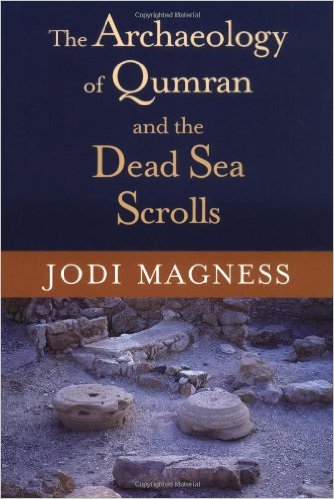
1. I'm trying to ease back into scholarship as I transition back to teaching. Yesterday I was trying to catch up a little on some Dead Sea Scroll scuttlebutt. Last time I taught Intertestamental Literature was in 2009, just as I was transitioning to become Dean.

I knew that Jodi Magness had caused some tremors in the force, that James VanderKam was going to have to revise The Dead Sea Scrolls Today at least a little. I bought John Collins' Beyond the Qumran Community and Hanan Eshel's, The Dead Sea Scrolls and the Hasmonean State and left them there on my shelf to collect dust.

2. So here's my update. It seems like everyone now is pretty much on board that 1) the scrolls go with the site of Qumran, 2) the community that goes with the scrolls was Essene, 3) that the Essenes were significantly bigger than the Dead Sea community, and 4) that many of the scrolls were produced elsewhere and brought to Qumran. Pretty much dead are Schiffman's Sadducee hypothesis and Norman Golb's Jerusalem library hypothesis (for a bizarre chapter here concerning his son, see here).


3. It looks as if Magness has well nigh convinced the DSS scholarly community that there is no real evidence for the community being at the site before the first century BC. She largely supports Roland de Vaux's 1950s analysis of the site, but with a few modifications. The denial of any occupation there before the first century is her biggest change.

Probably because of the numbers in a document called Covenant of Damascus, de Vaux identified an early phase of the site in the second century. But we now have some 50 years unaccounted for between the majority view of when the Essenes started and when we have any evidence of a group at Qumran.

4. Into this gap step Michael Wise and John Collins. The majority seems unmoved in its sense that the Teacher of Righteousness was active in the mid-second century BC and that Jonathan Maccabee was the proto-Wicked Priest of the pesharim in the scrolls. But of majorities, Collins says, "Such is the power of the received scholarly consensus" (95 n.27).

Collins suggests rather that there is no evidence that the Teacher of Righteousness squabbled over the priesthood at all. While he accepts that the Essene community must have formed in the late second century BC, he dates the TR's engagement with the Wicked Priest to the reign of Hyrcanus II (60s BC).

I have always found Collins extremely judicious, someone whom you can tell doesn't have an ax to grind but is really out for the most likely answer. That makes his reassessment something that must be taken very seriously indeed. Of course for me these things are just frustrating. Frustrated at how the early decades of a subject wobble. Frustrating that I am not up on the arguments enough to have a firm position.

Wednesday, August 19, 2015

I (Still) Believe: James Dunn

This is now my fourth post on John Byron and Joel Lohr's, I (Still) Believe. Previous posts include:

Richard Bauckham
Walter Brueggemann
Ellen Davis

Today is my own Doktor Vater: Jimmy Dunn.

1. The chapter is titled well: "In Quest of Truth." Dunn is a thinker. Obviously all the scholars in this book are thinkers, but he is a thinker of a different sort. He is someone for whom the quest for truth is insatiable. And by truth, I mean the cold hard truth as ascertained by the most objective seeker with the most information.

Jimmy is the kindest of dialog partners. He is committed to respect to the other person in dialog. But he is about the truth. He does not pull punches. He mentions one of my favorite stories in the chapter, where he is teaching at the Pontifical Institute in Rome on Hebrews, and he basically tells a group of priests that there is no basis in Hebrews for the role they conceive themselves to have. The lecture doesn't finish. They have an emergency meeting in the evening where all the priests present basically argue with each other.

2. Dunn told me once that he felt a certain similarity between his pilgrimage and my own. He started out rather conservative--I don't know if we can use the word fundamentalist of his Scottish context or if that is more an American term. But his early days at Glasgow were conservative ones, and he even went forward at a Billy Graham rally in 1955. He was once given a scolding after preaching a sermon in which he indicated why the RSV is more appropriate to use than the KJV.

For a while he was in training to become a minister in the Church of Scotland. He studied with William Barclay in Glasgow. Before long, he began to sense that his calling was more along educational lines, and he went to get a doctorate at Cambridge under C. F. D. Moule.

Questions began to gnaw at him there. He never lost his faith, mind you. He says at the end of the chapter, "my faith remains strong." He was a Methodist lay preacher when I was in Durham and he and his wife Meta are now attending an Anglican Church in one of the most Anglo-Catholic dioceses in Europe (although theirs is straightforwardly Anglican). He has especially been interested in ecumenical conversations since his days at Cambridge.

3. Dunn's commitment to following the evidence wherever it leads--and not to hide or soften his conclusions--has made him difficult to classify. He has spoken at the Evangelical Theological Society, for example, which is quite conservative. One of my first connections with him was when he came to speak at Asbury--these were the kinds of institutions that invited him and the kinds of PhD students he had. He wrote a quasi-apologetic work, The Evidence for Jesus, and has written books highlighting how central the Holy Spirit was for the early church, indeed for Jesus. He's also written on Scripture.

So is he a conservative? He certainly feels comfortable around conservatives.

But he resists classifications like that. He's a scholar. He's not interested in those sorts of labels at all. He's interested in the truth.

So others of his books have been as challenging for students like me as they are compelling. Unity and Diversity in the New Testament and Christology in the Making may not be correct on everything, but they will rock your world. He somehow has seemed to address the very questions just coming onto the horizon such that he slakes the thirst of the student of the Bible who reads it in its historical context, time and time again.

4. I will leave it at that. Most of the chapter explores the train of thought of ideas that he addressed in writing throughout his career as a scholar. But even at Cambridge, the many questions led him to a thought from John Wesley: If your heart beats with mine in affirming 'Jesus is Lord,' give me your hand.

Monday, August 17, 2015

I (Still) Believe: Ellen Davis

We continue our taste of John Byron and Joel Lohr's, I (Still) Believe with Ellen Davis, Old Testament professor at Duke Divinity School. Previous posts looked at chapters on Richard Bauckham and Walter Brueggemann.

1. What a pleasant read Ellen Davis' testimony is! What a peace seems to radiate from every page. There was a calm and a confidence in faith throughout the whole chapter. I don't know Ellen, but I get the sense that she is the kind of person who brings the blood pressure of a room down.

Fret not thy soul over evil doers. The Lord is in his holy temple. That's what this chapter feels like.

2. Davis grew up Episcopal, and she seems quite contemplative in terms of her personality. Her call to teaching seems to have come in an instant, after spending months in Oxford under the spiritual guidance of a woman named Sister Mary Kathleen. There is a real sense in her testimony that she never really struggled about what God might next have in store for her. At the right time, God revealed each next step.

I thought this paragraph was worth quoting: "A realized vocation is something like a tapestry. No one looking at the yet-to-be-assembled threads might have predicted the pattern into which they would eventually fit, but they are all important or necessary for the pattern to take shape" (45).

3. A number of experiences shaped her experience of Scripture. Growing up Episcopal, the Bible provided the "meaningful language" of her faith. She did not view it so much as a source of theology or an account of history. When she reads the text, her default question is not, "Did this really happen?" but "Why does it say this?"

She studied with Brevard Childs, of whom she says he "might well have been the only distinguished Old Testament scholar in the country who would have understood and accepted the fact that my primary motivation and guide for study was not the agenda of the academic guild, but rather the practical needs of the church" (48).

Another important experience has been her work with the church in Sudan. Not only has this pushed the "so what" question, but there are strong points of resemblance to Israelite culture. "Many Sudanese belong to a culture that is still primarily oral, and so they have a deep intuitive understanding of the kind of literature that emerges from such a culture. The common notion that African traditional readers of the Bible are instinctively 'fundamentalist' in the Western sense is completely false; they have no difficulty, for instance, with the notion that different Israelite 'sources' would tell the creation story in somewhat different ways, as is the case with their own various tribal traditions" (50).

There is some critique of some Western missionary approaches in the past here, but I'll let you buy the book to read them.

4. Davis ends the chapter by valuing the fact that Duke Divinity School is located within a context that is not always friendly to Christian faith. "The fact that our Christian beliefs are not widely shared among university colleagues keeps us at the Divinity School from taking the truth of the gospel as self-evident" (53).

If you want to read more, her most intriguing work is Scripture, Culture, and Agriculture: An Agrarian Reading of the Bible. For a text that is hermeneutically insightful, see this work co-edited by Ellen and Richard Hays: The Art of Reading Scripture.

Sunday, August 16, 2015

SA1. A sacrament is a divinely appointed means of grace.

This is the first post on sacraments in my ongoing series, theology in bullet points. The first unit in this series had to do with God and Creation (book here), and the second unit was on Christology and Atonement.

We are now in the third and final unit: The Holy Spirit and the Church. The first set of posts in this final unit was on the Holy Spirit. The second set was on the Church. This third set is on sacraments.
_______________________________
1. A sacrament is a divinely appointed means of grace. It is a divinely appointed meeting place where God takes something ordinary and does something extraordinary in us through it. It is an instrument of God by which God transforms us in some way. It is an "outward and visible sign of an inward grace."

Grace again is God's undeserved favor toward us. We often think of God's grace in relation to the atonement and forgiveness God has made possible through the death of Jesus. Yet God gives us good gifts all the time--gifts of power, gifts of blessing, gifts of knowledge. Our lives are full of God's grace in every area.

Ultimately, of course, God has established Jesus as the basis for receiving his saving and sanctifying grace. When we speak of baptism or communion or the Scriptures as means of grace, we are speaking of them as instruments of delivery, not as the real sources or bases of that grace. They are tools that God uses to meet us and change us, but they have no power in themselves. In themselves they are only ordinary water, bread, or words. It is only their connection to God and Christ that makes them conduits of power.

2. Baptism and communion are the two sacraments generally acknowledged by Protestants. This is a list reduced from the seven sacraments of the Catholic Middle Ages, which also included marriage, ordination, penance, confirmation, and last rites.

The Protestant reaction to Roman Catholicism predictably pushed at times to the opposite extreme of its opponent. If there was a tendency in catholicism to think that the sacraments worked ex opere operato, "from the act itself," Protestants tended to emphasize the faith of the person experiencing the sacrament as key. [1]

Similarly, some Protestants abandoned the notion that there are divinely appointed means of grace at all. For example, Quakers and the Salvation Army do not normally practice either baptism or communion. In a similar vein, Baptists tend to believe that communion is only a memorial of what Jesus did, not that it is actually an instrument of divine change.

3. But surely we can all recognize that God uses all sorts of different means to make us grow. God uses trials to help us grow. God uses Scripture to help us grow. God uses prayer to change us. For Francis of Assisi, all of nature was a sacrament that God could use to transform us and lead us to sense his presence.

Surely there is thus a sense in which there are the "ordinary" sacraments like baptism, communion, Scripture, prayer, fasting, Christian worship and fellowship. [2] But then there are "momentary" sacraments where God chooses to meet us in some other way by some other means. If a sacrament is a divinely appointed means of grace, then there are as many sacraments as there are ways that God meets us and transforms us.

The key aspects of a sacrament are 1) the medium that God transforms, 2) the work that God does using the medium as an instrument, and, of course, 3) the power of God working. A fourth element is also usually involved, namely, the faith either of the person receiving God's grace or the faith of the community surrounding the person receiving God's grace.

4. The power of God is of course the absolutely necessary component in any means of grace, and in God's will the atoning death of Christ is the basis for God's grace as it relates to our salvation and sanctification. No means of grace works on the basis of the medium alone, ex opere operata. Grace is always a miracle, a divine intervention into human history.

In a sense, the Bible is not Scripture until the power of the Holy Spirit comes over it while we are reading. Exegesis, the study of the original meaning of the biblical text, does not work ex opere operata to transform us or make us more Christ-like. The water of baptism does nothing spiritual unless the Holy Spirit transforms us. The bread of communion does nothing unless God works through it.

God does not need a medium to transform and change us. God can change us of his own will and of his own accord. In that sense, not even faith is necessary for God to change us. Indeed, we can only have faith as a result of God's grace. Faith itself is a gift of God, although God empowers our wills also to be involved in it. [3]

So God can change us directly, without a medium. In that instance we would not speak of a sacrament being involved. And although sacraments typically involve faith, God can change a person through a medium even if his or her faith is not involved. This is the exception, however, rather than the rule.

The power of God is thus the essential factor in any grace administered in a sacrament, and we would not call the administration of God's grace a sacrament by definition if a medium were not involved.

5. Faith is typically involved in a sacramental event, an event in which God's grace is experienced through a divinely appointed medium. Normally, this is the faith of the person receiving the grace. If I eat the bread and drink the wine of communion, but do it without any faith whatsoever, I am unlikely to receive any benefit from God thereby. Indeed, Paul suggests that such participation can actually be detrimental to us, even cause us to become sick and die (1 Cor. 11:29-30).

Again, God can choose to change us even though we are not expecting it, even though we are not approaching the "sacred moment" with faith.

We can read the Bible only looking for raw knowledge, or only as a book of history or literature, and not be changed. In that case the Bible is only a book, with ordinary words, and not Scripture. We can sit in a worship service and have our minds on something else, and not experience the grace of God through worship. We can say prayers over a meal or before we go to bed without thinking and receive no blessing. We can say the Lord's Prayer, the creed, or any other Christian activity in which others encounter God and them not be sacraments for us.

6. Rituals in themselves are neither powerful or vain. A prayer that is repeated does not have to be "vain repetition" (Matt. 6:7, KJV), but it can be. However, the human psyche is such that ritual actions can be far more powerful than mere ideas. Symbols can be exponentially more powerful than the literal. Accordingly, the literal cannot come anywhere near as close to showing us God as the symbolic and metaphorical.

For this reason, the logical word has no power beside the sacramental word. The act of worship, the act of participation in baptism or the Lord's Supper, participation in prayer and Christian fellowship--these moments have potentially life-changing effect. The pronouncement of a minister, "I pronounce you man and wife," can have a spiritual power if God is present in the moment--much more power than a dictionary definition of marriage.

Those who scorn rituals often have rituals that they do not acknowledge as such. If there is a power to their ministry, we can be sure that there are symbols and rituals present that they do not recognize as such. A church without them is likely a weak and powerless church, a Gnostic church, for this is the way God has created us, to experience him in our bodies, through physical means, in our embodiment, through material media in the world.

7. Since God is the power behind the dispersal of grace, grace can be triggered not only through the faith of the person receiving it, but also through the faith of others surrounding the recipient. Does not James 5:16 say that, "The prayer of the righteous is powerful and effective"? Our prayers can thus be a means of grace for others, even when they themselves do not have faith.

God has certainly used infant baptism throughout the centuries as a means of grace for the child, even though the child him or herself is not yet able to have faith. This is not a "saving grace" in that the child is not thereby "saved." But why would we not believe that God does something in this moment? [4] Indeed, is it possible that, because of the grace administered, the child could be more likely to believe later on, because the community of faith has surrounded him or her in faith as a child?

In such instances, the faith involved is the faith of the community surrounding the individual rather than the faith of the individual him or herself. When a person is unconscious in the hospital or dying, it is the faith of the person praying for them that can be a means God recognizes to heal. Anointing with oil is another example of a sacramental ritual involving a medium, by which God sometimes dispenses grace (cf. Jas. 5:14).

It is even possible for a believer to exercise faith over someone who is doubting. A person who is dying can sometimes experience doubts. A person can find it difficult to forgive themselves for something they have done. Our human minds are susceptible to dysfunction and neurosis, even psychosis. We can be enslaved to drugs or to various other addictions. At times the Holy Spirit gives power to another believer to be faith for the doubter, to be forgiveness or peace for the disquieted (cf. John 20:23; Matt. 16:19).

So while faith is typically involved in a "sacred moment" and that faith is usually the faith of the individual receiving grace, God can dispense grace through a medium of his own will and he can do so on the basis of the faith of others.

A sacrament is a divinely appointed means of grace, using some ordinary medium to transform us and dispense his undeserved, divine favor. There are ordinary means of grace that God has used time and time again throughout Christian history. But there are also divine moments where God unexpectedly meets us at some place or time and establishes holy ground on the spot, such as at a burning bush. Our faith is usually involved, but God can meet us at the time and place of his choosing, and he can do so because of the faith of others.

Next Sunday: SA2: Baptism is a sacrament of inclusion into the people of God.

[1] This phrase originally had to do with whether the purity of the priest administering the sacrament was a factor in the effectiveness of the sacrament's work. But the power "of the work working" itself in Protestant debate came to be contrasted with the importance of the faith of the person experiencing the sacrament.

[2] In Wesley's sermon, "The Means of Grace," he mentions the primary means of grace as prayer, searching the Scriptures, receiving the Lord's Supper, "the ordinary channels of conveying his grace to the souls of men." The reason Wesley does not mention baptism is because most anyone in England at that time would have been baptized as an infant, an act that was not repeated as an adult.

[3] Faith is the "work" God does using our will as the medium of his grace. He empowers our wills to have the capacity for faith.

[4] I would suggest that God uses "baby dedications" as means of grace in this way as well, even though such churches or individuals do not want to call the event a "baptism."

Friday, August 14, 2015

Indiana's Teacher Problem

Closing of Marion schools as students
exit to the county schools.
I thought I'd link to an article yesterday in The Washington Post called, "Indiana's got a problem: Too many teachers don't want to teach there anymore." No doubt there are elements in this article that some will dispute, but some aspects can't be disputed.

The key one is this: the turn over in teachers in the Marion School system this year is epidemic. My sense is that as many as 40% of the teachers in some of the Marion schools did not return this year. As a case in point, my son was scheduled to take a follow-up course with a favorite teacher he had last year for Bio-Med. Thankfully, they were able to find a teacher for this year, but the well-liked teacher is gone. MANY teachers are gone.

There's no disputing the problem. Why are the teachers jumping ship like rats? There is a serious problem here, and someone needs to get to the bottom of it! As this article indicates, it is not just a Marion problem. It is not just an Indiana problem. It is a widespread problem in the US. (So I am not casting aspersion at any of the leadership of the Marion Community Schools.)

Perhaps the most poignant paragraph in the article is this one: "a combination of under-resourced schools, the loss of job protections, unfair teacher evaluation methods, an increase in the amount of mandated standardized testing and the loss of professional autonomy."

That all sounds about right to me. Lots of thoughts. Here's just a few.
  • I understand the drive to give choices to parents. But the consequence is that the schools that need the most help get less and less. 
  • The behavior problem is MAJOR. I'd say to put those that can behave together regardless of academic ability but I'm not sure how many "behaved" classes you would actually have. All I can think of is having two teachers in many classrooms, with a well-designed system of student removal when problems arise. Again, that means more money to the very schools from which the Indiana legislature is taking it away.
  • You can't ignore the lowest common denominator to focus only on the middle and upper classes. The end result is out of control crime, violence, and drug traffic, not to mention a stupid majority. 
  • Decades of bureaucratic interference by both parties has sucked all the fun out of teaching. Democrats are notorious for administrative nonsense, and the Republicans in Indiana last year signed into law, was it fourteen hours worth of standardized testing?
  • By merit pay linked to student scores, you reward the teachers with easy rural students and penalize those that are willing to teach difficult, inner city students.
I'll leave it at that. But lest I give the wrong impression, my four children have had great teachers and have received an excellent education in the Marion school system. They have also seen lock downs, outbursts, and uncontrolled behavior in a small Indiana town that I never experienced growing up in the Fort Lauderdale, Florida public school system.

Nevertheless, let me again emphatically agree with the principal of Marion High School last week. MHS is still the best high school in the county in terms of its academic offerings. Gifted students who have fled to the counties for better behavior in middle school should come back for high school. The AP and honors possibilities at MHS are unmatched by the county schools, as far as I can tell.

Wednesday, August 12, 2015

I (Still) Believe: Walter Brueggemann

This week's sample from John Byron and Joel Lohr's, I (Still) Believe is Walter Brueggemann. Last week we sampled the chapter on Richard Bauckham.

1. The name of Walter Brueggeman will be familiar to many. The work that put him on the radar of many of us was The Prophetic Imagination, in which he traces the rise of power in the Old Testament and then shows the prophetic critique of that power. He is thus a champion for those who emphasize social justice and the social dimensions of the gospel.

In this chapter, we catch a possible hint of the origins of that emphasis in his childhood. His father was a dirt poor pastor for a community with extensive financial resources.

2. Brueggemann grew up in the "Evangelical and Reformed Church," which at the time he was being ordained merged to form the United Church of Christ. I have of course heard of the UCC, but knew nothing of its origins. It goes back to 1817 and Prussia when the king of Prussia got tired of the Lutherans and Calvinists fighting each other theologically and created a "Prussian Union." Because theology could not be the uniting point of the church, its principle of unity became more pietist and social justice focused.

Since theology was not the focus of Brueggemann's tradition, modernism did not create a serious crisis for his tradition. By the time he was born, his pastors and teachers already knew about German criticism but it was of little concern to them. The focus of preaching was on social justice and on an irenic spirit. He speaks of his rural home community: "The contrast between an evangelical congregation [his] and that of the Missouri Synod could not have been sharper. The Missouri Synod was (and continues to be) militantly exclusionary and vigilant about its doctrinal purity in a way that let the evangelical church be seen, by contrast, as wondrously free and open" (31).

This comment sparked a question about our current religious landscape in the US. I wondered if you took the fervor and organizational skill of a mega-church pastor and put it in a UCC pastor, might not that tradition be able to spark a revival among the nones right now, to save them from the abandonment of Christianity in a way that no remnant church is likely to do at this time? I don't expect it to happen, of course.

3. I'm probably telling too much. Pre-order the book! Brueggemann tells of the important teacher influences of his life at Elmhurst College and Eden Seminary. The Niebuhr's are mentioned, along with James Muilenburg, Brevard Childs, and Paul Ricoeur. His teachers/influences enabled him to listen to the story of the Old Testament as a story full of truths, rather than to get preoccupied with questions of historicity, along with source and form analysis.

"When our certitudes and our formulations of them are small, they cannot withstand the force of biblical criticism" (41). "I have never felt that critical study has in any way jeopardized my faith" (40). "The church is my 'natural habitat' for work" (41).

4. He gives some good advice at the end of the chapter, including "Do not arrive too soon at fixed, settled positions" (41). "Read widely and deeply." "Remember that we are not the first ones to struggle with these issues" (42). And perhaps most importantly, "We are always the 'junior partner' in interpretation. The senior partner is God's own Spirit."

5. Ricoeur has played a similar role in my own ability to transcend the "smally formulated certitudes" of fundamentalism. Brueggemann mentions Ricoeur's "orientation-disorientation-reorientation" schema. A solid training in biblical studies will often lead to disorientation to those who grew up in narrow circles. But this need not lead to a loss of faith. Faith-ful scholars like Brueggemann show us one way.

Tuesday, August 11, 2015

Monday Philosophy: The Importance of Dewey

Last week I began my way through Philip Kitcher's book, Preludes to Pragmatism: Toward a Reconstruction of Philosophy. No one will ever analyze my thinking on a scholarly level, but if you did, you would need to understand some of the things in this book. (The same goes for Keith Drury.)

1. In this chapter, Kitcher turns to the most important voice for pragmatism in the early twentieth century, John Dewey.

(It might be helpful to say that the fact that Dewey was an atheist does not mean that he has nothing of value to say for a Christian thinker. There is obviously a Christian version of pragmatism that believes that God is a personal Being, or I wouldn't be interested.

The key for me is to realize that human language can only point to and provide pictures of God. It cannot rise to the level of God's "thinking." It is the principle of incarnation. In revelation, God speaks our language, not "his.")

This chapter has 7 sections. The first gives us a nice taste of what Dewey meant when he spoke of “reconstructing” philosophy. He had no time for what have often been considered the core areas of philosophy—metaphysics, epistemology, and such. These areas tended to make philosophers into a “specialized class which uses a technical language” (2) that says little of anything useful to anyone but a philosopher. For Dewey, philosophy that was worth anything “must take effect in conduct” (2). It must have a meaningful impact on human lives.

2. In the second section, Kitcher backs up behind even Dewey to another of the pragmatist triumvirate, William James. Here is a famous quote from James that he actually claimed to draw from the third, C. S. Pierce: “The whole function of philosophy ought to be to find out what definite difference it will make to you and me” (3). In other words, it ought to address important questions. Here’s another quote from James: philosophy should make sense of “that somewhat chaotic view which everyone by nature carries about with him under his hat” (4).

For James, however, the primary preoccupation was the rise of science. How can we as individuals consider our lives meaningful given the rise of Darwinism? By contrast, Dewey was more interested in the use of philosophy for society as a whole (rather than the individual) and he saw multiple areas of life that needed to be addressed (not just science and religion). And of course James was at times open to the supernatural, while Dewey saw no usefulness to that idea.

Kitcher goes on in this section to ask what might make a question significant to life and what some concrete examples might be.

3. The third section deals with the question of how we might tell whether a question philosophy wants to answer is significant. Dewey did not buy James’ individualistic response—that the question must make a psychological difference to someone. That pretty much leaves philosophy where it is because the “specialized class” find their irrelevant pursuits psychologically meaningful. Dewey suggested it should enhance our engagement with nature. Kitcher does not find this satisfactory either. There are some explanatory pursuits that pay off in the end. Work that seems irrelevant can sometimes prove to be very relevant and impactful.

Kitcher finds some promise in Dewey’s sense that philosophy look to matters that are helpful to the public and to democracy. In other words, it should pursue things that have a collective rather than a mere individualistic pay-off. For him, things that are useful will have wide application rather than have to be rationalized as “truth for its own sake” (8). I do not completely agree with Dewey but I agree with his priorities (cf. Wesley Seminary).

Kitcher then enumerates what “well-ordered inquiry” would look like, philosophy that aims to be useful. First, it would give priority to questions that touch on the lives of many people. Philosophy should not focus on “the whimsical interests of the few, at cost to the many” (8). Second, philosophy must be well-informed. Finally, it should utilize a combination of expertise, with all points of view represented.

He does not pretend that this formula is clean cut. “There is, of course, no easy algorithm for testing extant or proposed lines of research” (10). To think there is a clear delineation of investigations that are useful is to misunderstand the fundamental dynamic of pragmatism itself.

4. Sections 4 and 5 in this chapter then show how Dewey applied pragmatism to ethics, politics, and religion. He begins with a very insightful quote from Dewey. No moral code can foresee every situation to which it will eventually have to be applied. This is of course true of the Bible, which does not address issues like nuclear war, in vitro fertilization, or disconnecting someone who is brain dead from a ventilator. It is ill-conceived for the rabbis (or the Wesleyan Discipline) to think that it can give a concrete legal answer to every future ethical question.

Ethical work is never finished. This is something I’ve long realized about teaching inductive Bible study. We inevitably end up spending most of the class looking at tools for understanding the original meaning but can’t really give a formulaic sense of how to apply the Bible to every situation today.

Dewey warned about the assumption that there was an abstract ethical ideology that we are applying to particular circumstances. Kitcher shows that this is largely a construct, because those who ran the Nazi death camps could answer every such “moral principle” question correctly. Similarly, Dewey objected to the notion that we as human beings each have some singular “moral point of view.” We are rather a “hodgepodge of considerations” (12-13).

5. Section 5 gives concrete examples of pragmatism at work in politics and religion. Dewey was someone sympathetic to John Stuart Mill, although Mill is once again very individual focused. Mill suggested that the state should only intervene into the life of an individual when an individual’s actions affected the lives of others. Dewey is more society focused. “Democracy advances human freedom through its ability to provide individual people with the ability to act together…” (15). Dewey worried, though that America had become so large and fragmented that it was easy for ignorance to take over, which diminishes the potential for freedom. “The mere opportunity to register a vote… is inadequate to realize it [democratic freedom]” (16).

Then Kitcher addresses Dewey in relation to religion. For Dewey, it is not religion that brings meaning, but when we find meaning, we develop a religious outlook to life. Philosophy thus should aim to address those “social conditions under which individual lives gain purpose and meaning” (17). Kitcher suggests that Dewey would be concerned with the current negativity and attacks on religion. A universe without religion leaves “a vacuum into which even the crudest forms of supernaturalism could easily re-intrude” (18). And here I think of how attractive a raw spiritualism or new age type spirituality can find a foothold in former Christians.

6. The sixth section deals with two objections to this program of “well-ordered inquiry.” How does this enterprise connect with the “central problems” of philosophy? And these ventures seem to require immersion in other disciplines and especially the practice of them. As to the latter, Kitcher suggests that the best philosophers have always reached across many disciplines. “Philosophy is not a discipline for those who are proud to know nothing, but is for people who aspire to know something of everything, so that they can propose… a broader perspective (19). Practitioners in these disciplines usually do not know enough about the other disciplines to do the integrative work of a philosopher.

Secondly, Dewey would object to the notion that these other areas of philosophy actually are the “central disciplines.” “Ventures in epistemology and metaphysics, Dewey claims, are often guilty of a… form of self-absorbed blindness” (20), like a chemist who becomes infatuated with blowing stylistic glass rather than the experiments it is made for. Kitcher argues that even in the twenty-first century, “the glass-blowers have taken over the lab” (21).

7. Finally, Kitcher compares himself to Rorty. Rorty argued that philosophy wasn’t a special discipline, but wanted to bury it. Kitcher, like Dewey, wants to renew it.

8. I think it’s enough for me to summarize this chapter for now. I don't think I have done it justice. I do personally think that there can be a “pragmatic epistemology” and a “pragmatic realism” that is useful. So I would extend the usefulness of philosophy to the central areas that Dewey more or less scorned. But I’m sure those issues will emerge later in the book.

More to come...

Monday, August 10, 2015

Sermon Starters: Inspiration--the Gift that Keeps on Giving

I preached this sermon at Mark Wilson's church, Hayward Wesleyan Church yesterday, August 10, 2015. You can listen to the audio of it here (27 minutes). After the service, Mark baptized 12 people in a nearby lake. Man, Wisconsin is idyllic country! It was great to be with Mark and the people of Hayward--lots of great people!

Inspiration: The Gift that Keeps on Giving
Text: Romans 1:8-17
(I paraphrased the key verses of Romans--1:16-17, which I described as a "zipped file" of the whole book of Romans.)

Introduction
I used as one of the themes of the sermon the idea that in Europe, you find that the same stones are reused over and over again over centuries, even millennia, to build the structures needed in each time and place (I referenced York Minister, the ruins of Troy, and the ruins of a priory used in a nearby farm in the countryside outside of Durham).

My gambit is that God uses and reuses the words of Scripture to build the houses that we need at various points in history and, indeed, in our individual lives. The inspiration of Scripture is not just what it meant in the "bubble above Paul's head," but God continues inspiring his people to hear in Scripture what they need to hear to make their way through this world and into eternity.

(My sermon was located at the end of a series on "Understanding the Bible" at Mark's church. They had been learning how to read the Bible in context, so I wanted to emphasize that, even though that is the goal, God will meet us where we are at take us from there. We need not be discouraged that we don't know all the things pastors and scholars know about how to interpret the Bible.)

The Example of Romans 1:17
I then transitioned into using Romans 1:17 and the "exquisite stone" of the "righteousness of God" throughout history as an example of the inspiration that keeps on giving and how God meets us where we are as we read Scripture. I proposed that I knew at least four ways to take this concept of the righteousness of God (more, actually), and that all of them had some truth to them.

 And here was a key point. Revelation has never been us coming up to God's level. Revelation (including the Bible) is God coming down to meet us on our level. This is of course what Jesus did when he came to earth and took on human flesh (John 1:14). If we could catch a glimpse of how the Father talks to Jesus and the Holy Spirit in heaven, our heads would explode.

Catholics, Luther, and Wesley
I then talk about how the RCC, Luther, and Wesley understood the righteousness of God, all of which had some truth to them.
  • The RCC of Luther's day understood Romans 1:17 to be about the righteous justice of God. Well, there's some truth there. Look at Romans 1:18. "Good news" is often good news against the backdrop of what could have been bad news, and there is potential bad new here--the judgment.
  • Luther saw in 1:17 the idea of a legal righteousness from God, God declaring us right with him in the divine court on the basis of Jesus (justification by faith). His theology was correct (see Romans 3), but that's probably not what Paul meant in this specific verse.
  • Wesley agreed with Luther on justification by faith and the meaning of 1:17, but he thought something was missing from Luther's theology of righteousness. Luther primarily saw it as a legal verdict, not as real godliness or goodness. Wesley believed God could actually change us to make us Christ-like and loving toward each other (see Romans 8).
  • God used the stone of the righteousness of God to build true structures for each of the above, even though none of them probably understood Romans 1:17 in terms of what was in the bubble over Paul's head when God inspired him at the first.
Paul's meaning
Even the stone Paul used in Romans 1:17 did not just fall out of heaven on his head. Paul himself was drawing on an exquisite stone from the Old Testament when he wrote about the righteousness of God. I looked at Psalm 71 and a number of similarities to Romans 1:16-17. I mentioned the later chapters of Isaiah as well where the righteousness of God and his giving of salvation are in parallel (Dead Sea Scrolls too).

I mentioned how parallelism works in Hebrew poetry--say it and say it again. So this prevailing background in the OT suggests that Paul's starting point for thinking about the righteousness of God was the way God wants to save his people. He's not like a professor who wants you to fail. He's not like a cowboy who wants an excuse to shoot you. God wants to save us!

So there is even a rebuilding from the building God made out of the stone in Psalm 71 and the building God makes out of the stone of God's righteousness in Romans 1:16-17. In the psalm, the psalmist is talking about God's faithfulness to him as an individual, just as God will be faithful to us as individuals today.

In Romans, the faithfulness is to all of humanity. As in Adam all died, so in Christ all will be made alive. God's faithfulness is shown in the good news of Jesus in that he has made a way for humanity and the whole creation to be rescued.

Conclusion
I used the story I heard about Virginia Wright at her funeral as the beginning of the conclusion. It was said that she could have a conversation with anyone, both a scholar and a three-year old. It's a great picture of how God can speak to you through Scripture no matter how young or old we are, no matter what our profession, no matter how smart we are. I used the old illustration of the farmer trying to get some chicks into a barn before a storm and thinking if he could just get down to their level and communicate with them.

That, I suggested, is what God does over and over again through Scripture. He takes these same stones, the old ancient stones that God used to build the people of God in the Old and New Testaments, and builds something beautiful in our lives.

Wesleyan-Arminian Reflections on the Church

Earlier this morning I posted the last post on the Church (ecclesiology) in my  "theology in bullet points" series. This Sunday I hope to start the second to last section of the whole enterprise, on sacraments.

So here are all the links in the series thus far:
_________________________
Part 1: God and Creation
God and Creation (online)
God and Creation (book form)
God and Creation (Kindle book)

Part 2: Christ and Salvation
Christ and Salvation (online)

Part 3: The Holy Spirit and the Church
The Doctrine of the Holy Spirit (pneumatology)
1. The Holy Spirit is a distinct person, but one in substance with the Father and Son.
2. The Holy Spirit enacts the will of the Father and Son in the world.
3. The Spirit sanctifies the Church.
4. The Spirit sanctifies the believer.

The Doctrine of the Church (ecclesiology)
1. In Christ, the Spirit creates the Church.
2. The true Church is an "invisible" church.
3. The invisible Church meets in visible churches.
4. The Church is one body, although it has many members.
5. There is no one, correct form of church governance.
6. There are likely elements to church governance.
7. The Church is in the world, but not of the world.
8. The Church has worship as its central and most important task.
9. The Church participates in God's mission to the world.
10. The Church disciples and nurtures God's people.

E10. The Church disciples and nurtures God's people.

This is now the tenth and final post on the Church in my ongoing series, theology in bullet points. The first unit in this series had to do with God and Creation (book here), and the second unit was on Christology and Atonement.

We are now in the third and final unit: The Holy Spirit and the Church. The first set of posts in this final unit on the Spirit and the Church was on the Holy Spirit.
_______________________________
The Church disciples and nurtures God's people.

If the Church's most important task is worship and if the Church as it faces outwardly participates in the mission of God to reconcile the world, the Church as it faces inwardly is charged to disciple and nurture God's people.

1. It is common to think of the Great Commission narrowly as a charge to get people to come to faith (Matt. 28:19-20). As we hinted in the previous article, this is even a narrow understanding of evangelism, for evangelism is to proclaim the good news, the gospel, and the good news is bigger than "getting saved." The gospel is even more about the lordship of Jesus Christ, which calls for a lifelong surrender and commitment to him as king. And the salvation it entails is more than our eternal destiny, including also our mission to bring healing to the unwhole.

Similarly, the Great Commission is to "go and make disciples." Making disciples is a much larger task than simply getting people in the door. It is more than "baptizing them" but also includes "teaching them to obey everything that I have commanded you" (Matt. 28:20). In other words, the Great Commission is as much about discipleship as it is evangelism.

2. Discipleship is the formation of God's people into true followers of Christ. It involves not only the entrance into the people of God ("baptizing them") but also the training of individuals in "everything that I have commanded you." It involves learning the Scriptures, which are "useful for teaching, for reproof, for correction, and for training in righteousness, so that everyone who belongs to God may be proficient, equipped for every good work" (2 Tim. 3:16-17).

Much more important than learning God's way as a set of truths is actually changing to be more like Christ. This is deep formation, where our attitudes and motivations become like Christ's, namely, by becoming oriented around love of God and others. As our hearts are formed to be more loving, then our actions become more Christ-like as well.

Discipleship is thus the primary task of the Church facing inwardly, just as evangelism is the primary task of the Church as it faces outward, and worship is the most important task of the Church not only as it faces upward, but as it engages in mission and discipleship. However, it may very well be that if a local church does not consciously focus on evangelism, it will have a tendency to over emphasize an inward look and neglect evangelism as a form of worship.

3. The Church disciples in more than one way. It disciples by proclamation, the proclamation of the word of God as it gathers together. Participation in the sacraments of the Church is a part of Christian formation and nurture. We are washed in baptism. We grow by feeding on Christ in communion. Even such activities as marriage, public repentance, funerals, and other events in the life of the Church can be instruments of discipleship.

The Church disciples very powerfully by bringing smaller groups of believers together for instruction and fellowship. The development of small groups of various sorts within churches is a very powerful tool for discipleship. Training before baptism, confirmation in some traditions, membership classes--discipleship can take many forms in a visible church. It certainly takes place outside the walls of a local church, such as in accountability groups and one-on-one mentoring.

4. Part of discipleship is also discipline. Training in righteousness involves spiritual disciplines such as prayer, fasting, and studying the Scriptures. It involves learning how to resist temptation and to "do the good we know we ought to do" by serving others.

But discipline also has the sense of redirection when we get off course. In love, one task of the Church is to correct the person who is headed on a dangerous path. In extreme cases, the visible church may even have to expel and break off fellowship with some who were formerly part of the community. The hope in such cases is for redemption and reconciliation, as well as to protect the body of Christ.

5. We might consider fellowship to be part of discipleship in the sense that it is also Christian formation. It is the creation and nurturing of community. But we shouldn't think of it merely as another form of instruction. Fellowship gets at the heart of how God has created us as human beings. He created us to be in community with one another.

To be able to laugh together, eat together, cry together, walk together is the very stuff of humanity. We as Christians do all these things. The Church is not merely a place for learning and worship. If we have to turn to some other venue to fulfill our basic human need for fellowship, then the visible church is not fully being the Church.

In addition to worship and evangelism, the Church thus has as a primary task the discipleship and nurturing of God's people.

Saturday, August 08, 2015

Saturday Novel: Ambush

Alan looked around the room to see if there was anyone else he didn't know. Satisfied that he had a good sense of the players, he moved over to a table where Ridley was sitting by herself, looking at her phone.

"You running in the morning?" he asked.

"Of course. Don't even thinking of skipping just because of a reception."

"I wasn't," he said with a smile. "You haven't seemed very engaged tonight," he continued, changing the topic.

"You're all freshers," she said dryly. "There's nothing of any interest to the lot of you."

"Well aren't you just a ball of sunshine," he responded with a chuckle. "Since we're all so uninteresting, I don't suppose you're ready to head out yet."

"You thinking of turning in?" she responded. "It won't help you with tomorrow's run, but it couldn't hurt you."

Alan thought he detected the hint of a smile.

"I'm going to make you eat that smirk sometime in the next month," he answered. "Want to head out?"

"Sure."

It was a lovely, cool night in the Peterhouse grounds. Alan wasn't quite sure where Ridley lived, but she seemed to be headed in the same direction as he was.

"Is your room in this direction?" he finally asked.

"What do you think?" she answered, and seemed about to say more when the sound of something whizzed by. Then there was another of the same.

"Get down," she said, pushing him to the ground.

"Were those bullets?" he muttered when they spotted a couple figures in black moving quickly toward them from the side...

Friday, August 07, 2015

Friday Science: Inflation before the Bang

Review Post #3

I've been working my way through Max Tegmark's, Our Mathematical Universe. My post on the first two chapters is here. My post on the third chapter is here.

1. Today I want to cover chapters 4 and 5. I can't believe how much has been happening in cosmic science these last few years. It feels like the cutting edge of science is moving faster than most of us could imagine. It feels like you have to be way smarter to be part of it than ever before. Man I feel old.

So chapter 4 includes some interesting claims. According to the latest estimates, only about 3% of the cosmos is ordinary matter. To get the expansion rate correct, about 68% of the universe would need to be "dark energy," where this is energy we cannot observe that does not cluster to form galaxies and such. It is energy that has a repulsive gravitational effect (77). Then 27% of our universe would be "dark matter," matter that we cannot observe that contributes to the mass of the universe that does affect the clustering of ordinary matter into galaxies.

I don't particularly like the concept of dark matter and energy. They sound like things we make up because our theory is wrong. (They remind me of an old notion called phlogiston). But Tegmark assures us that the numbers have been suggested from more than one universe measurement.

The chapter goes through some of the chase that arrived at these numbers. They mostly seem to derive from precision measurements of fluctuations in cosmic background radiation (a chart on p.72). The "cosmic matter budget" is also said to explain how the total cosmic density can be 10 to the 10th power lower than water and how space can be flat.

2. I would need to reread these chapters to put everything together better. The current thinking seems like something that could be radically reconceived if an Einstein came along, but Tegmark certainly gives the impression that the current thinking is pulling together toward the same conclusions from multiple directions. So I'm writing them down in construction pencil, although some of these findings are far enough along that Nobel Prizes have been awarded.

According to the varied measurements, the universe is currently thought to be about 13.7 or 13.8 billion years old. The "big bang" for Tegmark was a point near the very beginning where the universe doubled its size in under a second. It spent the next few minutes fusing about 25% of total hydrogen into helium. Then this hydrogen-helium plasma cooled for about 400,000 "years" (Gamow), after which the clumping and expansion took place that has resulted in the current visible universe with its swirling galaxies and such.

3. In chapter 5, Tegmark pushes back before this cosmic "big bang." I understand now a little better what he meant when he said that the big bang is not exactly the beginning. If I am getting it right, there is about a third of a second before this "big bang" that needs to be explained. (I have a couple other books I really need to read--Hawking's Brief History and a book called The First Three Minutes).

The key players here are Alan Guth and Andrei Linde. Guth addressed a "horizon problem." Why is the universe the same temperature when there are parts of it that one might say have never touched? Another problem is the "flatness problem." I'm not entirely sure what it means to say that the universe is flat, but apparently, it is balanced exactly right like a bike standing up without a kick stand.

Guth's suggested explanation was "inflation." In 10 to the negative 38th power seconds, the mass of the universe doubled 260 times. It borrows the energy to create this mass from gravitation, if I understand correctly. The gravitational waves which were observed last year are a prediction of this model.

At the end of this chapter, Tegmark suggests that this inflation has never stopped. It's just that it stopped in our pocket of the universe. Following Alex Vilenkin, about a third of the inflating substance of the universe "bangs" into galaxies while the rest continues to inflate beyond our sight. So our "Big Bang" was really the end of inflation in our part of space.

Meanwhile, inflation can, according to general relativity, create an infinite volume inside a finite volume. So our universe began "inside" a space smaller than an atom.

4. Well now. I don't know enough even to understand, much less evaluate these strange theories. But I will read on. I was struck by the tenuousness of it all, how the numbers need to be just right to get what we have. The anthropic principle, which seems to fit nicely into an argument from design.