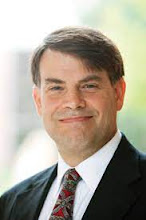
If it comes out on schedule, the book will be available next week! Here is the seventh post on John Byron and Joel Lohr's, I (Still) Believe. I probably won't do every person from here on out. You can buy the book and read them yourself!
Previous posts include:
Richard Bauckham
Walter Brueggemann
Ellen Davis
James Dunn
Gordon Fee
Beverly Roberts Gaventa
1. Today is John Goldingay. I enjoyed this chapter. I don't know Goldingay personally, but I can see that he is probably, as he implies of himself, a little eccentric. He is English, and he notes early in the book that people think of England as a nation known for eccentrics. But he claims that even the English thought him weird. He's obviously a kindred spirit. :-)
I was reminded of Ellen Davis' chapter when Goldingay suggests that he doesn't know why he believed and others didn't. He just did and does. He mentions the notion of election whimsically (94).
I knew a former Wesleyan who ended up Calvinist for similar reasons. He couldn't explain why he ended up believing while his friends around him didn't. I obviously find it hard to subscribe to such constructs, although I certainly am appreciative of them. There's a line in a Woody Allen movie where a Jewish woman says something along those lines: "Faith is a gift. Either you have it or you don't."
2. "I haven't really questioned God's reality" (98). The questions that Goldingay has faced about faith have not come from biblical studies, but from his wife's some forty plus years of struggling with MS, if I read him correctly. She died in 2009. I have a friend with MS, so I felt not a little empathy for him in these pages. It is clear that he struggled, especially since it affected her mind from early on.
He had some very interesting musings here and I hope you'll buy the book to read them. One of his most striking lines is this one: "The world does not revolve around me" (96).
He also has some difficult lines to say about God's plan for our lives. I completely agree with him, although it is not at all popular to say these days. "There is no indication in Scripture that God has a plan for the life of each individual. God has a plan that we should come to maturity in Christ and to holiness... It isn't surprising; wise and loving fathers don't have plans for their children" (99). Good theology in that section.
3. Goldingay's struggle with his wife led him to a robust view of resurrection. Interestingly, he wasn't initially concerned in the 70s whether it was literal or not. Most of the OT has no sense of a future resurrection. But Jesus' resurrection demonstrates it and it became important for him to believe that, one day, his wife's body would be restored to her.
I thought his advice and comments on higher critical issues were helpful. He sees the possibility of "believing criticism." "One doesn't accept theories that seem simply based on unfaith--e.g., that prophecy is impossible. But neither does one accept theories that seem simply based on tradition--e.g., that Moses wrote the Pentateuch or that all of Isaiah must have been written by Isaiah" (96).
Here again we see that British evangelicalism is more balanced than American evangelicalism. Indeed, Fuller seems to have it right, from Goldingay's description: "Fuller is an interdenominational seminary but it has a clear theological ethos in its commitment to the kind of Christian faith that in England we call open evangelicalism: it maintains evangelicalism's traditional stress on the death and resurrection of Christ, the centrality of scripture, and a commitment to evangelism, but combines these emphases with an interest in learning from people of other theological beliefs, a comfort with biblical criticism, and a commitment to social and cultural involvement" (100).
Sounds about right to me.
4. Buy the book to hear more. Find out what happened his first July 4th when he put up a Union Jack for fun. Did he ever get remarried? Has he pastored any here in the States?
Showing posts with label John Goldingay. Show all posts
Thursday, August 27, 2015
Wednesday, June 10, 2015
Nijay Gupta on Goldingay
Nijay Gupta has written two reviews of John Goldingay's new book, Do We Need the New Testament?
1. His first post is positive: Goldingay is right!
2. His second post pushes back: Goldingay is wrong!
I think Nijay does a great job of this. Let me say that I simply didn't grow up hearing that the OT wasn't my testament. In fact, I knew far more about the OT going into college than I did about the New Testament. I tested out of NT Survey in college at SWU and I remember thinking, wow, I know a whole lot less about the NT than the OT. I take this as a reflection of how much OT preaching I must have heard growing up and going to camp meeting.
In fact, I identify more with what I take to be the background of Fee and Stuart. I grew up with concern about "shaving the edges of your beard" (Lev. 19:27) and women "wearing that which pertaineth to a man" (in my case, slacks; Deut. 22:5). I grew up needing to hear about passages in the NT that told me not to let anyone judge me for whether I observed a sabbath (Col. 2:16). We did, however, eat pork chops.
I respect Goldingay greatly, but some of the things he says about the NT are nothing short of astounding to me (read Nijay's review).
I have been rather soft-spoken on my two-fold hermeneutic till now, believe it or not. But I think I will get more assertive in this now second phase to my career as a scholar. There are two distinct ways to read the Bible--historically and sacramentally. They need not contradict. They are both legitimate.
I am both tired of the theological interpreters who pretend history does not exist. And of course I reject the old school historians who dismiss the sacramental entirely. Goldingay, in typical evangelical fashion, tries to overlay the historical with the sacramental. Very popular right now. He skews the history to make it fit with the theological, and he pretends the sacramental is the historical.
But it basically amounts to fundamental historical incompetence. It will not stand.
1. His first post is positive: Goldingay is right!
2. His second post pushes back: Goldingay is wrong!
I think Nijay does a great job of this. Let me say that I simply didn't grow up hearing that the OT wasn't my testament. In fact, I knew far more about the OT going into college than I did about the New Testament. I tested out of NT Survey in college at SWU and I remember thinking, wow, I know a whole lot less about the NT than the OT. I take this as a reflection of how much OT preaching I must have heard growing up and going to camp meeting.
In fact, I identify more with what I take to be the background of Fee and Stuart. I grew up with concern about "shaving the edges of your beard" (Lev. 19:27) and women "wearing that which pertaineth to a man" (in my case, slacks; Deut. 22:5). I grew up needing to hear about passages in the NT that told me not to let anyone judge me for whether I observed a sabbath (Col. 2:16). We did, however, eat pork chops.
I respect Goldingay greatly, but some of the things he says about the NT are nothing short of astounding to me (read Nijay's review).
I have been rather soft-spoken on my two-fold hermeneutic till now, believe it or not. But I think I will get more assertive in this now second phase to my career as a scholar. There are two distinct ways to read the Bible--historically and sacramentally. They need not contradict. They are both legitimate.
I am both tired of the theological interpreters who pretend history does not exist. And of course I reject the old school historians who dismiss the sacramental entirely. Goldingay, in typical evangelical fashion, tries to overlay the historical with the sacramental. Very popular right now. He skews the history to make it fit with the theological, and he pretends the sacramental is the historical.
But it basically amounts to fundamental historical incompetence. It will not stand.
Subscribe to:
Posts (Atom)