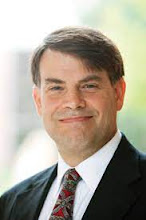
The video commentary on Hebrews continues. Previous posts include:
Introduction
Hebrews 1:1-4 (encomium)
Hebrews 1:5-14 (catena of celebration)
Now an 8 minute commentary on 2:1-4:
Explanatory Notes (Hebrews 2:1-4)
2:1 On account of this, let us hold fast to the things we have heard lest at some time we drift away.
This is a conclusion that follows from the previous chapter. "On account of this," is "because Christ is greater than the angels." Angels are only ministering spirits sent for those about to inherit salvation.
The things we have heard are the "word of salvation" first spoken by the Lord that the author will quickly mention. Drifting away is not just a hypothetical for the author but a real possibility. If we do not remain faithful, we will not make it.
2:2 For if the word that was spoken through angels became firm and every transgression and disobedience received a just punishment...
The author is constructing a "lesser to greater argument," also called an a minore ad minorem, an a fortiori, and in Hebrew, a qal wahomer argument. If something is true of the lesser angels, then it will certainly be true of the greater Christ. The idea that the Jewish law was brought to Moses through angels appears in intertestamental Judaism and several times in the NT (e.g., Gal. 3 and Acts 7).
2:3a ... how will we escape, if we neglect such a great salvation that received the beginning of speaking through the Lord...
If the angels, along with the prophets, were mediums of God's revelation in the old covenant, Christ is the one through whom God has spoken his most recent logos. Christ thus does not appear to be directly equivalent to the word itself in Hebrews' imagery.
Interesting is that what is contrasted is the punishment. Christians often conceptualize the OT as a time of punishment and the NT as a time of grace. It is not so for Hebrews. If the punishment of disobedience was large in the old covenant, you can imagine it will be large under the new covenant.
2:3b ... and was confirmed to us by those who heard him [the Lord],
This single comment effectively eliminates Paul as the author of Hebrews. It would be completely unprecedented for Paul to place himself not among those who had direct contact with the Lord but with those who did above him (Peter, etc...). Paul rather considers himself equal to the apostles and an eyewitness (1 Cor. 9:1).
2:4 God confirming at the same time both with signs and wonders and various powers and dispensations of the Holy Spirit according to His will.
Interesting is that the train of thought seems to indicate that it was the apostles who did signs and wonders. Since the audience knew these people, we cannot pretend as if these signs and wonders were merely legend. Those second generation Christians who passed on the word of salvation must have done wonders.
Showing posts with label Hebrews Video Commentary. Show all posts
Showing posts with label Hebrews Video Commentary. Show all posts
Sunday, July 15, 2012


Saturday, July 07, 2012
Hebrews Video Commentary 1:5-14
I continue my re-videoing of Hebrews commentary
Previously, Hebrews 1:1-4
Now, Hebrews 1:5-14 (39 minutes), followed by my written Explanatory Notes:
Explanatory Notes (Hebrews 1:5-14)
Introduction
The first four verses of Hebrews ended with the statement that Christ "sat down on the right hand of Majesty in the heights, having become as much greater than the angels as the name he has inherited is greater than them."
1. Timing
This mention of the angels provides a convenient segway into a chain of quotations that demonstrate the superiority of Christ to the angels in 1:5-14. 1:3-4 straightforwardly point to the timing of Christ's superiority--it is after he is exalted to God's right hand. Christ sat at God's right hand, thereby becoming greater than the angels.
Hebrews 2 will give us further background to this setting because it indicates that Christ became lower than the angels for a little while in his earthly life. We should thus read the chain of quotes in relation to the exalted, post-resurrection Christ. The burden of proof is squarely on anyone who would suggest otherwise.
2. Structure
There is a straightforward structure to this "catena" or chain of quotes:
a. The first and last quotes form what is called an inclusio--they are both introduced with the same words--"To which of the angels has He said at any time" (1:5, 13). That signals the beginning and ending to the chain.
b. Verse 7 forms an "on the one hand" (μεν)-"on the other hand (δε) relation with 8-12. This makes it unlikely that the chain is shaped in the shape of some chiasm (e.g., Meier, A, B, C, C, B, A). Further, we should thus look for the point of contrast with verse 7 to know the main reason the author uses the specific quotes of 8-12.
3. Meaning
1:5 "For to which of the angels has He said at any time, 'You are my Son; today I have given you birth' and "I will be a Father to him, and he will be a Son?'"
These OT passages, Psalm 2 and 2 Samuel 7:14, were passages that we find the Dead Sea Scrolls use in relation to the Messiah. In their OT contexts they of course referred to the early king. Here, however, they are used in relation to the exalted Christ, who is enthroned at the point of his exaltation to God's right hand. This is the timing also of Acts 13:33 and Romans 1:3.
God has never made the angels king, but He has just made Jesus king, Christ, Son of God.
This leads us to the question of the name Christ has inherited. Given the context, we are immediately pushed to think that the name is Son. The word "for" in 1:5 seems to be substantiating and/or explaining what 1:4 has just said, and 1:4 has just said Jesus was given a name more excellent than them.
On the other hand, Richard Bauckham argues vigorously that the name must be Yahweh, or Lord. After all, this is in fact God's specific name. The reasoning fits well with our ways of thinking. Son is a category, not a name as we use the word in English. The proper name of God is Yahweh and so this is the name the Father would pass on to His Son.
And the translation of Yahweh into Greek is Lord, which appears later in the passage. Further, it seems very likely that the "name above all names" Philippians 2 is Yahweh or Lord, so we have evidence of a tradition.
Bauckham is brilliant, but his logic seems foreign to the text of Hebrews. Further, it is not the direction the context seems to be pushing since 1) the verse immediately following 1:4 uses the word Son and 2) nothing is made of the word Lord beyond its use in one of the later quotes.
In any case, Son is a royal title, so perhaps we should not push too big a distinction between the "divine titles" of this chain of quotations: Son, God, and Lord.
1:6 "And again, whenever He leads His firstborn Son into the civilized world he says, 'And let all the angels of God worship him.'"
This verse connects to the previous one in structure--"To which (5a)... and (5b)... and again (6)."
It is easy for us to read this verse in relation to Christ's birth, but this is apparently not what the author was thinking. The context does not place Christ above the angels in his earthly life but in his exalted state after the resurrection. On earth he becomes "lower than the angels."
The "whenever" could lead a person to see this verse in relation to the second coming, especially if you relocate the word again--"whenever He leads His firstborn Son into the world again." But given the contextual setting (and given the use of this word, "civilized world," in 2:5), we should take this verse in relation to Christ's arrival in heaven after his resurrection. Notice that the civilized world has been relocated now in heaven rather than on earth, perhaps in the light of Jerusalem's destruction.
The picture is again an enthronement, and the word "worship" here is a word used of the proper due given to a king. It is not a word restricted to the worship of a conventional god. The picture is thus a celebration of the arrival of the king into his throneroom, and all the subjects of the kingdom in the room (the angels) bow.
1:7 "And to the angels, on the one hand, he says, 'The one who makes His angels winds and His ministers a flame of fire."
This begins the second group of three quotes. The "on the one hand" indicates that this verse contrasts with all of 1:8-12. Angels are servants of God in the creation--runners, servants in the kingdom. The chain ends with an apt recapitulation of this idea--"Are they not all ministering spirits send for those about to inherit salvation."
1:8-9 "But to the Son, 'Your throne, O God, is forever and ever and the staff of straightness is the staff of your kingdom. You loved righteousness and hated lawlessness. On account of this, God--your God--has anointed you with an oil of exaltation in the presence of your companions."
This is Psalm 45, a wedding psalm originally addressed to a human king. The word "God" here thus highlights the fact once again that Jesus is king, just as the title Son of God does. It was originally in the OT, of course, a somewhat metaphorical address, as the psalm goes on to distinguish the human king as God from the king's God, the literal God. The imagery of anointing evokes a sense of kingship also, as well as the title Christ.
But the points of contrast with verse 7 have to do with the Son's permanence and royalty. The angels are like winds and flames--constantly changing. The Son's throne is forever and ever. Similarly, they are ministers, servants. Christ is king.
1:10-12--"and 'You at the beginning, Lord, founded the earth, and the heavens are the works of your hands. They will perish, but you remain, and they all as a garment will become old, and as a wrap you will wrap them up, as a garment they will even be changed. But you are the same and your years will not fail."
This is another reference to Christ in relation to creation (cf. 1:2). But the point of contrast is again that the angels are transitory like winds and flames--indeed like the creation. But Christ the Lord will remain forever, even after the creation is destroyed. The destruction of the cosmos anticipates the mention of its removal in chapter 12.
1:13 "But to which of the angels has He said at any time, 'Sit at my right hand until I make your enemies a footstool for your feet.'"
Thus the chain comes to a full circle. We know from 1 Corinthians 15 that Psalm 2 (1:5) and Psalm 110:1 (1:14) were connected in Pauline circles. So the author of Hebrews similarly connects them. We end with a clear reference to the exaltation, but it has been in mind throughout.
1:14--"Are they not all ministering spirits sent to minister to those about to inherit salvation?"
This verse squarely locates the earthly function of the angels during the old age. Their role may linger until the creation is removed, but at some point they will only worship God and the Son, their task on earth being done. We remember that 2:2 associates them with the giving of the Law, again reminding us of their old covenant role.
We are left wondering why the author spends so much time here contrasting Christ with the angels. Certainly an easy answer is the fact that the angels delivered the law. In that sense it is perfectly appropriate to contrast the two as mediators of the two covenants.
Did the audience have an overly inflated view of angels? Did they worship angels? Did they think Christ was just an angel? It is usually at this point that Colossians 2 is brought into discussion or the Dead Sea document that refers to an angel Melchizedek.
We cannot say too certainly one way or another. If anything, it would fit best if the audience associated the angels with heavenly atonement, as we find in the Testament of Levi and the Songs of the Sabbath Sacrifice.
Previously, Hebrews 1:1-4
Now, Hebrews 1:5-14 (39 minutes), followed by my written Explanatory Notes:
Explanatory Notes (Hebrews 1:5-14)
Introduction
The first four verses of Hebrews ended with the statement that Christ "sat down on the right hand of Majesty in the heights, having become as much greater than the angels as the name he has inherited is greater than them."
1. Timing
This mention of the angels provides a convenient segway into a chain of quotations that demonstrate the superiority of Christ to the angels in 1:5-14. 1:3-4 straightforwardly point to the timing of Christ's superiority--it is after he is exalted to God's right hand. Christ sat at God's right hand, thereby becoming greater than the angels.
Hebrews 2 will give us further background to this setting because it indicates that Christ became lower than the angels for a little while in his earthly life. We should thus read the chain of quotes in relation to the exalted, post-resurrection Christ. The burden of proof is squarely on anyone who would suggest otherwise.
2. Structure
There is a straightforward structure to this "catena" or chain of quotes:
a. The first and last quotes form what is called an inclusio--they are both introduced with the same words--"To which of the angels has He said at any time" (1:5, 13). That signals the beginning and ending to the chain.
b. Verse 7 forms an "on the one hand" (μεν)-"on the other hand (δε) relation with 8-12. This makes it unlikely that the chain is shaped in the shape of some chiasm (e.g., Meier, A, B, C, C, B, A). Further, we should thus look for the point of contrast with verse 7 to know the main reason the author uses the specific quotes of 8-12.
3. Meaning
1:5 "For to which of the angels has He said at any time, 'You are my Son; today I have given you birth' and "I will be a Father to him, and he will be a Son?'"
These OT passages, Psalm 2 and 2 Samuel 7:14, were passages that we find the Dead Sea Scrolls use in relation to the Messiah. In their OT contexts they of course referred to the early king. Here, however, they are used in relation to the exalted Christ, who is enthroned at the point of his exaltation to God's right hand. This is the timing also of Acts 13:33 and Romans 1:3.
God has never made the angels king, but He has just made Jesus king, Christ, Son of God.
This leads us to the question of the name Christ has inherited. Given the context, we are immediately pushed to think that the name is Son. The word "for" in 1:5 seems to be substantiating and/or explaining what 1:4 has just said, and 1:4 has just said Jesus was given a name more excellent than them.
On the other hand, Richard Bauckham argues vigorously that the name must be Yahweh, or Lord. After all, this is in fact God's specific name. The reasoning fits well with our ways of thinking. Son is a category, not a name as we use the word in English. The proper name of God is Yahweh and so this is the name the Father would pass on to His Son.
And the translation of Yahweh into Greek is Lord, which appears later in the passage. Further, it seems very likely that the "name above all names" Philippians 2 is Yahweh or Lord, so we have evidence of a tradition.
Bauckham is brilliant, but his logic seems foreign to the text of Hebrews. Further, it is not the direction the context seems to be pushing since 1) the verse immediately following 1:4 uses the word Son and 2) nothing is made of the word Lord beyond its use in one of the later quotes.
In any case, Son is a royal title, so perhaps we should not push too big a distinction between the "divine titles" of this chain of quotations: Son, God, and Lord.
1:6 "And again, whenever He leads His firstborn Son into the civilized world he says, 'And let all the angels of God worship him.'"
This verse connects to the previous one in structure--"To which (5a)... and (5b)... and again (6)."
It is easy for us to read this verse in relation to Christ's birth, but this is apparently not what the author was thinking. The context does not place Christ above the angels in his earthly life but in his exalted state after the resurrection. On earth he becomes "lower than the angels."
The "whenever" could lead a person to see this verse in relation to the second coming, especially if you relocate the word again--"whenever He leads His firstborn Son into the world again." But given the contextual setting (and given the use of this word, "civilized world," in 2:5), we should take this verse in relation to Christ's arrival in heaven after his resurrection. Notice that the civilized world has been relocated now in heaven rather than on earth, perhaps in the light of Jerusalem's destruction.
The picture is again an enthronement, and the word "worship" here is a word used of the proper due given to a king. It is not a word restricted to the worship of a conventional god. The picture is thus a celebration of the arrival of the king into his throneroom, and all the subjects of the kingdom in the room (the angels) bow.
1:7 "And to the angels, on the one hand, he says, 'The one who makes His angels winds and His ministers a flame of fire."
This begins the second group of three quotes. The "on the one hand" indicates that this verse contrasts with all of 1:8-12. Angels are servants of God in the creation--runners, servants in the kingdom. The chain ends with an apt recapitulation of this idea--"Are they not all ministering spirits send for those about to inherit salvation."
1:8-9 "But to the Son, 'Your throne, O God, is forever and ever and the staff of straightness is the staff of your kingdom. You loved righteousness and hated lawlessness. On account of this, God--your God--has anointed you with an oil of exaltation in the presence of your companions."
This is Psalm 45, a wedding psalm originally addressed to a human king. The word "God" here thus highlights the fact once again that Jesus is king, just as the title Son of God does. It was originally in the OT, of course, a somewhat metaphorical address, as the psalm goes on to distinguish the human king as God from the king's God, the literal God. The imagery of anointing evokes a sense of kingship also, as well as the title Christ.
But the points of contrast with verse 7 have to do with the Son's permanence and royalty. The angels are like winds and flames--constantly changing. The Son's throne is forever and ever. Similarly, they are ministers, servants. Christ is king.
1:10-12--"and 'You at the beginning, Lord, founded the earth, and the heavens are the works of your hands. They will perish, but you remain, and they all as a garment will become old, and as a wrap you will wrap them up, as a garment they will even be changed. But you are the same and your years will not fail."
This is another reference to Christ in relation to creation (cf. 1:2). But the point of contrast is again that the angels are transitory like winds and flames--indeed like the creation. But Christ the Lord will remain forever, even after the creation is destroyed. The destruction of the cosmos anticipates the mention of its removal in chapter 12.
1:13 "But to which of the angels has He said at any time, 'Sit at my right hand until I make your enemies a footstool for your feet.'"
Thus the chain comes to a full circle. We know from 1 Corinthians 15 that Psalm 2 (1:5) and Psalm 110:1 (1:14) were connected in Pauline circles. So the author of Hebrews similarly connects them. We end with a clear reference to the exaltation, but it has been in mind throughout.
1:14--"Are they not all ministering spirits sent to minister to those about to inherit salvation?"
This verse squarely locates the earthly function of the angels during the old age. Their role may linger until the creation is removed, but at some point they will only worship God and the Son, their task on earth being done. We remember that 2:2 associates them with the giving of the Law, again reminding us of their old covenant role.
We are left wondering why the author spends so much time here contrasting Christ with the angels. Certainly an easy answer is the fact that the angels delivered the law. In that sense it is perfectly appropriate to contrast the two as mediators of the two covenants.
Did the audience have an overly inflated view of angels? Did they worship angels? Did they think Christ was just an angel? It is usually at this point that Colossians 2 is brought into discussion or the Dead Sea document that refers to an angel Melchizedek.
We cannot say too certainly one way or another. If anything, it would fit best if the audience associated the angels with heavenly atonement, as we find in the Testament of Levi and the Songs of the Sabbath Sacrifice.
Thursday, June 21, 2012
Hebrews Video Commentary 1:1-4
A few years ago I had recordings from a class I taught that went all through the book of Hebrews. Due to the fact it was moderated by a third party, it was basically lost. Here I begin a new series, stored on YouTube. This is Hebrews 1:1-4. My written Explanatory Notes follow it below.
Explanatory Notes (Hebrews 1:1-4)
1:1 Although God spoke formerly to the fathers through the prophets in many and various ways, s
1:4 ...having become as much greater than the angels as the name he has inherited is more excellent than theirs.
Verse 4 signals the theme that will preoccupy the rest of Hebrews 1, namely, Christ's superiority to the angels. We note the timing--it is after he is enthroned that he becomes greater than the angels. Hebrews 2 speaks of how Christ "was lower than the angels for a little while." In the exaltation, he becomes greater than the angels.
His superiority to the angels corresponds to his more excellent name--Son. This is a name that reflects Christ's cosmic kingship. To say that he inherits this name at his exaltation is to say what Acts 13:33 and Romans 1:4 say. Son of God is a royal title that applies most meaningful to Christ as he is enthroned as king at God's right hand.
Explanatory Notes (Hebrews 1:1-4)
This is one of the most elegant Greek paragraphs in the NT.
It is a single sentence in Greek periodic style.
1:1 Although God spoke formerly to the fathers through the prophets in many and various ways, s
The first two verses present a contrast between an age in which God spoke in
many ways to the fathers through the prophets and the way He is speaking now.
Now He speaks in a singular way, through a Son, who is of course the
Son of God par excellence, Jesus the Messiah.
1:2a in these last days he has spoken to us through a Son...
1:2a in these last days he has spoken to us through a Son...
The phrase "in the last days" is of course a Septuagentalism drawn
principally from the language of Jeremiah. It is no coincidence that Jeremiah
is also the place where we hear the new covenant language that Hebrews also
uses. By adding the word "these," the author makes it clear that
these are the days to which the prophets of the OT were pointing in their
prophecies.
1:2b ... whom he appointed as heir of all things, through whom also he made the worlds,
1:2b ... whom he appointed as heir of all things, through whom also he made the worlds,
The last part of verse two places Christ both at the beginning and end of the
creation. The point is not so much a matter of presence but of purpose. As the
heir of all things, he has ultimate significance in relation to the destiny of
the world. This implies that Christ is also the beginning of all things, the
very purpose of creation.
The majority of scholars would see in 1:2 a reference to Christ's pre-existence. This is of course possible. However, it is also possible that the author is saying something subtle about Christ as God's wisdom for the universe. Elsewhere the author seems to refer to God "the Father" as the creator in a way that distinguishes Jesus from him in creation. It is possible that the author is telling his audience that the creation finds its purpose and destiny in Christ, the very reason for its existence.
1:3a ... who as a reflection of his glory and an impression of his substance,
The majority of scholars would see in 1:2 a reference to Christ's pre-existence. This is of course possible. However, it is also possible that the author is saying something subtle about Christ as God's wisdom for the universe. Elsewhere the author seems to refer to God "the Father" as the creator in a way that distinguishes Jesus from him in creation. It is possible that the author is telling his audience that the creation finds its purpose and destiny in Christ, the very reason for its existence.
1:3a ... who as a reflection of his glory and an impression of his substance,
The statement that Christ is a "reflection of glory" is an allusion
to Wisdom 7:26, where wisdom is said to be a reflection of eternal light and an
image of God's goodness. Wisdom is the only place where the word
"reflection" occurs in the Greek OT. Christ thus seems implicitly
compared to God's wisdom, as in other parts of the NT (which offers another
piece of evidence that the reference to Christ as agent of creation is an implicit comparison of him to God's wisdom in 1:2).
Some argue that the word for reflection should be given an active sense "radiance" rather than "reflection." But given the passive nature of "impression" or "stamp," "reflection" seems more likely.
1:3b ...and bearing the universe by the word of his power, This statement could refer to Christ as sustainer of the creation or the agent of creation again.
It reminds us of the Colossian hymn, where allusions to Christ as the logos or word say that "in him all things hold together" (1:17). We could mention parallels in Philo to the logos having this sort of "gluing" function. In Hebrews 1:3, of course, the word for word is hrema rather than logos. This does not create difficulties for a logos type interpretation of the statement, since Christ would be the one compared to the logos and the word of power here would be the word of the logos.
In general, Hebrews does not compare Christ to the logos. This verse would be the most likely candidate. An allusion to the logos could support either the idea of Christ as agent of creation or of sustaining the universe. Given that this participial phrase modifies "he sat down," it may refer to Christ as eschatological creator of a new creation who as exalted Lord "brings" it by his powerful word.
1:3c ...when he had made a cleansing for sins...
The first four verses of Hebrews are known as the exordium. This mini-introduction gives us in many respects a brief overview of some of the material covered later in the sermon. We have already seen the author set the stage for the two ages--formerly/last days. This statement anticipates the main topic of Hebrews teaching--the full sufficiency of Christ's death to take away sins.
1:3d ...he sat at the right hand of Majesty in the heights
This is the heart of the "who" clause we have been in since verse 3 began. As a reflection of God's glory, as an impression of his substance, bearing the universe by his all powerful word, after he had made a cleansing for sins, under these circumstances, he sat at God's right hand. The implication seems to be that it is the exalted Christ who is the reflection of God's glory and the impression of God's substance.
The statement is of course an allusion to Psalm 110:1--"The LORD said to my Lord, 'Sit at my right hand until I make your enemies a footstool for your feet." This verse features significantly in other parts of the NT as a reference to Christ's enthronement as cosmic king after the resurrection.
Some argue that the word for reflection should be given an active sense "radiance" rather than "reflection." But given the passive nature of "impression" or "stamp," "reflection" seems more likely.
1:3b ...and bearing the universe by the word of his power, This statement could refer to Christ as sustainer of the creation or the agent of creation again.
It reminds us of the Colossian hymn, where allusions to Christ as the logos or word say that "in him all things hold together" (1:17). We could mention parallels in Philo to the logos having this sort of "gluing" function. In Hebrews 1:3, of course, the word for word is hrema rather than logos. This does not create difficulties for a logos type interpretation of the statement, since Christ would be the one compared to the logos and the word of power here would be the word of the logos.
In general, Hebrews does not compare Christ to the logos. This verse would be the most likely candidate. An allusion to the logos could support either the idea of Christ as agent of creation or of sustaining the universe. Given that this participial phrase modifies "he sat down," it may refer to Christ as eschatological creator of a new creation who as exalted Lord "brings" it by his powerful word.
1:3c ...when he had made a cleansing for sins...
The first four verses of Hebrews are known as the exordium. This mini-introduction gives us in many respects a brief overview of some of the material covered later in the sermon. We have already seen the author set the stage for the two ages--formerly/last days. This statement anticipates the main topic of Hebrews teaching--the full sufficiency of Christ's death to take away sins.
1:3d ...he sat at the right hand of Majesty in the heights
This is the heart of the "who" clause we have been in since verse 3 began. As a reflection of God's glory, as an impression of his substance, bearing the universe by his all powerful word, after he had made a cleansing for sins, under these circumstances, he sat at God's right hand. The implication seems to be that it is the exalted Christ who is the reflection of God's glory and the impression of God's substance.
The statement is of course an allusion to Psalm 110:1--"The LORD said to my Lord, 'Sit at my right hand until I make your enemies a footstool for your feet." This verse features significantly in other parts of the NT as a reference to Christ's enthronement as cosmic king after the resurrection.
1:4 ...having become as much greater than the angels as the name he has inherited is more excellent than theirs.
Verse 4 signals the theme that will preoccupy the rest of Hebrews 1, namely, Christ's superiority to the angels. We note the timing--it is after he is enthroned that he becomes greater than the angels. Hebrews 2 speaks of how Christ "was lower than the angels for a little while." In the exaltation, he becomes greater than the angels.
His superiority to the angels corresponds to his more excellent name--Son. This is a name that reflects Christ's cosmic kingship. To say that he inherits this name at his exaltation is to say what Acts 13:33 and Romans 1:4 say. Son of God is a royal title that applies most meaningful to Christ as he is enthroned as king at God's right hand.
Subscribe to:
Posts (Atom)