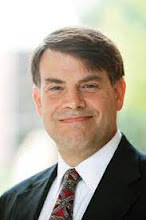
We don't have to agree with everything he says, but it seems a whole lot better than a lot of religious political rhetoric from both sides, I think.
___________________
Barack Obama at the Call to Renewal Conference
Good morning.
I appreciate the opportunity to speak here at the Call to Renewal's Building a Covenant for a New America conference. I've had the opportunity to take a look at your Covenant for a New America. It is filled with outstanding policies and prescriptions for much of what ails this country. So I'd like to congratulate you all on the thoughtful presentations you've given so far about poverty and justice in America, and for putting fire under the feet of the political leadership here in Washington.
But today I'd like to talk about the connection between religion and politics and perhaps offer some thoughts about how we can sort through some of the often bitter arguments that we've been seeing over the last several years. I do so because, as you all know, we can affirm the importance of poverty in the Bible; and we can raise up and pass out this Covenant for a New America. We can talk to the press, and we can discuss the religious call to address poverty and environmental stewardship all we want, but it won't have an impact unless we tackle head-on the mutual suspicion that sometimes exists between religious America and secular America.
I want to give you an example that I think illustrates this fact. As some of you know, during the 2004 U.S. Senate General Election I ran against a gentleman named Alan Keyes. Mr. Keyes is well-versed in the Jerry Falwell-Pat Robertson style of rhetoric that often labels progressives as both immoral and godless. Indeed, Mr. Keyes announced towards the end of the campaign that, "Jesus Christ would not vote for Barack Obama. Christ would not vote for Barack Obama because Barack Obama has behaved in a way that it is inconceivable for Christ to have behaved."
Jesus Christ would not vote for Barack Obama. Now, I was urged by some of my liberal supporters not to take this statement seriously, to essentially ignore it. To them, Mr. Keyes was an extremist, and his arguments not worth entertaining. And since at the time, I was up 40 points in the polls, it probably wasn't a bad piece of strategic advice.
But what they didn't understand, however, was that I had to take Mr. Keyes seriously, for he claimed to speak for my religion, and my God. He claimed knowledge of certain truths. Mr. Obama says he's a Christian, he was saying, and yet he supports a lifestyle that the Bible calls an abomination. Mr. Obama says he's a Christian, but supports the destruction of innocent and sacred life.
And so what would my supporters have me say? How should I respond? Should I say that a literalist reading of the Bible was folly? Should I say that Mr. Keyes, who is a Roman Catholic, should ignore the teachings of the Pope? Unwilling to go there, I answered with what has come to be the typically liberal response in such debates - namely, I said that we live in a pluralistic society, that I can't impose my own religious views on another, that I was running to be the U.S. Senator of Illinois and not the Minister of Illinois. But Mr. Keyes's implicit accusation that I was not a true Christian nagged at me, and I was also aware that my answer did not adequately address the role my faith has in guiding my own values and my own beliefs.
Now, my dilemma was by no means unique. In a way, it reflected the broader debate we've been having in this country for the last thirty years over the role of religion in politics. For some time now, there has been plenty of talk among pundits and pollsters that the political divide in this country has fallen sharply along religious lines. Indeed, the single biggest "gap" in party affiliation among white Americans today is not between men and women, or those who reside in so-called Red States and those who reside in Blue, but between those who attend church regularly and those who don't.
Conservative leaders have been all too happy to exploit this gap, consistently reminding evangelical Christians that Democrats disrespect their values and dislike their Church, while suggesting to the rest of the country that religious Americans care only about issues like abortion and gay marriage; school prayer and intelligent design. Democrats, for the most part, have taken the bait.
At best, we may try to avoid the conversation about religious values altogether, fearful of offending anyone and claiming that - regardless of our personal beliefs - constitutional principles tie our hands. At worst, there are some liberals who dismiss religion in the public square as inherently irrational or intolerant, insisting on a caricature of religious Americans that paints them as fanatical, or thinking that the very word "Christian" describes one's political opponents, not people of faith.
Now, such strategies of avoidance may work for progressives when our opponent is Alan Keyes. But over the long haul, I think we make a mistake when we fail to acknowledge the power of faith in people's lives -- in the lives of the American people -- and I think it's time that we join a serious debate about how to reconcile faith with our modern, pluralistic democracy.
And if we're going to do that then we first need to understand that Americans are a religious people. 90 percent of us believe in God, 70 percent affiliate themselves with an organized religion, 38 percent call themselves committed Christians, and substantially more people in America believe in angels than they do in evolution. This religious tendency is not simply the result of successful marketing by skilled preachers or the draw of popular mega-churches. In fact, it speaks to a hunger that's deeper than that - a hunger that goes beyond any particular issue or cause.
Each day, it seems, thousands of Americans are going about their daily rounds - dropping off the kids at school, driving to the office, flying to a business meeting, shopping at the mall, trying to stay on their diets - and they're coming to the realization that something is missing. They are deciding that their work, their possessions, their diversions, their sheer busyness, is not enough. They want a sense of purpose, a narrative arc to their lives. They're looking to relieve a chronic loneliness, a feeling supported by a recent study that shows Americans have fewer close friends and confidants than ever before.
And so they need an assurance that somebody out there cares about them, is listening to them - that they are not just destined to travel down that long highway towards nothingness. And I speak with some experience on this matter. I was not raised in a particularly religious household, as undoubtedly many in the audience were. My father, who returned to Kenya when I was just two, was born Muslim but as an adult became an atheist.
My mother, whose parents were non-practicing Baptists and Methodists, was probably one of the most spiritual and kindest people I've ever known, but grew up with a healthy skepticism of organized religion herself. As a consequence, so did I.
It wasn't until after college, when I went to Chicago to work as a community organizer for a group of Christian churches, that I confronted my own spiritual dilemma. I was working with churches, and the Christians who I worked with recognized themselves in me. They saw that I knew their Book and that I shared their values and sang their songs. But they sensed that a part of me that remained removed, detached, that I was an observer in their midst.
And in time, I came to realize that something was missing as well -- that without a vessel for my beliefs, without a commitment to a particular community of faith, at some level I would always remain apart, and alone. And if it weren't for the particular attributes of the historically black church, I may have accepted this fate. But as the months passed in Chicago, I found myself drawn - not just to work with the church, but to be in the church.
For one thing, I believed and still believe in the power of the African-American religious tradition to spur social change, a power made real by some of the leaders here today. Because of its past, the black church understands in an intimate way the Biblical call to feed the hungry and cloth the naked and challenge powers and principalities. And in its historical struggles for freedom and the rights of man, I was able to see faith as more than just a comfort to the weary or a hedge against death, but rather as an active, palpable agent in the world. As a source of hope. And perhaps it was out of this intimate knowledge of hardship -- the grounding of faith in struggle -- that the church offered me a second insight, one that I think is important to emphasize today.
Faith doesn't mean that you don't have doubts. You need to come to church in the first place precisely because you are first of this world, not apart from it. You need to embrace Christ precisely because you have sins to wash away - because you are human and need an ally in this difficult journey.
It was because of these newfound understandings that I was finally able to walk down the aisle of Trinity United Church of Christ on 95th Street in the Southside of Chicago one day and affirm my Christian faith. It came about as a choice, and not an epiphany. I didn't fall out in church. The questions I had didn't magically disappear. But kneeling beneath that cross on the South Side, I felt that I heard God's spirit beckoning me. I submitted myself to His will, and dedicated myself to discovering His truth.
That's a path that has been shared by millions upon millions of Americans - evangelicals, Catholics, Protestants, Jews and Muslims alike; some since birth, others at certain turning points in their lives. It is not something they set apart from the rest of their beliefs and values. In fact, it is often what drives their beliefs and their values. And that is why that, if we truly hope to speak to people where they're at - to communicate our hopes and values in a way that's relevant to their own - then as progressives, we cannot abandon the field of religious discourse.
Because when we ignore the debate about what it means to be a good Christian or Muslim or Jew; when we discuss religion only in the negative sense of where or how it should not be practiced, rather than in the positive sense of what it tells us about our obligations towards one another; when we shy away from religious venues and religious broadcasts because we assume that we will be unwelcome - others will fill the vacuum, those with the most insular views of faith, or those who cynically use religion to justify partisan ends. In other words, if we don't reach out to evangelical Christians and other religious Americans and tell them what we stand for, then the Jerry Falwells and Pat Robertsons and Alan Keyeses will continue to hold sway.
More fundamentally, the discomfort of some progressives with any hint of religion has often prevented us from effectively addressing issues in moral terms. Some of the problem here is rhetorical - if we scrub language of all religious content, we forfeit the imagery and terminology through which millions of Americans understand both their personal morality and social justice. Imagine Lincoln's Second Inaugural Address without reference to "the judgments of the Lord." Or King's I Have a Dream speech without references to "all of God's children." Their summoning of a higher truth helped inspire what had seemed impossible, and move the nation to embrace a common destiny.
Our failure as progressives to tap into the moral underpinnings of the nation is not just rhetorical, though. Our fear of getting "preachy" may also lead us to discount the role that values and culture play in some of our most urgent social problems.After all, the problems of poverty and racism, the uninsured and the unemployed, are not simply technical problems in search of the perfect ten point plan. They are rooted in both societal indifference and individual callousness - in the imperfections of man.
Solving these problems will require changes in government policy, but it will also require changes in hearts and a change in minds. I believe in keeping guns out of our inner cities, and that our leaders must say so in the face of the gun manufacturers' lobby - but I also believe that when a gang-banger shoots indiscriminately into a crowd because he feels somebody disrespected him, we've got a moral problem. There's a hole in that young man's heart - a hole that the government alone cannot fix.
I believe in vigorous enforcement of our non-discrimination laws. But I also believe that a transformation of conscience and a genuine commitment to diversity on the part of the nation's CEOs could bring about quicker results than a battalion of lawyers. They have more lawyers than us anyway.
I think that we should put more of our tax dollars into educating poor girls and boys. I think that the work that Marian Wright Edelman has done all her life is absolutely how we should prioritize our resources in the wealthiest nation on earth. I also think that we should give them the information about contraception that can prevent unwanted pregnancies, lower abortion rates, and help assure that that every child is loved and cherished. But, you know, my Bible tells me that if we train a child in the way he should go, when he is old he will not turn from it. So I think faith and guidance can help fortify a young woman's sense of self, a young man's sense of responsibility, and a sense of reverence that all young people should have for the act of sexual intimacy.
I am not suggesting that every progressive suddenly latch on to religious terminology - that can be dangerous. Nothing is more transparent than inauthentic expressions of faith. As Jim has mentioned, some politicians come and clap -- off rhythm -- to the choir. We don't need that. In fact, because I do not believe that religious people have a monopoly on morality, I would rather have someone who is grounded in morality and ethics, and who is also secular, affirm their morality and ethics and values without pretending that they're something they're not. They don't need to do that. None of us need to do that.
But what I am suggesting is this - secularists are wrong when they ask believers to leave their religion at the door before entering into the public square. Frederick Douglas, Abraham Lincoln, Williams Jennings Bryant, Dorothy Day, Martin Luther King - indeed, the majority of great reformers in American history - were not only motivated by faith, but repeatedly used religious language to argue for their cause. So to say that men and women should not inject their "personal morality" into public policy debates is a practical absurdity. Our law is by definition a codification of morality, much of it grounded in the Judeo-Christian tradition.
Moreover, if we progressives shed some of these biases, we might recognize some overlapping values that both religious and secular people share when it comes to the moral and material direction of our country. We might recognize that the call to sacrifice on behalf of the next generation, the need to think in terms of "thou" and not just "I," resonates in religious congregations all across the country. And we might realize that we have the ability to reach out to the evangelical community and engage millions of religious Americans in the larger project of American renewal.
Some of this is already beginning to happen. Pastors, friends of mine like Rick Warren and T.D. Jakes are wielding their enormous influences to confront AIDS, Third World debt relief, and the genocide in Darfur. Religious thinkers and activists like our good friend Jim Wallis and Tony Campolo are lifting up the Biblical injunction to help the poor as a means of mobilizing Christians against budget cuts to social programs and growing inequality.
And by the way, we need Christians on Capitol Hill, Jews on Capitol Hill and Muslims on Capitol Hill talking about the estate tax. When you've got an estate tax debate that proposes a trillion dollars being taken out of social programs to go to a handful of folks who don't need and weren't even asking for it, you know that we need an injection of morality in our political debate. Across the country, individual churches like my own and your own are sponsoring day care programs, building senior centers, helping ex-offenders reclaim their lives, and rebuilding our gulf coast in the aftermath of Hurricane Katrina.
So the question is, how do we build on these still-tentative partnerships between religious and secular people of good will? It's going to take more work, a lot more work than we've done so far. The tensions and the suspicions on each side of the religious divide will have to be squarely addressed. And each side will need to accept some ground rules for collaboration.
While I've already laid out some of the work that progressive leaders need to do, I want to talk a little bit about what conservative leaders need to do -- some truths they need to acknowledge. For one, they need to understand the critical role that the separation of church and state has played in preserving not only our democracy, but the robustness of our religious practice. Folks tend to forget that during our founding, it wasn't the atheists or the civil libertarians who were the most effective champions of the First Amendment. It was the persecuted minorities, it was Baptists like John Leland who didn't want the established churches to impose their views on folks who were getting happy out in the fields and teaching the scripture to slaves. It was the forbearers of the evangelicals who were the most adamant about not mingling government with religious, because they did not want state-sponsored religion hindering their ability to practice their faith as they understood it.
Moreover, given the increasing diversity of America's population, the dangers of sectarianism have never been greater. Whatever we once were, we are no longer just a Christian nation; we are also a Jewish nation, a Muslim nation, a Buddhist nation, a Hindu nation, and a nation of nonbelievers.And even if we did have only Christians in our midst, if we expelled every non-Christian from the United States of America, whose Christianity would we teach in the schools? Would we go with James Dobson's, or Al Sharpton's? Which passages of Scripture should guide our public policy? Should we go with Leviticus, which suggests slavery is ok and that eating shellfish is abomination? How about Deuteronomy, which suggests stoning your child if he strays from the faith? Or should we just stick to the Sermon on the Mount - a passage that is so radical that it's doubtful that our own Defense Department would survive its application?
So before we get carried away, let's read our bibles. Folks haven't been reading their bibles. This brings me to my second point. Democracy demands that the religiously motivated translate their concerns into universal, rather than religion-specific, values. It requires that their proposals be subject to argument, and amenable to reason. I may be opposed to abortion for religious reasons, but if I seek to pass a law banning the practice, I cannot simply point to the teachings of my church or evoke God's will. I have to explain why abortion violates some principle that is accessible to people of all faiths, including those with no faith at all.
Now this is going to be difficult for some who believe in the inerrancy of the Bible, as many evangelicals do. But in a pluralistic democracy, we have no choice. Politics depends on our ability to persuade each other of common aims based on a common reality. It involves the compromise, the art of what's possible. At some fundamental level, religion does not allow for compromise. It's the art of the impossible. If God has spoken, then followers are expected to live up to God's edicts, regardless of the consequences.
To base one's life on such uncompromising commitments may be sublime, but to base our policy making on such commitments would be a dangerous thing. And if you doubt that, let me give you an example.We all know the story of Abraham and Isaac. Abraham is ordered by God to offer up his only son, and without argument, he takes Isaac to the mountaintop, binds him to an altar, and raises his knife, prepared to act as God has commanded.
Of course, in the end God sends down an angel to intercede at the very last minute, and Abraham passes God's test of devotion. But it's fair to say that if any of us leaving this church saw Abraham on a roof of a building raising his knife, we would, at the very least, call the police and expect the Department of Children and Family Services to take Isaac away from Abraham. We would do so because we do not hear what Abraham hears, do not see what Abraham sees, true as those experiences may be. So the best we can do is act in accordance with those things that we all see, and that we all hear, be it common laws or basic reason.
Finally, any reconciliation between faith and democratic pluralism requires some sense of proportion.This goes for both sides. Even those who claim the Bible's inerrancy make distinctions between Scriptural edicts, sensing that some passages - the Ten Commandments, say, or a belief in Christ's divinity - are central to Christian faith, while others are more culturally specific and may be modified to accommodate modern life. The American people intuitively understand this, which is why the majority of Catholics practice birth control and some of those opposed to gay marriage nevertheless are opposed to a Constitutional amendment to ban it. Religious leadership need not accept such wisdom in counseling their flocks, but they should recognize this wisdom in their politics.
But a sense of proportion should also guide those who police the boundaries between church and state. Not every mention of God in public is a breach to the wall of separation - context matters. It is doubtful that children reciting the Pledge of Allegiance feel oppressed or brainwashed as a consequence of muttering the phrase "under God." I didn't. Having voluntary student prayer groups use school property to meet should not be a threat, any more than its use by the High School Republicans should threaten Democrats. And one can envision certain faith-based programs - targeting ex-offenders or substance abusers - that offer a uniquely powerful way of solving problems.
So we all have some work to do here. But I am hopeful that we can bridge the gaps that exist and overcome the prejudices each of us bring to this debate. And I have faith that millions of believing Americans want that to happen. No matter how religious they may or may not be, people are tired of seeing faith used as a tool of attack. They don't want faith used to belittle or to divide. They're tired of hearing folks deliver more screed than sermon. Because in the end, that's not how they think about faith in their own lives.
So let me end with just one other interaction I had during my campaign. A few days after I won the Democratic nomination in my U.S. Senate race, I received an email from a doctor at the University of Chicago Medical School that said the following:"Congratulations on your overwhelming and inspiring primary win. I was happy to vote for you, and I will tell you that I am seriously considering voting for you in the general election. I write to express my concerns that may, in the end, prevent me from supporting you."
The doctor described himself as a Christian who understood his commitments to be "totalizing." His faith led him to a strong opposition to abortion and gay marriage, although he said that his faith also led him to question the idolatry of the free market and quick resort to militarism that seemed to characterize much of the Republican agenda.
But the reason the doctor was considering not voting for me was not simply my position on abortion. Rather, he had read an entry that my campaign had posted on my website, which suggested that I would fight "right-wing ideologues who want to take away a woman's right to choose." The doctor went on to write: "I sense that you have a strong sense of justice...and I also sense that you are a fair minded person with a high regard for reason...Whatever your convictions, if you truly believe that those who oppose abortion are all ideologues driven by perverse desires to inflict suffering on women, then you, in my judgment, are not fair-minded....You know that we enter times that are fraught with possibilities for good and for harm, times when we are struggling to make sense of a common polity in the context of plurality, when we are unsure of what grounds we have for making any claims that involve others...I do not ask at this point that you oppose abortion, only that you speak about this issue in fair-minded words."
Fair-minded words. So I looked at my website and found the offending words. In fairness to them, my staff had written them using standard Democratic boilerplate language to summarize my pro-choice position during the Democratic primary, at a time when some of my opponents were questioning my commitment to protect Roe v. Wade. Re-reading the doctor's letter, though, I felt a pang of shame. It is people like him who are looking for a deeper, fuller conversation about religion in this country. They may not change their positions, but they are willing to listen and learn from those who are willing to speak in fair-minded words.
Those who know of the central and awesome place that God holds in the lives of so many, and who refuse to treat faith as simply another political issue with which to score points.So I wrote back to the doctor, and I thanked him for his advice. The next day, I circulated the email to my staff and changed the language on my website to state in clear but simple terms my pro-choice position.
And that night, before I went to bed, I said a prayer of my own - a prayer that I might extend the same presumption of good faith to others that the doctor had extended to me. And that night, before I went to bed I said a prayer of my own. It's a prayer I think I share with a lot of Americans. A hope that we can live with one another in a way that reconciles the beliefs of each with the good of all. It's a prayer worth praying, and a conversation worth having in this country in the months and years to come.
Thank you.
Monday, December 04, 2006


Saturday, December 02, 2006
Evangelical Asked to Speak on Democrat's Weekly Broadcast
I'm Jim Wallis, author of God's Politics. I was surprised and grateful when Senate Democratic Leader Harry Reid called to say his party wanted to set a new tone and invite, for the first time, a non-partisan religious leader to deliver their weekly radio address and speak about the values that could unite Americans at this critical time.
So, I want to be clear that I am not speaking for the Democratic Party, but as a person of faith who feels the hunger in America for a new vision of our life together, and sees the opportunity to apply our best moral values to the urgent problems we face. I am not an elected official or political partisan, but a religious leader who believes that real solutions must transcend partisan politics. For too long, we have had a politics of blame and fear, while America is eager for a politics of solutions and hope. It is time to find common ground by moving to higher ground.
Because we have lost a commitment to the common good, politics is failing to solve the deepest crises of our time. Real solutions will require our best thinking and dialogue, but also call us to transformation and renewal.
Most Americans know that the important issues we confront have an essential moral character. It is the role of faith communities to remind us of that fact. But religion has no monopoly on morality. We need a new, morally-centered discourse on politics that welcomes each of us to the table.
A government that works for the common good is central. There is a growing desire for integrity in our government across the political spectrum. Corruption in government violates our basic principles. Money and power distort our political decision-making and even our elections. We must restore trust in our government and reclaim the integrity of our democratic system.
At this moment in history, we need new directions.
Who is left out and left behind is always a religious and moral question. In the Hebrew Scriptures, the health of a society was measured by how it cared for its weakest and most vulnerable, and prosperity was to be shared by all. Jesus proclaimed a gospel that was "good news to the poor."
I am an evangelical Christian, and a commitment to "the least of these" is central to my personal faith and compels my public actions. It is time to lift up practical policies and effective practices that "make work work" for low-income families and challenge the increasing wealth gap between rich and poor. We must find a new moral and political will to overcome poverty that combines personal and social responsibility with a commitment to support strong families.
Answering the call to lift people out of poverty will require spiritual commitment and bipartisan political leadership. Since the election, I have spoken with leaders from both parties about creating a real anti-poverty agenda in Congress. We need a grand alliance between liberals and conservatives to produce new and effective strategies.
This week, President Bush met with Prime Minister Maliki of Iraq, seeking solutions to the rapidly deteriorating situation in that civil-war torn nation. Nearly 3,000 Americans and hundreds of thousands of Iraqis have died. The cost and consequences of a disastrous war are moral issues our country must address. Leaders in both parties are acknowledging that the only moral and practical course is to dramatically change the direction of U.S. policy, starting with an honest national debate about how to extricate U.S. forces from Iraq with the least possible damage to everyone involved.
Our earth and the fragile atmosphere that surrounds it are God's good creation. Yet, our environment is in jeopardy as global warming continues unchecked and our air and water are polluted. Good stewardship of our resources is a religious and moral question. Energy conservation and less dependence on fossil fuels are commitments that could change our future - from the renewal of our lifestyles to the moral redemption of our foreign policies.
A culture that promotes healthy families is necessary to raise our children with strong values, and the breakdown of family and community in our society must be addressed. But we need serious solutions, not the scapegoating of others. And wouldn't coming together to find common ground that dramatically reduces the number of abortions be better than both the left and the right using it as an issue to divide us?
We need a new politics inspired by our deepest held values. We must summon the best in the American people, and unite to solve some of the moral issues of our time. Americans are much less concerned about what is liberal or conservative, what is Democrat or Republican. Rather, we care about what is right and what works.
The path of partisan division is well worn, but the road of compassionate priorities and social justice will lead us to a new America. Building that new America will require greater moral leadership from both Democrats and Republicans, and also from each and every one of us.
I'm Jim Wallis. Thank you and God bless you.
Monday, November 27, 2006
Augustine Shifts 1
Now that I'm 40, I want to make this decade count as a scholar. I've piddled with topics here and there. It looks like my dissertation will be published with Cambridge on Hebrews. I'm in the proposal writing stage of what I hope will be my next book on a generally scholarly level.
So I need to get a little focused. In short, I may only post here once a week, usually on Mondays (sometimes sneaking it in on Sunday). Of course if the Spirit moves, I doubt I'll stop myself.
For the next few Mondays, I thought I'd mention a few shifts in our understanding of Paul that Augustine has contributed to us. The first--a shift from speaking of our flesh as the foothold of sin over us to the idea that we have a sinful nature.
The NIV regularly translates the Greek word flesh as "sinful nature." It is one of many, many rabbit trails of the NIV, in my opinion. For Paul the starting point for understanding flesh is, well, skin. There is a natural glide in his arguments in Romans from the flesh to our mortal bodies and our physical members.
"Do not let sin continue to reign in your mortal body" (6:12).
"nor continue to present your members as instruments of unrighteousness to sin" (6:13).
"for when we were in the flesh..." (6:5)
As usual, the good old NIV obscures Paul's logic.
At the same time, flesh easily becomes a metaphor for the part of us that sin holds power over. So just as we can die with Christ (and yet still be physically alive), we can get out of our flesh (even though we're still in our skin). "Those who are in the flesh are not able to please God" (8:8).
Paul can speak about sin dwelling in my flesh (7:18). But we should not take this as a statement of literal nature. Why? First, because flesh is not intrinsically sinful--Jesus came in the likeness of sinful flesh (8:3). Now it's not that Jesus' flesh was any different from ours literally. Sin just didn't have power over his flesh as it does ours. Secondly, because Paul indicates we can get out of this flesh in 8:8.
So what rabbit trails has Augustine sent us down in this instance. Questions of eradication or suppression are immediately seen to be arguments over a metaphor taken too literally. But eradication comes closest to what Paul does with the metaphor.
Is the sin nature passed down genetically? Is this why Jesus was born of a virgin? Paul knows nothing of these questions. It seems more likely that we should connect Paul's statement that the creation was subjected to futility (8:20) to this discussion. The entire creation is enslaved, and our physical bodies are a part of that creation. Sin is thus a power that holds over the physical realm in general, one for which Spirit is an antidote.
I think we should see this same general way of thinking behind Paul's enigmatic comments about the elements in Galatians 4:9: "now that you have known God (or rather are known by God) how are you turning again to the weak and impoverished elements, which you wish to serve again anew?" Colossians will develop this strange way of thinking that equates keeping certain parts of the Jewish law with enslavement to sin.
So we have no reason to think that the virgin birth had anything to do with Christ not having a sin nature. It's one of several rabbit trails of church history brought to you by Augustine.
Sunday, November 26, 2006
The Da Vinci Code
I finally saw the Da Vinci Code this week. In true Ken form, I only read a few pages of the book when it came out. Then I missed the movie when it was in the theater. My wife Angie on the other hand read the book when we were in Germany 2004 and saw the movie with my step-daugthers.
I guess the movie is a little different from the book (so the police chief is not Opus Dei in the book), but here are some thoughts.
Sheerly on the merits of the plot, clever. This is a kind of genius to be able to weave things together this way. Of course it is the same kind of genius that we see in conspiracy theories and Left Behind eschatology. But it is very clever indeed. It would be even clever-er if the historical facts were a little more accurate, :-) but more on that in a second.
I can see why many devout Catholics were offended. The book/movie basically pictures the RC church as systematically trying to squash the truth about Jesus being human and having children. Members of Opus Dei I imagine were particularly offended. My impression is that the movie toned down some of this anti-catholic rhetoric.
Is Brown yet another bitter ex-Catholic? The same kind of conspiracy theories were rampant in the early 90's over the Dead Sea Scrolls. People were arguing that the Church didn't want to let the scrolls out because they contradicted Christianity. Of course it all proved to be false hype. Then there was the movie Stigmata that took a similar schtick. This is a genre, the "The Catholic Church is evil and conspiring against you" genre.
Of course there are a number of historical "cheats," as Jim Garlow and many others have pointed out. For example, the Council of Nicaea was about the Trinity, not about what books belong in the canon or about the divinity of Christ. Nicaea was in 325 and we don't even have an instance of someone suggesting the current list of NT books until 369. And while Nicaea did debate whether Jesus was the first of God's creations, the gospel of John in the 90's already has a picture of Jesus that goes way beyond the one Da Vinci pictures being abandoned in 325.
As for Jesus being married or having children, I find nothing intrinsically heretical about that. He was fully human--no council denies it. Sex and human passion are not evil, nor is having children. Of course I don't think Jesus had any children and the Bible gives us no reason to think he was married. Then again, we wouldn't know that Peter was married if Paul hadn't made an off handed comment about it in 1 Corinthians 9.
More problematic from a Christian point of view is the sloshy, maybe humans are divine thing at the end of the movie. Reminds me of Star Trek V. New age-y.
So it was a very clever movie. I can see why it hit so close to home for so many. Reminds me of the meat offered to idols issue. Some people can watch these things and see it for what it is--a fiction. For others, the world it projects is just too unpleasant to enjoy, even as a novel.
Wednesday, November 22, 2006
Paraphrase of Romans 9-11
9 Now don't get me wrong. Don't get the impression that I don't like my own people or that I'm glad they're in trouble for not accepting Jesus as Messiah. I wish I could be damned in their place! And it's such a pity because my fellow Israelites have so much going for them. The covenants and promises are for them. God gave them the law and the temple. Jesus himself was a Jew!
But this is not God's fault. In a sense, not everyone in Israel is yet truly in Israel. True Israel is, after all, about God's direction and not about your DNA. God's plan often is unpredictable and our job is to accept it rather than question it. It's not about us following our plan but about following the plan God himself has set up. God can show mercy on the Gentiles if he wants to show mercy on the Gentiles. And if part of his plan is for most of Israel to reject him right now, it's his call.
So is God unrighteous for having a different plan than we would expect? Is God unrighteous because it fits his will for most of Israel to reject him right now?
Absolutely not. God can do what he wants--he's God.
You might say, then, well why does God find fault with Israel because his Messiah isn't what they were expecting, indeed what the Scriptures themselves would lead us to expect?
It's not your place to ask. God can make most of Israel reject Jesus if he wants to because he's God. It's his clay and he can do whatever he wants with it.
Right now it's his will to include the Gentiles in the people of God. And right now it's his will that only part of Israel will accept Jesus as the Messiah.
So is that really what you're saying, Paul, you ask. The non-Jews who didn't care about being right with God have come to be right with God and Israel--which wanted to be right with God--is not. Yes. Why? Because they have not accepted God's plan. They have continued to think God considers their acts of keeping the Jewish law as the basis for continued right standing before God. But they misunderstand what the law was all about. The law was meant to point to Christ. Faith in God's plan, what he has done through Christ, is the path he wants both Jew and Gentile to take in order that they might be in good standing with him.
Israel is currently tripping over Christ. Their zeal for the law has ironically led them away from God's plan. I sure hope they will come to realize this!
Moses' writings realize it. Deuteronomy tells about this path to right standing with God. It's not something you have to go up to heaven or down to the dead to get. It's right in your mouth, the confession of faith that Jesus is in fact God's king, God's messiah, the Lord of the universe. It's faith that God raised Jesus up from the dead to take this role. If we will call on Jesus as Lord we will all be saved from God's wrath on the Day of Judgment.
It's because of this good news that I have gone all over the world. But thus far most of Israel has not accepted this good news. The writings of Moses and Isaiah both have some words that are true of most of Israel: God is making them envious by bringing the Gentiles into the people of God, even though the Gentiles weren't even looking for God.
So is that it for Israel, the end?
Absolutely not! I'm an Israelite, after all. There is already a remnant who have accepted Jesus as Messiah. This is a group that has placed their faith in God's gracious offer of reconciliation through Christ, rather than by keeping the Jewish law. In some mysterious way, this is just God's plan for those in Israel who have not accepted Jesus as Messiah.
So are those who have rejected Jesus toast, the rest of Israel? Is there no hope for them?
Absolutely not! This is apparently God's plan to bring the Gentiles into the people of God. Those of you who are Gentiles will make Israel so jealous. They will become jealous that God is showing such favoritism to those who didn't even start out as his people. You're like a branch that God has grafted into the tree of Israel.
By the way, if Israel had no basis for boasting in a privileged relationship with God, certainly you Gentiles don't have any basis to boast either. If your faith fails like Israel's has, God can cut your branch off too. And if Israel starts having faith, God can graft them back in as well.
In fact, this is all a big mystery to me--especially the fact that Israel has not accepted Jesus as Messiah. But when enough Gentiles are in, then the rest of Israel will come in too--Israel will eventually affirm Jesus as Messiah. How could it be otherwise, since God would not change his mind about his election of Israel. Ultimately, God will have mercy on everyone--both Jew and Gentile.
Oh how mysterious and unfathomable is God's way of thinking to us! Everything is ultimately about him, to whom be glory forever!
Tuesday, November 21, 2006
Paraphrase of Romans 5-8
5 Therefore, we have indeed been justified by faith and are at peace with God, reconciled through Christ's death. The problem both Jew and Gentile face has been taken care of through the blood of Christ and we will be saved from God's wrath when it comes on the world. God has shown us His love for us in that while we were His enemies, Christ died for the ungodly we mentioned in chapter 1.
Notice I mention in chapter 5: 1) the hope of the glory of God, something that I will end the section with in chapter 8 and 2) tribulations, remembering that I will mention sufferings at the end of this section as well. These comments may just create an inclusio that binds chapters 5-8 together. It may also imply that we should read my comments on sin and the law later at least partially against the backdrop of the way we Christians are currently suffering for Christ.
Let's step back and place this discussion of justification and sin into its broader narrative framework. You see, sin entered into the world through one person, Adam. And death was the result. Before God gave the law to Moses, the power of sin was in the world, even though sin was not taken into account. But they still died even though they didn't sin like Adam, who knew the commandment.
But Christ has done the opposite of Adam. Many died because of Adam. Many will receive God's grace because of Christ. The disobedience of one person made many sinners; the faithful obedience of one will make many righteous, justified. The purpose of the Jewish law was to make sin multiply as people knowingly violated it. But God's grace multiplies even more when that happens and reigns as it leads to eternal life.
6 So I've said that grace multiplies even more as sin multiplies as we consciously violate the Jewish law. So should we dwell on sinning, so that even more grace comes? Absolutely not!
We've died to sin and been buried with Christ. We must therefore rise up to a new way of life. We become conformed to his death, and then later we will be resurrected like him. When we died, we died to sin.
What that means is that the power of sin must not rule over your dying bodies, meaning that you just can't obey the desires of your body. You can't present the parts of your body to sin, but your body to right living. We are not in the situation under the law we started out in; we are in the age of God's grace through Christ.
So since we have God's grace on our side, should we go ahead and sin and not worry about it? Absolutely not! That would make you a slave of sin rather than a slave of right living. Thanks be to God! You were slaves of sin, but you have been freed from sin and now serve righteousness. Good thing too, because the end of the "slave to sin" path is death, death is its wages. But now you you are free from sin and enslaved to righteousness--your living is now the kind appropriate when you belong to God.
7 Again, you used to be married to the Jewish law and to the power sin exerted over you through it. But when your first husband dies, you can get remarried. So now although you were in the flesh, with the passions of sins working in the parts of your body, now you have been released from the power sin had over you because of the law.
So does that make the Jewish law evil?
Absolutely not! The law told me what sin was. But the power of sin uses the law to kill me. So like those before the law and Adam, we start off life without real knowledge of the law. Then like Adam, we learn the commandment and the power of sin takes advantage of us and we head for death. It isn't the law's fault--it is correctly pointing out what the holy and just and good actually is.
So why did I die then, since the law is good? The problem is that when you are a slave to sin, when you are "in your flesh," in your dying body, a person isn't able to keep the good law even when they want to. We all start off this way, as fleshly creatures sold as slaves under sin. The young Jew may want to keep the law and do the good in their inner person, but there is a rule in their flesh that prevents them. Woe is me! What can be done?
Thanks be to God, through Jesus Christ our Lord something can be done!
So you see there is no condemnation to those in Christ Jesus, just as we saw back in chapter 5. The rule of sin that entered the world through Adam is overcome by the rule of the Spirit that entered the world through Christ. The law couldn't make us right with God--our flesh made sure of that. But God sent his Son in the flesh--flesh that looked like the sinful flesh the rest of us have--and condemned sin in the flesh. Now the just act of the law can be fulfilled in us (love) if we walk according to the Spirit.
But those "in the flesh" can't please God, they are not subject to the law of God. But you're not in the flesh; you're in the Spirit, because the Spirit of Christ is in you--you can't even belong to Christ if you don't have his Spirit.
So as we said in chapter 6, put to death the deeds of the body of the flesh and you will truly live.
Those with God's Spirit are His sons. If we suffer with him we will be glorified with him. The sufferings we're experiencing these days are nothing compared to the glory we're about to see. The creation of which our bodies is a part is waiting to be liberated just like we are. We know that all these things will come to the good at the end, for God has pre-arranged for us to be resurrected and take on the image of his Son.
God is on our side! None of the things we are experiencing can separate us from the love of God that He has shown us in Christ Jesus!
Wednesday, November 15, 2006
Paraphrase of Romans 1-4
Hi, I'm Paul, I'm a servant of Jesus Christ--and let me share a little "creed" about him you might have heard: he's "son of David" and thus Messiah in his flesh but "Son of God" in power because God raised him from the dead according to the Spirit of holiness"--and you all are the Romans. I've often wanted to come visit you so that we could have a kind of spiritual gift exchange, but it just hasn't happened up till now. I'm an apostle to the Gentiles, so I want to preach to you all at Rome too.
For I'm not ashamed of the good news about what God has done through Jesus Christ. What God has done has provided a way for everyone who has faith to be saved from God's wrath on the day of judgment. In that good news God reveals His righteousness and justice toward Israel and the world, starting with His faithfulness toward the world and leading to our faith in response, just as Habakkuk 2:4 has proclaimed: "The one who is righteous on the basis of faith, will live."
For we all start out with this a problem: God judges the ungodliness of humanity and the unright aspect of people. People should know about the true God. Everyone should know His invisible power and divinity. But instead the nations worship idols. So God has let them spiral out of control, to follow that road out to its logical conclusion. We see this in the same sex practices of certain ones who bring on the punishment of disgrace in the very act itself. In fact look at the world. We can see their spiralling out of control in their covetousness, strife, murder, gossip, deceit, boasting, etc. These sorts of behaviors are worthy of death, and yet people applaud them.
2 But don't get to smug. I know some of you have been thinking. "Yeah, Paul, most Gentiles are like that. God's going to blast them. But I am or have become a Jew." But are you actually living any differently that these "heinous Gentiles" you're laughing at? The fact that God is only graciously receiving you should lead you to repent just like it should them! It is not the hearers of the Jewish law that God accepts, but the doers.
So if you should find a Gentile [nudge, wink--I'm talking about Christians here] that keeps the essence of the Jewish law, shows the law written on their hearts [nudge, wink, because they have the Spirit] shouldn't their uncircumcision be counted as circumcision? But it works both ways. Should a circumcised Jew be considered a Jew if they don't keep the essence of the law [nudge wink: love your neighbor as yourself]? So you who call yourself a Jew, do you actually keep the Jewish law? I know a lot who call themselves a Jew but actually behave in a way that disgraces God among the nations.
3 So does a Jew have any advantage at all, especially if circumcision doesn't matter? Sure. They have the Scriptures. The fact that some don't live up to them isn't God's problem. And by the way, if you've heard that I teach "Let's sin so that God's grace will come," I don't teach that.
The fact is that both Jews and Gentiles are under the power of sin. Neither has a claim to God's favor. "No one made of flesh will be found not guilty and approved," because no one has kept the Jewish law that good. All have sinned--both Jew and Gentile--and neither have the glory God intended for humanity in the creation. That's the problem.
But God has shown His righteousness again--the fact that He is just, and that He is faithful to Israel and in fact the whole world. But He has shown his righteousness in a way that doesn't involve the Jewish Law, even though the books of the Law and the Prophets have foretold it. What I'm talking about is the righteousness God has shown through the faithfulness of Jesus Christ resulting in atonement for all who have faith in what God has done through him. So although both Jew and Gentile have sinned, both can be acquitted because of God's grace made possible by offering Christ as redemption, as an atoning sacrifice. See how this shows that God is just [because a punishment has been asserted] and yet God makes people just if they have this faith Jesus demonstrated.
No one, Jew or Gentile, has any basis to boast before God. God is one God, which means He must be God of both Jew and Gentile. And he justifies or declares someone in right standing the same way. For the Jew it is on the basis of faith [not works of law] and for the Gentile it is through their faith as well. A person is justified by faith and not by works of the Jewish law.
4 Let's use Abraham as a test case. Genesis says that Abraham had faith in God and God afforded him right standing before Him. When was this? Was Abraham circumcised when this happened? No, it was when he was uncircumcised. So Abraham at this point of his life is the father of all those justified while they are uncircumcised, namely, the Gentiles. What kind of faith did Abraham have? He had faith in a God who could raise the dead. He had faith in a God who could give life to a barren womb. If we have faith in this God who raised Jesus from the dead, we will be considered right with God too.
Jesus died to atone for our sins and he was raised to establish our right standing before God. This is the solution.
Sunday, November 12, 2006
Sources behind the travel narrative of Acts
As I continue to think about Acts, I want to reflect a little on the travel narrative in which Paul travels from Casaerea to Rome. Luke also ends with a long travel narrative (to Jerusalem), so Luke seems to like arranging his narratives this way.
I might also mention that the so called "Western text" of Acts (primarily manuscript D) differs significantly from the "Alexandrian" text (as usual for Acts) in this section.
In this post I want to reflect a little on the argument of Lamouille and Boismard, largely endorsed by Jerome Murphy O'Connor, that Luke has spliced together two different versions of the shipwreck narrative.
Murphy O'Connor summarizes the argument in this way (I am adding and modifying it at various points):
1. Acts 27:11-12 is a bit strange in the light of 27:8-10 (you'll notice that I've modified the verses slightly from how Murphy-O'Connor does).
Acts 27:8-11 says, "And barely sailing past it [Salmone] did we arrive at a certain place called Fair Havens, which is near the city of Lasia. And because enough time had passed and the time for sailing was already precarious because even the Fast [Day of Atonement] had already past, Paul advised them saying, 'Men, I see that with danger and much cost not only of cargo and ship but also of our lives the sailing is about to be.' The centurion listened more to the pilot and owner more than to what was said by Paul. "
Here we have the characteristic "we" of this section of Acts. Paul seems to be warning them not to take some open sea voyage that will cost them in lives.
But when we arrive at 27:12, we do not have the characteristic "we." Also, what is being discussed is not an open sea voyage, but a fairly mundane trip of about 60 miles along the southern coast of Crete:
27:12 says, "And since a harbor didn't exist there that was suitable to spend the winter, the majority favored going on from there, if somehow they might be able to reach Phoenix to winter there, which was a harbor of Crete facing the south and northwest."
Boismard, Lamouille, and Murphy-O'Connor all think that these two comments come from two editions of the same story: a travel journal and a source based on the same travel journal.
2. Verse 16 seems to imply that they got the boat under control at an island called Cauda, just south of western Crete. They lower something in verse 17.
But in verse 18 they are suddenly in the open sea again in a storm again.
3. The expression epekilan ten naun, found in Homer, usually means to land on an open beach, not to shipwreck or hit a reef. The idea of running aground appears several times, e.g., in 27:29 and in 27:41 (the Homeric parallel).
So they conclude we have two versions of the same story.
I'm always wary of the kinds of source analyses that tease out sources in a way that goes "verse for source A, verse for source B; verse for source A..." It just seems a little odd. I am open to being convinced otherwise, but I'm much more sympathetic to the idea that someone edited a single source and didn't work out all the kinks. Or that we have a paragraph from one source and a paragraph that resumes the other.
So where are the potential fissures that might indicate source matters?
1. Much of 9-11 relates to an open sea voyage, while 27:8 at Fair Havens would flow fairly easily into 27:12 and an attempt to make Phoenix for winter. Perhaps Luke has edited a "travel source" significantly in 27:9-11?
2. Verses 9-16 make sense as an attempt to make Phoenix gone awry. They find themselves off the shores of Cauda.
3. In 27:16 we have a strange reference to getting the "boat" under control. This is not the ship, but a smaller boat that is also mentioned in 27:30 and 32. What's up with the dinghy?
4. We also note the repetition of "run the ship aground" (27:29 and 41) and the strange machinations with anchors and such. They put something down in 27:17 ("vessel"), 29 (now we have anchyra), and then they lose them in 40.
I'm not done processing their argument. But I might add that F. F. Bruce's commentary, drawing heavily on a work by one James Smith from the 1800's, makes a lot of sense out of the narrative as it stands.
Saturday, November 11, 2006
How much does Acts shuffle events?
Today I'm reflecting just a little on the question of the extent to which Luke-Acts might move and combine various events to make for economic, artistic, and theological presentation.
If we start with Luke, we have some relatively firm evidence on this topic. Regardless of which of the dominant hypotheses you follow on the synoptic question, Luke is using either Mark, Matthew, or something like them. In any of these cases it is reasonable to think that if an event in Luke appears in a significantly different place, then Luke has likely moved it there for some reason.
One such event is Jesus' visit to his hometown. In Mark and Matthew this occurs well into the story: Mark 6:1-5 and Matthew 13:53-58. The similarities in these two accounts makes it highly likely that we are looking at the same traditional material, particularly the key point: "a prophet is not without honor in his hometown" (Mark 6:4; Matt. 13:57).
But in Luke, Jesus' visit to Nazareth occurs at the very beginning of his ministry, and there is a good deal of dialog that does not appear in Mark or Matthew. Is it the same traditional material, but placed at the beginning of Luke to present a kind of "inaugural address"? We have the same key point: "No prophet is accepted in his hometown" (Luke 4:24). This does not preclude the possibility that Luke drew the dialog material from other sources, but it would imply that he has intentionally shifted some things around and perhaps combined some incidences.
And as Luke follows the sequence of Mark and Matthew, the hometown visit is missing later (in fact does not appear elsewhere).
Here are the orders of events in the same "neighborhood" of the synoptics:
Mark: Parable of Seeds, Jesus calms storm, a dead girl and sick woman, prophet without honor, Jesus sends out 12, John the Baptist story
Matthew: Jesus calms storm, ... dead girl and sick woman, ... Jesus (talks about) sending out the 12, ... Parable of Seeds, prophet without honor, John the Baptist story
Luke: Parable of Seeds, ... Jesus calms storm, ... a dead girl and a sick woman, X, Jesus sends out 12 ...
It is thus reasonable to think that Luke has moved this event to become the "lead off hitter" in his presentation of Jesus. I won't die for it, but it seems to be the most logical conclusion given the evidence (add usual allowances that X doesn't always mark the spot), and I can't think of any faith considerations that forbid us from following the evidence.
I might just pause to say that I don't believe this contradicts the idea that Luke is inspired. We see the evidence for these kinds of modifications so often that I think it is unhelpful either to deny them or spend one's time explaining them away. Rather I think we need to sever the connection our culture tends to make between inspiration and the question of exact history. There is no problem with the text. The problem is with us. From my point of view, how can we even begin to talk maturely about the meaning of the biblical texts if we will not allow them to do and say what they seem to do and say?
Either to ignore these kinds of issues completely because they are "irrelevant" (I'm making no claim here that they are most relevant) or to deny them as untrue stunts the maturation of our theology. These issues should not be the main focus of our use of the text to be sure, but a mature use of Scripture is aware of them and integrates them at some level into its functioning. How could hiding our head in the sand be the sign of a healthy faith?
Well, this post is long enough so I'll leave the discussion there. Other candidates are the "Jerusalem Council" of Acts 15--is it Luke's version of Galatians 2? Another issue in the interpretation of Luke is why he has omitted a series of events around the sea of Galilee (the "great omission" of Mark 6:45-8:26). Vernon Robbins suggests it is in lieu of the sea adventures of Paul in Acts? I don't know about that one. It is interesting that 2 Corinthians 11 already tells us of shipwreck and a day and a night at sea long before Acts' day and a night at sea. Has Luke transplanted this event to the end of Paul's ministry for some reason?
Does Luke sometimes shuffle events to make theological points clearer, to conserve space, and to enhance the effect of the story? If so, what would be the implications for how we use Luke-Acts as Scripture, in our ministries, and in our personal lives?
First, it pushes us to focus on the theology of Luke more than the history behind Luke. Rearrangement of things might actually at times make Luke's theology clearer to us. The "inaugural address" of Luke 4, for example, tells us that Luke saw Jesus' earthly ministry as one that focused on the poor and disempowered. By placing this incident first, he sets the tone for the rest of Jesus' ministry.
And we have been right to read the first chapters of Acts as what the church should be like. This is in fact one of the main things I believe we are meant to take from these chapters. But we shouldn't moan that we are not like them and spend all our time trying to "get back" to the good old days. There's a fair chance that Luke hasn't told us all the warts of the earliest church (we learn some of them from Paul).
Second, we must listen to Luke's theology alongside of Paul and the other books. It is a mistake to blur the theologies together or dismiss parts of them in some quest to make history the common ground. Our theology is where we find the common ground, in dialog with "tradition, reason, and experience." So John has his own hint of Pentecost in 20:22. But we can't splice this with Acts to say that the disciples had already received the Holy Spirit before the Day of Pentecost. In the narrative world of Luke-Acts Pentecost is explicitly the fulfillment of Luke 3:16 (Acts 1:4) and no one has received the Spirit before that time.
I believe that a deep theology of inspiration and a mature use of Scripture will integrate these kinds of concerns into its use of biblical texts. It will neither fail to take them into account using irrelevancy as an excuse nor will it expend its efforts on ingenious attempts to harmonize texts together. I just don't see any other way if we truly want to listen to these texts for what they seem to say and continue to believe that God is a God of truth.
Tuesday, November 07, 2006
Comments on Jeff Greenway's Announcement
This seems an appropriate juncture to make a few comments in relation to Asbury, both in hope that Asbury will move forward and since I will be moving forward. For one, my future does not lie with Asbury (I was not offered the position, saving me the hard decision). Second, this Greenway announcement is surely his final or at least penultimate statement to the Asbury community. Finally, the Asbury board meets next week for the first time since the crisis.
I had been encouraged to apply for the Asbury position and had done so prior to the time that this crisis erupted. This was a recipe for my complete absorption in the event. The fate of the crisis was potentially my fate as well. When I said things like "I for one would never teach on faculty with this EXCO," I said so knowing that I had an application in process. That was of course a comment made in the heat of the occasion, but you can see in retrospect that some of my comments were me wrestling with my own application.
At the same time, I felt that I might also give voice to what I saw as a disempowered faculty and President Greenway with little serious consequence. It was a win-win. To go to Asbury would likely be a win; to stay at IWU would be a win as well. I was deeply conflicted anyway and became rather fatalistic about my involvement. If my provocations killed my application, so be it. By the way, I am told that the relevant committees put my involvement in the crisis aside in their decision making process.
But that's all peripheral--things to say to bring closure. Let me now offer the following thoughts on Jeff's letter and some suggestions for Asbury's healthy advance.
There were a few places in his letter where Jeff hinted at his perspective on the crisis:
"...the rightest stand I have ever taken. I stood my ground during these weeks as an act of obedience. I have loved and continue to love Asbury Seminary, and hope that the Board will take the issues I have raised to them seriously."
From what I understand, Jeff did indeed take a confrontative approach before the board on October 17th. This was not well received. Whether the outcome of the vote might have been different if he had taken a more submissive approach, I cannot say. You might remember that I recommended at the time that he let the faculty and others do the confrontation, that he needed to submit to the board's authority to survive.
I will not, however, pass judgment on his motives. Perhaps he saw himself peforming an act of self-sacrifice for the betterment of the community. Perhaps he chose to present his case against certain individuals in the best interests of Asbury's future, knowing it would mean his own demise? I don't know.
But apparently 3/4 of the board voted in favor of Greenway's resignation, and that is difficult to ignore. I have little doubt but that Jeff was wronged in this process and likely before. But I have to consider this sort of vote definitive as well. To think anything otherwise is to conclude that Asbury is lost. If the power that governs Asbury were this perverse, then Asbury would be a total loss, and I just don't believe this.
Sadly, Jeff also writes this:
"as of the time of this writing, I have not and probably will not receive a severance package that is fair, equitable or just. I was presented a package, but for a variety of reasons could not sign such a non-negotiable, punitive, one-sided document."
Likely part of this disagreement is the usual "gag" order that goes with these sorts of agreements. I'm guessing that Jeff does not want to be gagged.
My suggestions for the board to move Asbury forward:
As the Asbury Trustees come to campus for their regular meeting next week, I have the following suggestions for their self-examination.
1. Simply to "avoid the very appearance of evil," there should be a "good form" re-election of the executive committee, chair, and vice chair. Even if exactly the same individuals are re-elected, the board needs to do this as an act of good faith. They don't have to do it--they are the chief authority of the institution. But they should.
Wouldn't it be great? First one person resigns and then is re-elected. Then another, then another... Again, it doesn't matter if exactly the same people are re-elected to every position. But it would "avoid the very appearance of evil."
2. The charges that President Greenway brought to the board should be thoroughly investigated by this new consultant or a new consultant with recommendations made.
3. Some obvious new policies should be enacted by the board:
a) It should become a by-law that, except under unusual circumstances, there should be a perfunctory change of Board Chair when there is a change of President.
b) In a crisis such as we have just experienced, there should be a mandatory calling of the entire board within a week, unless a distance vote of the whole board empowers a smaller portion of the board to take certain emergency actions.
4. A number of more general matters should be investigated and acted on, although I do not know enough to make specific suggestions:
a) scrupulous measures should be taken to ensure that the board stick to its own policies with regard to a portion of the board not being allowed oversight of the President. This policy seems to have been flagrantly ignored throughout the crisis, if I understand it correctly.
b) the nature of the faculty's "shared governance" needs to be explored deeply. The board should submit to the advice of the key accrediting agencies on what shared governance means.
If I might be so bold as to state what I believe to be the truth, Dr. Greenway did not really seem to understand his subordination to the board. He seemed to interact with the board at times as if it was like a PPR committee or church board. In this sense the board really is more like a corporate board where the CEO is subordinate to the Chair of the Board.
On the other hand, the board didn't seem to understand that shared governance works somewhat differently from anything you might have in a corporation. The appropriate accrediting agencies should be invited to spell out the differences in detail and any appropriate policy changes should be made.
c. In my opinion, the manner of communication--both within the board itself and between the board and the community--should be seriously addressed. My perception is that the power core of the board hoarded its control of the situation and kept the broader board at bay throughout the crisis.
Also, there were some very simple ways in which communication might have taken place to the community without breeching confidentiality. For example, even "the Board would like to let the faculty know that their voice is being heard and is deeply respected, although for reasons we will make known later we cannot inform you further." The confidentiality argument simply doesn't seem to ring true as the whole story.
d) These things suggest cumulatively that the management set up and style of the board has some serious problems to it. I hear Dr. Goodwin from the past suggesting a more systems approach be put in place.
Blessings to Asbury and Greenway, Ken
Greenway Announcement
Here is Dr. Greenway's announcement about where he and his wife will be going later this month. Good news! Apparently Reynoldsburg is the second largest UM church in the North Central Jurisdiction. It is second only behind Ginghamsburg UMC.
The Greenway children will continue to attend Asbury College, so at least these pressing matters are sorted. Whew!
If I have time later today I may reflect a little more on some of the issues hinted at here. But for now, here is Greenway's announcement:
________________________
November 5, 2006
Dear Family and Friends,
Greetings in the name of Jesus Christ our Savior and Lord.
Beth and our children join me in thanking you for the extraordinary ways that you have been agents of God’s grace in our lives during the last two months.
As you know, since August 31, we have been walking (sometimes limping and other times crawling) through an incredible series of events that have resulted in my leaving the presidency of Asbury Theological Seminary. The last two months have been the hardest place I have ever stood, but the rightest stand I have ever taken. I stood my ground during these weeks as an act of obedience. I have loved and continue to love Asbury Seminary, and hope that the Board will take the issues I have raised to them seriously.
Let me bear witness to the grace of God in these days.
1. We give praise to God for his grace and mercy during this journey. The scriptures have never been richer. Prayer has never been deeper. Worship has never been more precious. Christian community has never been more present. We have been overwhelmed and undergirded by the prayers and encouragement of many people.
2. I am blessed to be married to Beth, our love for each other and our faith in God have been deepened and strengthened through this. We would never have chosen to walk this walk, but we are so glad for the ways God is visiting us in this season.
3. We are blessed by the unity of our children. For the last couple of years, we have been praying that our kids would be “one” in their love for one another, and the last nine weeks have created the circumstance where that prayer is being answered. Once again, we would not have chosen such a lot, but are grateful for the way God is using it.
4. The faith of our family has been strengthened in immeasurable ways. Our kids are speaking faith language from the depths of their souls in prayer and conversation that have blown us away. We rejoice in God’s grace.
5. God is using this to bring reconciliation in our extended families. We both have brothers who live far away from God and us. As our families have been informed of what has been happening, these brothers have each been in contact with us to express love that has not been expressed for years. God is good.
6. We have been buoyed by the outpouring of love from the Asbury Theological Seminary faculty, staff, students, alumni and donors, our church, the community of Wilmore, Asbury College and our extended circle of friends. It is hard to believe that this is the community that the board consultant says is “deeply divided” about my leadership.
7. We are praying that bitterness will not take root in our hearts. We have been still, and have come to know that the Lord is God. We have been wounded, and are praying that God will turn these wounds into marks that can be used for His glory. We are praying for forgiveness for all involved.
There is much to tell, and over time, we will share it with persons in appropriate ways. At this time, what is necessary to share is that I resigned in mid-October, and as of the time of this writing, I have not and probably will not receive a severance package that is fair, equitable or just. I was presented a package, but for a variety of reasons could not sign such a non-negotiable, punitive, one-sided document.
But today is not about the past for my family and me, it is about the future. God has been faithful to our act of obedience, and has provided a place for us to continue our life in ministry.
I have been appointed by my Bishop, Tom Bickerton, as a part-time Conference Approved Evangelist through the Western Pennsylvania Conference effective October 18, 2006. This was done to prevent me from being placed on Leave of Absence, and because persons have expressed a desire to support us in ways that the Executive Committee of the Board of Trustees has chosen not to. This appointment provides a means by which persons can do this. I anticipate that this appointment as a part-time Conference Approved Evangelist will last through June of 2008.
The reason this is a part-time appointment is because I have also been appointed by Bishop Bickerton and Bishop Bruce Ough from the West Ohio Conference as the Sr. Pastor of the Reynoldsburg United Methodist Church in the West Ohio Conference. I will remain a member of the Western Pennsylvania Conference for the time being.
Reynoldsburg is located ten miles east of Columbus, and returns us to some of our mid-western cultural roots. It is a great church with an evangelical core, a mission heart, a huge vision, and a distinctively Wesleyan expression of mission and ministry that centers on a passion for souls and compassion for people. It is the second largest church in the West Ohio Conference and one of the largest congregations in the North Central Jurisdiction with an average weekend worshipping congregation of nearly 2,500. It is a great church with a great vision, and we are humbled and honored to be going there. You can read more about it by going to its website at http://www.rumc.org/.
We will be moving out of our home in Wilmore around November 14, and will begin our ministry at Reynoldsburg on December 1. (I get to preach through Advent this year!) We thank you for the profound ways you have provided support and care for us during these days. We believe that the relationships we have formed will transcend the title of “President of Asbury Theological Seminary,” and look forward to seeing how they will develop in the years to come.
Our children will remain at Asbury College. The college community and leadership have been phenomenal to them during this season, and we are looking forward to the ways God will form them as they continue their education.
Thank you for your love, prayers, care and concern during these days. We have been buoyed by them. Please pray that the move will be smooth, and that God will grant us favor as I return to be a pastor…which is all I ever wanted to be when I graduated from Asbury in 1985. Isn’t God good?
Blessings!
Jeff…for the Greenway’s
Monday, November 06, 2006
Setting the Record Straight: Rom. 6-8
Notice the timing of the following:
1. Rom. 6:17-18: "Thanks be to God [same phrase as in Rom. 7:25!] because you were slaves of sin but you obeyed from the heart the type of teaching you received...
... and having been freed from sin you were enslaved to righteousness."
2. Rom. 6:20, 22: "For when you were slaves of sin, you were free to righteousness ...
... but now having been freed from sin and having been enslaved to God, you have your fruit unto holiness."
3. Rom. 7:5-6: "For when we were in the flesh, the passions of sins, which [were aroused] through the law, were working in our members...
... but now we have been discharged from the law ... so that we serve in the newness of Spirit..."
4. Gal. 5:16: "Walk in the Spirit and you certainly will not fulfill the desires of the flesh."
5. Rom. 8:2, 4, 8, 9: "The 'law' of the Spirit has freed you from the 'law' of sin and death ... in order that the just standard of the Law might be fulfilled in us who do not walk according to the flesh but according to the Spirit ... those in the flesh are not able to please God. But you are not in the flesh but in the Spirit, if indeed the Spirit of God dwells in you."
So, we are now equipped from the overall context to understand better Romans 7:25b, the summary of Romans 7:7-25:
"Therefore, then, I myself with my mind serve the law of God but with my flesh the law of sin."
This is a summary of what Paul has been saying in 7:7-25.
E.g., 7:23, "I see a different 'law' in my members warring with the 'law' of my mind and enslaving me with the 'law' of sin that is in my members."
But notice the "state" that these two verses depict:
1. This person serves the law of sin with their flesh.
2. This person is enslaved to the law of sin.
3. The law of sin is in their "members."
But look at when Paul has said repeatedly that these conditions apply:
1. You were in the flesh (7:5; 8:8); you certainly do not [now] fulfill the desires of the flesh (Gal. 5:16).
2. You were slaves of sin (6:17).
3. Sin used to work in your members (7:5).
In fact, for Paul's logic to make sense, 7:7-25 must refer to what we "were" rather than what Christians "are." Otherwise he quite significantly contradicts himself.
And of course the expression "thanks be to God" in 6:17 and 7:25a make this clear.
Rom. 6:17: "Thanks be to God because you were slaves of sin..."
Rom. 7:24-25a: "A wretched person am I! Who will rescue me from the body of this death? Thanks be to God, through Jesus Christ our Lord...
Therefore now no condemnation exists to those in Christ Jesus, for the 'law' of the Spirit of law in Christ Jesus has set you free from the law of sin and death."
Sunday, November 05, 2006
Interpretations of Romans 7
Here are several interpretations of Romans 7 and particularly of statements like "the good I want to do I don't do; but the bad I do not want to do, that I do." Some people mix and match these views a bit.
1. James D. G. Dunn: "In this 'I' Paul includes himself as a believer ..., not just in his pre-Christian days... The split Paul is about to expound is one between the epochs of Adam and Christ: the 'I' is split and the law is split ... because each belongs to two epochs at the same time in this period of overlap between the epoch of Adam and the epoch of Christ, between the era of the flesh and the era of the Spirit" (Word, 388).
This somewhat traditional interpretation sees the struggle of Romans 7 as the current struggle of all believers, who live in two worlds at the same time. The one is the world of the Spirit that we serve with our minds. The other is the world of the flesh in which we struggle with sin. This view has fallen on hard times.
2. Douglas Moo: "ego [Greek for "I"] denotes Paul himself but ... the events depicted in these verses were not all experiences personally and consciously by the Apostle... a combination of the autobiographical view with the view that identifies ego with Israel." (NICNT, 431)
"vv. 14-25 describe the situation of an unregenerate person. Specifically, I think that Paul is looking back, from his Christian understanding, to the situation of himself, and other Jews like him, living under the law of Moses." (447-48).
This is a respectable position I think. Moo believes that these verses refer to Paul's past experiences as a Jew and, indeed, to the common experiences of Israel as it has tried to keep the Mosaic Law.
3. Krister Stendahl: "We look in vain for a statement in which Paul would speak about himself as an actual sinner" ("Paul and the Introspective Conscience," Paul Among Jews and Gentiles, 91). "Paul here is involved in an argument about the Law; he is not primarily concerned about man's or his own cloven ego or predicament" (92). "'Now if I do what I do not want, then it is not I who do it, but the sin which dwells in me.' The argument is one of acquittal of the ego, not one of utter contrition. Such a line of thought would be impossible if Paul's intention were to describe man's (sic) predicament."
Stendahl, following the classic study of W. G. Kümmel (Römer 7 und die Bekehrung des Paulus), sees the "I" and present tense of Romans 7 as a rhetorical device to make the situation of the person under the Jewish Law vivid. Such a person may want to keep the Law, but because of the power of sin over their flesh they are unable to keep the Law. But Paul is not necessarily giving some deeply autobiographical snippet of his past (in fact what he says throughout his letters leads us in a different direction, one in which he was very confident of himself in the past, cf. Phil. 3:6) and he is certainly not speaking of his present, given the timing of verses like Romans 6:17-18; 7:5-6; and 8:1-4 in relation to the summary in 7:25b.
4. Adam: A side issue is whether or not Paul has Adam in mind in 7:7-13. Perhaps most scholars think Paul did (e.g., Dunn above), although I myself remain unconvinced.
Ben Witherington would be somewhat typical. Here are some selections:
"Rom. 7:8 refers to a 'commandment' (singular) ... Only Adam, in all biblical history, was under only one commandment, and it was one about coveting..." (Romans, 189).
"v. 9 says, 'I was living once without/apart from the Law' The only person said in the Bible to be living before or without any law was Adam" (189).
"Sin is personified in this text, especially in v. 11, as if were like the snake in the garden" (189).
"Paul, then, is retelling the story of Adam from the past in vv. 7-13 and telling the story of all those in Adam in the present in vv. 14-25" (190).
I have a few questions about this line of interpretation. The first is of course why Paul never says anything explicitly about this. But even then, why does he use the word anazao in 7:9, "sin revived." Sin didn't revive in Adam's case, for he did not have sin before. In general, Paul's argument seems to be about someone whose flesh is under the power of sin, and it is unclear to me how this would apply to Adam before his sin.
5. Israel: Another side issue is the degree to which the "I" in this passage represents Israel. Moo has already given us a reasonable suggestion that Paul is speaking somewhat of the typical experience of a Jew and, thus, of Israel.
Tom Wright would be the one we would most expect to pursue this line of thought. Here are some selections:
"'The law' here, to repeat, is the Mosaic law, the Torah, and this is one of Paul's fullest discussions of it And those who are 'under the law' are, basically, Jews, and, by extension, those who attach themselves to Israel, i.e., God-fearers and proselytes" (New Interpreter's Bible, "Romans," 552).
"The change of tense [in verse 14] has to do ... with the change from the description of what happened when Torah first arrived in Israel, the time when Israel recapitulated the sin of Adam ... to the description of the ongoing state of those who live under the law" (553).
Wright thus seems to see the "I" of Romans 7 as a recapitulation of the story of Israel. Very clever indeed. But I wonder if once again Paul would have made this allusion clearer if it is in fact what he had meant. Nevertheless, the similarity of verses like 7:9 to 5:14 is tantalizing.
Conclusion: Paul's own autobiographical statements elsewhere make it unlikely that Romans 7 was ever a very good description of how Paul actually felt either as a Christian or in his pre-Christian days. In that sense I most agree with Krister Stendahl's analysis. It is possible that there are echoes of Adam in 7:7-12, but I believe these must be secondary if they exist. Paul is giving a theological run down of a Jew trying to keep the Mosaic law (and as Sanders points out, he picks a commandment whose keeping is less concrete than others and particularly susceptible to inner ambiguity). Perhaps the scenario is modeled on Adam, but it is not Adam. Similarly, Moo is surely correct to see the "I" as the typical Jew and thus see a connection with Israel. But Wright may go a little too far in virtually equating the "I" with Israel.
Friday, November 03, 2006
Sermon Starters: Jesus as True Humanity
I am preaching this Sunday and also working on some sample chapters for a new book proposal. My sermon relates to a small portion of the sample chapter.
The sample chapter is titled "True Humanity" and is part of what I am calling a "biblical systematic theology" (rather than a systematic biblical theology). It is meant to be my version of Wayne Grudem's Biblical Doctrine, which comes at theology from a 5 point Calvinist point of view. Grudem thinks he is unfolding biblical doctrine, although I suspect what he does is largely proof text his own theology.
I will of course also be giving my theology and fly it very close to the surface of various biblical theologies. But an authentic biblical theology ends up constructing numerous theologies, plural: Paul's theology, Johannine theology, etc... Even in each of these we can probably speak of developments and variations. That is not what I am trying to do.
I will acknowledge that I am creating a systematic theology--the Bible itself does not. As such I will have to interact with the voices of the Christians of the ages, tradition, reason, experience, etc... But I intend to fly the plane low to the text. I am not an expert in these other areas. It will be heavy on Bible but broader than biblical theology.
Preface, preface, preface. The chapter is what would conventionally be called anthropology. Most theologies turn at this point to Adam and the image of God as the starting point. I intend to approach it the other way around, Christ as the key to true humanity and the image of God. Here's a first draft for the chapter outline:
7.1 Christ and Adam (the latter as a biblical foil for the former)
7.2 The Faith-full Christ (true humanity in relation to God the Father)
7.3 The Sinless Christ (true humanity in life)
7.4 The Governing Christ (true humanity in relation to the creation)
7.5 The Prophetic Christ (true humanity empowered by the Spirit)
7.5 Humanity in the Image of God
But this is not Sunday's sermon, whose outline is:
1. Introduction from 2 Corinthians 4: Paul's identification with Christ's sufferings, WWJD with a twist.
2. The empowered Christ (Acts 2, playing it by the human rules to where there is nothing Jesus does on earth that Christians cannot also do through the power of the Spirit)
3. The sinless Christ (Heb. 4, tempted yet without sin, so also 1 Cor. 10:13 we can be through the power of the Spirit)
4. The faith-full Christ (2 Cor. 4, Romans 3:22, Phil. 2 and friends), Christ was raised because of his faith and faithfulness to the point of death. So also we will be justified before God on the basis of our faith.
Thursday, November 02, 2006
Message from Dr. Kalas, Interim President of Asbury
This now from Interim President Kalas:
_______________
Dear Asbury friends,
As I seek to listen to you day by day, I find that we are at different places in our attitude toward what has happened on our campus in the past two months. Some are ready to move on; whatever the past has been with its misunderstandings and disappointments, these persons feel that they want now simply to move forward with faith and love.
On the other hand, some are still wrestling with earnest and justified concerns about Dr. Greenway’s departure and the responses of the Board, the faculty, staff and students. They feel not only the need for personal and community healing, but also for an effective processing of what has happened so that mistakes of the past won’t be repeated.
With this in mind, I have asked – with the guidance of our President’s Leadership group -- to bring to our campus Dr. --- and one or two of his associates. He was with us for most of a day last week, doing preliminary interviews with a rather wide variety of people from our campuses. I am very impressed with his professional skills and his Christian commitment. ... He deals with organizations as varied as public school systems, churches, corporate bodies, and educational institutions, guiding them through a range of complicated and difficult circumstances.
He and associates will confer with numbers of students, faculty, and staff while he is on campus and with our entire Seminary Board when they convene for their semi-annual meeting. Please watch for more details that will be released soon as to how you may be involved in these upcoming meetings.
It is my hope, that by God's grace this process will also help us discover and deal with some of the hidden realities that may have long preceded this present crisis and that have undoubtedly contributed to our current condition. I am counting on all of us to cooperate in every possible way with Dr. --- and his associates, supporting their work by our prayers and by our readiness to learn from them.
Thank you, gracious friends in Christ, for working with me for God’s high purposes for our beloved school.
Your friend,
J. Ellsworth Kalas
President
______________________
I might say that while I do not anticipate being at Asbury next year, I met with Dr. Kalas earlier this week and believe him to be a genuinely conciliatory individual. While he and I have a slightly different view of recent events at Asbury (only slightly), I believe that he has no agenda other than the healing of the seminary.
I might also say that (following up on my doubts about the trajectory of Asbury last year) if the current faculty remain, I believe Asbury is a very good place for Wesleyans to do their seminary education. Their faculty are top rate and the Wesleyans and IWU graduates I saw there are really thriving. Asbury is not perfect by any means (in my view), but I'll not speak of that :-)
But I was impressed that 1) the faculty have engaged developments in how to teach (e.g. problem based learning, etc...) and 2) they have engaged the legitimate issues raised by postmodernism.
I very strongly hope that these strengths are not inadvertant casualties in any way of this crisis. Whatever Greenway's faults might have been, these were his strengths! I believe Asbury to be in a very vulnerable place right now. If they can hold it together, even plateau for a year, then hire a good, not reactionary president, it can continue on its positive way.
Blessings to Asbury as it tries to move forward.
Repentance and Sinful Natures
We read through Whatever Became of Holiness? by Steve deNeff this week in the masters Theology of Holiness class. As many will know, he takes a very strong view of God's holiness and justice and of sin and thus of repentance. I was reminded of a conversation I had in England once upon a time with my best friend there, an Anglican minister. He wondered whether I had ever been converted because my testimony did not involve a period where I acquired a strong sense of my vileness (my words).
I posed this question for discussion Tuesday night. Picture a 5 year old girl in Sunday School whose temperament is compliant. She is the type that is always eager to help. She listens intently to whatever the Sunday School teacher says. She tries to help others when they are hurt or when others mistreat them. She in fact is observably kind in "nature."
Now the question. How do you go about convincing her that she is a vile sinner who needs to repent of her heinousness before God?
Surely most kids are not like this, but most pastors can picture this girl too. My suggestions are two fold. And they are only suggestions, not statements.
1. That while we must certainly repent of the things we have thought, said, and done that harm or wrong God and others, repentance is most healthily thought of as a proper attitude toward our relationship with God. That is of course as great a sense of our intrinsic insignificance before Him as possible, our complete intrinsic unworthiness next to the All powerful.
Our value comes from the fact that God values us, not from some intrinsic value we might have. I realize this gets us into issues of the image of God, but I will leave aside that "analogy" here.
2. Second, I think it may be unhealthy to approach this topic from the angle of any great offense we bring to God by our imperfection. This model of God's justice, the fount of the idea of penal substitution, seems to raise lots of questions in my mind. In particular, I feel like I am most like God in my parenting, not when I lash out in mechanistic punishment of offenses against my sovereignty, but when I am able to see beyond the "presenting problem" to address the issues of my children that lie beneath the surface. I suspect that even our current foreign policy as a nation is tainted by an immature sense of God's wrath and nature as just. These elements of the biblical record are far from uniquely Jewish or Christian. They are part and parcel of the ancient world where the whimsical and unpredictable gods must be "fed" to keep them from going off on us again and spewing volcanic ash on our heads.
I want to add one more footnote. Repentance is not a major category for all the NT authors. It is of course major for Luke and Acts, and also for Revelation. Since of course we sometimes read the early church through the eyes of Acts, we might take the impression that repentance was central for Paul. But of course Paul himself rarely even uses the word repentance. It does not seem a major category for him. As one who has taken a generally "new perspective" on Paul, I do not read Paul as a person who had a strong sense of his own sinfulness either before or after he accepted Jesus as Messiah (I don't think Paul ever really felt much like Romans 7 himself). The book of John doesn't even use the word once!
My suggestion is that repentance does not take central place for all the NT authors, and thus we need be careful not to assume it will have the same emphasis in the life of every Christian.
These are the thoughts I am thinking today...
Subscribe to:
Posts (Atom)